
Strategic decision making courses are essential for insurance agency owners striving to steer complex situations and foster growth in today’s competitive marketplace. These courses focus on empowering decision-makers to improve decision quality through structured decision processes. By understanding how to effectively diagnose decision situations and facilitate clear communication, agency owners can better serve their clients and improve their business operations.
Key aspects of strategic decision making involve:
- Decision Quality: Ensuring that decisions are made with the best possible information and context.
- Decision Processes: Developing systematic approaches to evaluate and implement decisions effectively.
At PIA Southern Alliance, we understand the unique challenges faced by insurance professionals, particularly in the property and casualty sector. With my experience in promoting the highest professional standards and educational resources, we aim to guide you through the intricacies of strategic decision making courses.
Strategic decision making courses word roundup:
– cic agency management
– certified insurance counselor certification
– insurance certification programs
Understanding Strategic Decision Making
Strategic decision making is a cornerstone of success for insurance agencies, especially in the property and casualty sector. This process involves using frameworks like game theory, enhancing strategic awareness, and applying decision analysis to make informed choices.
Game Theory is a tool that helps decision-makers understand competitive dynamics. Think of it as a chess game where each move affects the opponent’s strategy. In insurance, this could mean anticipating competitors’ pricing strategies or understanding how regulatory changes might impact market dynamics.
Strategic Awareness involves recognizing the broader landscape in which your agency operates. This means staying informed about industry trends, economic shifts, and technological advancements. For instance, an agency in Georgia might need to adapt its strategies due to changes in state insurance regulations or emerging risks like cyber threats.
Decision Analysis is about breaking down complex decisions into manageable parts. It involves evaluating options, considering the risks and benefits, and choosing the best course of action. For example, when deciding whether to expand into a new market, an agency might analyze potential customer demographics, competitive presence, and local regulations.

Courses on strategic decision making often incorporate these elements to help insurance professionals develop robust decision-making skills. By understanding and applying these concepts, agency owners can make better decisions that align with their business goals and adapt to the ever-changing insurance landscape.
Strategic Decision Making Courses
Strategic decision making courses are crucial for insurance professionals aiming to lift their leadership skills and decision-making capabilities. These courses, often available online, provide a flexible learning environment that fits the busy schedules of property and casualty insurance agents in Georgia, Alabama, and Mississippi.
Decision-Making Training
Decision-making training is designed to improve your ability to make informed and timely decisions. This training focuses on practical techniques that can be applied directly to the challenges faced by insurance agents. By learning to evaluate risks and opportunities effectively, agents can better serve their clients and improve agency performance.
Online Courses
Online courses offer a convenient option for insurance professionals seeking to improve their strategic decision-making skills. These courses often include interactive modules, case studies, and real-world scenarios that mimic the complexities of the insurance industry. Participants can learn at their own pace, making it easier to balance professional development with work commitments.
Leadership Development
Leadership development is a key component of strategic decision making courses. These programs aim to cultivate the skills necessary for leading teams and driving agency growth. By focusing on strategic thinking and decision-making processes, agents can position themselves as leaders within their organizations and the broader industry.

Key Benefits of Strategic Decision Making Courses:
- Improved Decision Quality: Gain skills to make more informed and effective decisions.
- Improved Strategic Awareness: Stay ahead of industry trends and regulatory changes.
- Increased Leadership Potential: Develop capabilities that prepare you for greater responsibilities.
By investing in strategic decision making courses, insurance agents can not only improve their own decision-making processes but also contribute to the overall success and competitiveness of their agencies. This commitment to continuous learning and development is essential in navigating the dynamic property and casualty insurance sector.
Next, we will explore the Key Components of Strategic Decision Making, focusing on formulating objectives, resource allocation, and fostering trust.
Key Components of Strategic Decision Making
Strategic decision making is like crafting a roadmap for success. It involves several key components that guide insurance professionals in making sound decisions. Let’s break down these components: formulating objectives, resource allocation, and fostering trust.
Formulating Objectives
Every strategic decision begins with clear objectives. Think of objectives as the destination on your roadmap. In the insurance world, these could include increasing market share, improving client retention, or enhancing operational efficiency.
- Specific and Measurable: Objectives should be clear and quantifiable. For example, “Increase policy renewals by 15% within the next year.”
- Aligned with Mission: Objectives must align with the broader mission of your agency. This ensures everyone is working towards the same goals.
Formulating solid objectives sets the stage for effective decision-making. It provides a clear target for all actions and strategies.
Resource Allocation
Once objectives are set, the next step is resource allocation. This involves distributing available resources—time, money, and personnel—to achieve your goals.
- Prioritization: Focus resources on high-impact areas that drive the most value.
- Efficiency: Use resources wisely to maximize returns. For instance, investing in technology that streamlines operations can free up time for client relationship building.
Effective resource allocation ensures that your agency is well-equipped to pursue its objectives without unnecessary waste.
Fostering Trust
Trust is the glue that holds everything together in strategic decision making. Without trust, even the best-laid plans can falter.
- Transparency: Open communication about decisions and changes builds trust within teams and with clients.
- Consistency: Consistently applying policies and procedures reinforces reliability and integrity.
Fostering trust creates a supportive environment where everyone feels confident in the agency’s direction and decisions.
By focusing on these key components—formulating objectives, resource allocation, and fostering trust—insurance professionals can steer strategic decision making with confidence. This approach not only improves decision quality but also strengthens the foundation for long-term success.
Next, we will explore the 5 Steps to Effective Strategic Decision Making, providing a practical framework for tackling complex decisions.
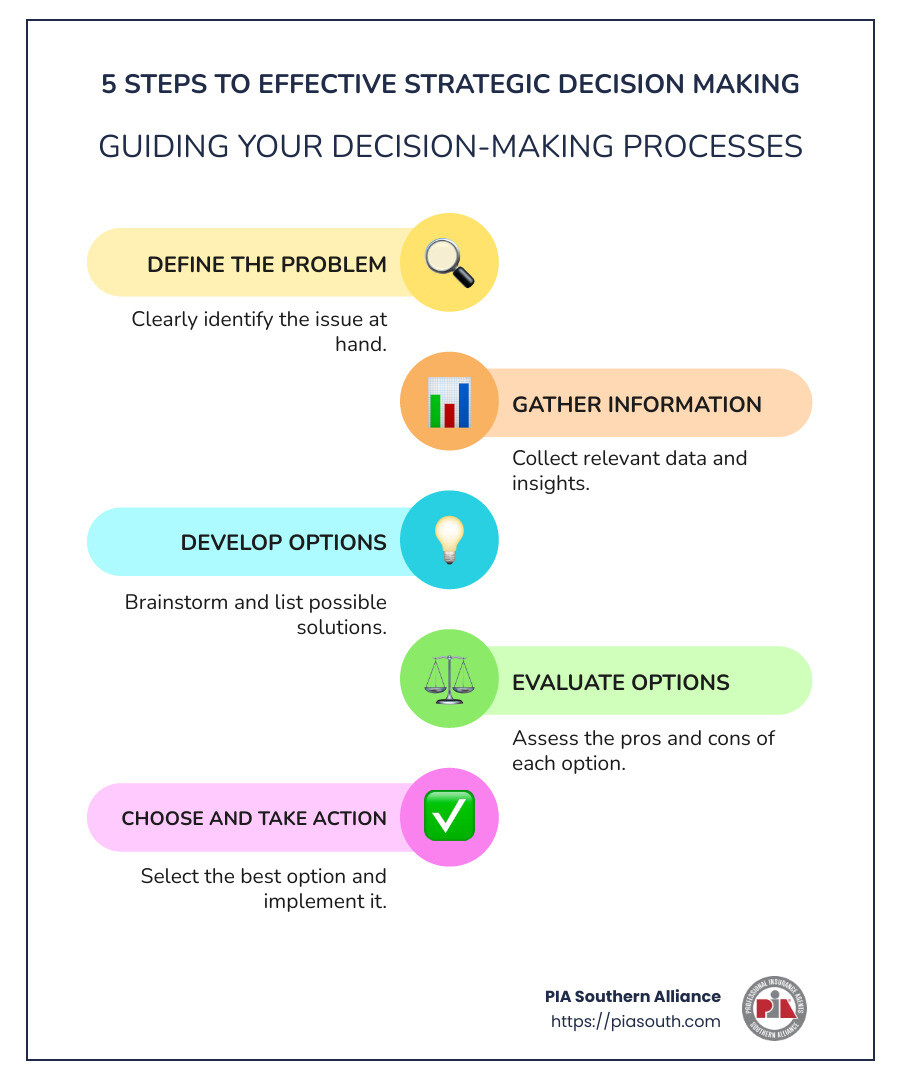
5 Steps to Effective Strategic Decision Making
Strategic decision making is a journey that involves a series of steps to ensure that choices are well-informed and effective. Here, we break down the 5 essential steps to guide insurance professionals through this process.
1. Define the Problem
The first step in strategic decision making is to clearly define the problem. This involves understanding the core issue that needs to be addressed. In the insurance industry, this could be anything from declining client renewals to navigating regulatory changes.
- Clarity is Key: Clearly articulate the problem to avoid misunderstanding.
- Root Cause Analysis: Dig deep to identify the underlying causes, not just the symptoms.
A well-defined problem sets the stage for effective solutions.
2. Gather Information
Once the problem is defined, the next step is to gather relevant information. This involves collecting data and insights that will inform your decision.
- Comprehensive Data Collection: Gather information from various sources, including market trends, customer feedback, and financial reports.
- Seek Expert Opinions: Consult with industry experts or colleagues to gain different perspectives.
Having a solid foundation of information helps in making informed decisions.
3. Develop Options
With a clear understanding of the problem and relevant information at hand, it’s time to develop potential solutions or options.
- Brainstorming: Encourage creative thinking to generate a wide range of options.
- Feasibility Assessment: Evaluate the practicality and potential impact of each option.
Developing multiple options provides flexibility in decision making.
4. Evaluate Options
Once options are developed, it’s crucial to evaluate them to determine the best course of action.
- Pros and Cons Analysis: Weigh the advantages and disadvantages of each option.
- Risk Assessment: Consider potential risks and how they might affect your agency.
Evaluating options ensures that the chosen path aligns with your objectives and minimizes risks.
5. Choose and Take Action
The final step is to choose the best option and take decisive action.
- Decisiveness: Make a clear decision and commit to it.
- Implementation Plan: Develop a detailed plan for executing the decision, including timelines and responsibilities.
Taking action with confidence is essential for achieving desired outcomes.
By following these 5 steps, insurance professionals can steer strategic decision making with greater effectiveness and confidence. This structured approach not only improves decision quality but also improves the ability to adapt to the ever-changing insurance landscape.
Frequently Asked Questions about Strategic Decision Making
What are the 5 major strategic decision-making areas?
Strategic decision-making is a complex process that involves several key areas. Here are the 5 major areas:
Objectives: Setting clear and achievable goals is crucial. Objectives guide the direction of decision-making and help align efforts across the organization.
Resources: Efficient allocation of resources such as time, money, and personnel is vital. This ensures that the organization can support its strategic initiatives effectively.
Organizational Culture: The values and norms within an organization influence decision-making processes. A culture that fosters innovation and adaptability can significantly impact strategic success.
Risk Management: Identifying and mitigating risks is essential to protect the organization from potential setbacks. This involves assessing the likelihood and impact of various risks.
Performance Measurement: Establishing metrics to evaluate the success of strategic decisions helps in refining objectives and improving future decision-making.
What is the study of strategic decision-making called?
The study of strategic decision-making is a multidisciplinary field that draws from various academic disciplines:
Game Theory: This involves the study of strategic interactions where the outcome for each participant depends on the actions of others. It’s widely used in economics and business strategy.
Mathematics: Quantitative analysis and modeling are essential in evaluating different strategic options and predicting outcomes.
Psychology: Understanding human behavior and cognitive biases can improve decision-making by accounting for how people perceive and react to different scenarios.
These fields collectively contribute to a deeper understanding of how strategic decisions are made and how they can be optimized.
What are the 7 steps in decision-making strategy?
A structured approach to decision-making helps ensure that all aspects are considered. Here are the 7 steps commonly followed in a decision-making strategy:
Identify Decision: Clearly define the decision that needs to be made. This sets the scope and focus for the process.
Gather Information: Collect relevant data and insights to inform the decision. This includes both quantitative and qualitative information.
Identify Alternatives: Develop a list of possible options or courses of action. This encourages creative thinking and flexibility.
Weigh Evidence: Evaluate the pros and cons of each alternative. Consider the potential outcomes and risks associated with each option.
Choose Among Alternatives: Select the best option based on the evaluation. This requires careful consideration of objectives and constraints.
Take Action: Implement the chosen alternative. Develop a plan that outlines the steps needed to execute the decision effectively.
Review Decision and Consequences: After implementation, assess the results of the decision. This helps in learning and improving future decision-making processes.
By following these steps, insurance professionals in Georgia, Alabama, and Mississippi can improve their strategic decision-making capabilities, leading to better outcomes for their agencies.
Conclusion
At PIA Southern Alliance, we understand that strategic decision-making is crucial for success in the insurance industry. Our educational resources are designed to empower independent insurance agencies in Georgia, Alabama, and Mississippi to excel in this area.
Strategic decision-making involves setting clear objectives, allocating resources efficiently, and fostering a culture that encourages innovation. By honing these skills, agents can make informed choices that drive their agencies forward.
Our specialized webinars and courses focus on enhancing decision-making skills. We offer a comprehensive suite of learning opportunities custom to the unique challenges faced by property and casualty insurance agents. These resources are crafted to improve cross-selling abilities and strategic planning, ensuring agents are well-equipped to steer the complexities of the insurance landscape.
For those looking to advance their careers and agency capabilities, exploring our professional designations and educational programs is a great next step. With our support, you can confidently tackle strategic decisions and achieve your professional goals.