
Sample insurance agency perpetuation plan is a vital element in ensuring a smooth transition when agency owners step down. Whether you’re prepping for succession planning or agency transition, having a clear, actionable strategy safeguards your agency’s future. Consider these key steps:
- Define Key Players: Identify family or staff members for ownership roles.
- Outline Eligibility: Set criteria for who can purchase shares.
- Triggering Events: List events that initiate ownership transfer.
- Agency Valuation: Establish methods to determine value.
- Funding Sources: Clarify how purchases will be financed.
With these elements, your agency is better equipped to handle unexpected changes, protecting both clients and staff from disruptions. A robust plan not only secures your legacy but also improves your agency’s value, ensuring a prized future for all stakeholders.
As a representative of PIA Southern Alliance, I bring a wealth of experience in sample insurance agency perpetuation plan development, focusing on safeguarding growth and continuity for agencies in the Southeast. Let’s dig into how these plans can transform your business strategy.

Glossary for sample insurance agency perpetuation plan:
– cross-selling insurance techniques
Understanding Perpetuation Planning
In the insurance world, perpetuation planning is like having a safety net for your agency. It ensures your business keeps running smoothly, even when big changes happen. Whether it’s a sudden event or planned retirement, having a plan in place is crucial.
Business Continuity
Imagine your agency as a well-oiled machine. What happens if a key part suddenly stops working? Without a perpetuation plan, your agency might struggle to keep serving clients. With a plan, you have a roadmap for what to do next, ensuring your agency continues to operate seamlessly.
Consider this: agencies without a perpetuation plan often sell at a discount when faced with unexpected events. A well-documented plan can protect your agency’s value and keep it running smoothly.

Retirement Planning
Retirement is a big milestone. For agency owners, it means stepping back and letting someone else take the reins. A strong perpetuation plan helps you prepare for this transition. It outlines how ownership will change hands and ensures your retirement is smooth and stress-free.
Think of it like this: your perpetuation plan is your retirement plan. It not only secures your agency’s future but also ensures you achieve your personal financial goals.
Agency Lifecycle
Every agency goes through a lifecycle, from startup to growth, and eventually, transition. Understanding where your agency is in this lifecycle helps in planning for the future. A perpetuation plan aligns with your agency’s current stage and prepares it for the next.
For example, if your agency is in the growth phase, your plan might focus on identifying future leaders and training them. If you’re closer to transition, it might focus on valuation and sale processes.
In summary, perpetuation planning is about ensuring business continuity, preparing for retirement, and aligning with your agency’s lifecycle. It’s a proactive step that secures your agency’s legacy and future. Let’s explore the key components of a sample insurance agency perpetuation plan next.
Key Components of a Sample Insurance Agency Perpetuation Plan
Creating a sample insurance agency perpetuation plan involves several key components. These elements ensure that your agency can smoothly transition ownership and maintain its value, even during unexpected changes.
Contingency Buy-Sell Agreement
A contingency buy-sell agreement is like an insurance policy for your agency’s ownership. It’s a legal contract that outlines what happens if an owner can no longer manage the agency, whether due to retirement, disability, or other unforeseen events. This agreement ensures that ownership transitions smoothly without disputes, protecting both the agency and its stakeholders.
Ownership Transition
Ownership transition is the process of handing over the reins of the agency to the next owner. This can be a family member, a staff member, or an external buyer. The plan should clearly define the steps and timeline for the transition. This clarity helps avoid confusion and ensures a seamless changeover, maintaining business continuity.
Triggering Events
Triggering events are specific circumstances that activate the perpetuation plan. These might include the death, disability, or retirement of an owner. By identifying these events, the plan can provide a clear roadmap for action, minimizing disruptions to the agency’s operations.
Agency Valuation
Knowing the value of your agency is crucial for a successful transition. Agency valuation determines how much your agency is worth and is vital for setting a fair price if the agency is sold. This valuation should be updated regularly to reflect the agency’s current market value and financial health.
Funding Sources
Funding sources are essential for facilitating ownership transitions. Whether it’s buying out a retiring partner or acquiring new shares, having a clear plan for financing these transactions is critical. Common funding sources include personal savings, bank loans, or internal financing arrangements.
Tax Implications
Understanding tax implications is crucial in perpetuation planning. Transferring ownership can have significant tax consequences for both the seller and the buyer. A well-structured plan will consider these implications and seek to minimize tax liabilities, ensuring a financially sound transition.
These key components form the backbone of a sample insurance agency perpetuation plan. By addressing each element, you can create a robust plan that ensures your agency’s future success. Next, we’ll dig into how to develop your perpetuation plan, focusing on eligibility criteria, priority purchase, and more.
Developing Your Perpetuation Plan
When crafting your sample insurance agency perpetuation plan, consider several essential factors that will guide and protect your agency through changes. Let’s explore these critical elements:
Eligibility Criteria
Setting clear eligibility criteria is fundamental to ensuring a smooth ownership transition. Determine who is eligible to purchase shares or take over the agency. This could include family members, current staff, or external parties. By clearly defining eligibility, you can streamline the selection process and maintain the agency’s integrity and values.
Priority Purchase
Establishing a priority purchase process is crucial. This involves deciding who gets the first opportunity to buy into the agency. For instance, you might prioritize current employees or family members. A well-defined priority purchase policy helps prevent disputes and ensures that ownership transitions to those most invested in the agency’s success.
Insurance Coverages
Insurance coverages are vital in any perpetuation plan. Ensure you have adequate life and disability insurance policies for key owners. These coverages provide financial security and help facilitate ownership transitions in the event of unexpected events, such as the death or disability of an owner. This safety net ensures the agency can continue operating smoothly.
Dispute Resolution
Disputes can arise during ownership transitions, so having a clear dispute resolution process is essential. Outline how conflicts will be handled, whether through mediation, arbitration, or legal proceedings. A defined process for resolving disagreements can prevent prolonged conflicts and protect the agency’s stability during transitions.
By focusing on these elements, your sample insurance agency perpetuation plan will be well-equipped to handle ownership transitions effectively. Next, we’ll explore best practices for documenting and implementing a successful perpetuation plan.
Sample Insurance Agency Perpetuation Plan: Best Practices
Crafting a sample insurance agency perpetuation plan involves more than just planning for the unexpected. It’s about ensuring a seamless transition and securing the future of your agency. Here are some best practices to guide you:
Documented Plan
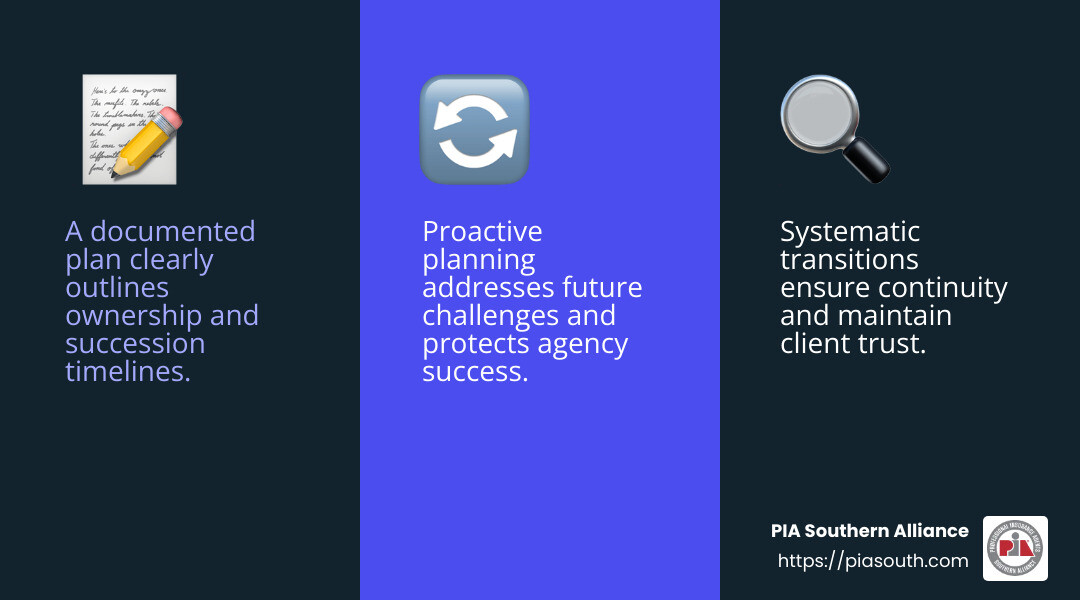
A well-documented plan is crucial. Without it, your agency might face confusion and potential financial loss during a transition. The plan should clearly outline all processes and agreements. This includes ownership details, succession timelines, and any legal requirements. A documented plan serves as a roadmap, ensuring all parties know their roles and responsibilities.
Systematic Transition
A systematic transition is key for continuity. This involves a step-by-step process that guides the agency from current ownership to the next. Define each stage of the transition, from initial discussions to the final handover. This approach minimizes disruptions and maintains client trust. Consider setting up a timeline that includes training for new leaders to ensure they are prepared to take over.
Proactive Planning
Proactive planning means anticipating future needs and challenges. Regularly review and update your perpetuation plan to reflect changes in the agency or market conditions. This ensures the plan remains relevant and effective. By planning ahead, you can address potential issues before they become problems, protecting the agency’s long-term success.
By implementing these best practices, your sample insurance agency perpetuation plan will not only facilitate a smooth transition but also safeguard your agency’s legacy. Let’s now dig into frequently asked questions about perpetuation planning to further improve your understanding.
Frequently Asked Questions about Perpetuation Planning
What is an agency perpetuation plan?
An agency perpetuation plan is a strategic blueprint designed to ensure the continuity of an insurance agency. It outlines how the business will continue to operate when the current owners retire, step down, or face unforeseen circumstances. This plan is crucial for maintaining business continuity, safeguarding the agency’s legacy, and providing a clear path for succession.
For instance, a perpetuation plan might include a contingency buy-sell agreement, which specifies what happens if an owner can no longer lead. It details how ownership will transfer and under what conditions, ensuring a smooth transition.
How do you create a perpetuation plan?
Creating a perpetuation plan involves several key steps:
Identify Key Components: Start by outlining the essential elements such as triggering events, agency valuation, and ownership transition. Make sure to include funding sources and tax implications.
Define Eligibility Criteria: Establish who is eligible to purchase shares and set the priority for potential buyers. This could be family members, key employees, or external parties.
Outline Insurance Coverages: Determine the necessary insurance coverages to protect the agency during transitions.
Plan for Dispute Resolution: Include mechanisms for resolving disputes that may arise during the transition process.
Document Everything: Ensure the plan is well-documented and accessible to all relevant parties.
Use Resources: Leverage resources from industry experts and organizations like PIA South to guide your planning process.
By following these steps, you can create a comprehensive perpetuation plan that protects your agency’s future.
Why is a perpetuation plan important?
A perpetuation plan is vital for several reasons:
Business Protection: It ensures the agency can continue operating smoothly, even in the face of unexpected events. This continuity is crucial for maintaining client trust and agency value.
Family Security: For family-owned agencies, a perpetuation plan provides clarity on succession, reducing potential conflicts and ensuring the family’s financial security.
Agency Value: Having a plan in place can improve the agency’s value by demonstrating stability and foresight to potential buyers or successors.
In summary, an agency perpetuation plan is not just a safeguard; it’s a strategic tool that helps secure the agency’s legacy, protect its stakeholders, and ensure its long-term success.
Conclusion
As we wrap up our discussion on perpetuation planning, it’s clear that having a solid sample insurance agency perpetuation plan is essential for the future of any agency. But where do you turn for help in creating such a plan?
This is where PIA Southern Alliance comes into play. We are dedicated to supporting independent insurance agencies in Georgia, Alabama, and Mississippi. Our mission is to empower agencies with the tools and knowledge they need to thrive, especially in the field of perpetuation planning.
Educational Resources: We offer a range of resources designed to improve your strategic decision-making skills. Our specialized webinars and courses focus on key areas like commercial property insurance and cross-selling abilities. Whether you’re looking to improve your agency’s profitability or streamline your succession planning, we have the educational tools to guide you every step of the way.
Our approach is simple: provide clear, actionable strategies that are easy to implement. We believe that with the right support, every agency can create a perpetuation plan that not only secures its future but also improves its current operations.
Strategic Decision-Making: At the heart of a successful agency is strategic decision-making. With our resources, you can tackle the complexities of the insurance industry with confidence. From understanding agency valuation to navigating tax implications, our programs are designed to equip you with the knowledge you need to make informed decisions.
If you’re ready to take the next step in securing your agency’s future, explore our agency services. Let PIA Southern Alliance be your partner in building a successful and enduring agency.