
Property Casualty Insurance Classes: Your Gateway to a Rewarding Career
Looking for property casualty insurance classes to start or advance your insurance career? Here’s a quick guide to the main types of P&C classes available:
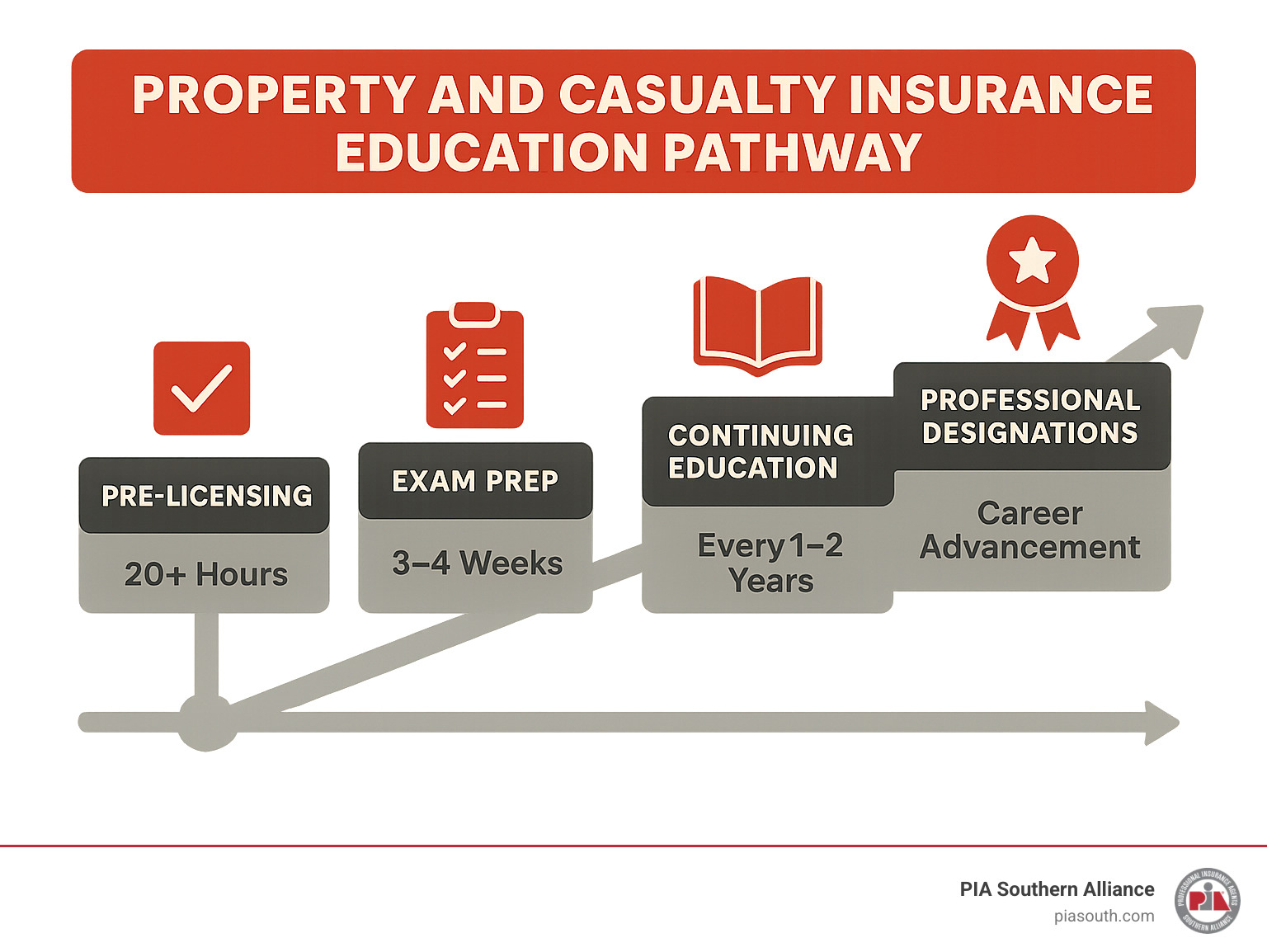
- Pre-licensing courses: Required education to qualify for state licensing exams
- Exam prep classes: Focused review materials with practice tests and simulators
- Continuing education: Required courses to maintain your license (varies by state)
- Professional designations: Advanced credentials like CPCU to boost expertise
- Specialty training: Focused on specific lines like commercial property or cyber liability
Property casualty insurance classes are specialized educational courses designed to prepare individuals for careers in the insurance industry, covering everything from basic policy concepts to advanced risk management techniques. These classes teach you how to understand, sell, and service insurance products that protect clients’ physical assets and shield them from liability claims.
Whether you’re just starting your insurance journey or looking to expand your expertise, property and casualty education provides the foundation for a successful career in an industry that remains resilient even during economic downturns.
As an independent agent in Georgia, Alabama, or Mississippi, your path to success begins with quality education that goes beyond the basics. The right P&C classes don’t just help you pass exams—they prepare you to confidently analyze risks, recommend appropriate coverage, and provide exceptional service to your clients.
Why Property & Casualty Education Matters
In today’s rapidly evolving insurance landscape, new risks emerge daily and coverage options continue to expand. For agents across Georgia, Alabama, and Mississippi, staying competitive isn’t just about having a license—it’s about investing in quality property casualty insurance classes that build a rock-solid foundation of knowledge.
When you truly understand property and casualty insurance, you become more than just another agent—you transform into a trusted advisor for your clients. Imagine confidently explaining to a worried business owner the difference between named perils and open perils, or clearly breaking down how coinsurance penalties might affect their claim. That’s the kind of value clients simply can’t get from clicking through a basic online quote.
If you’re considering jumping into the insurance world, a risk management degree provides the most direct path to success in the P&C arena. These specialized programs blend essential insurance fundamentals with practical business principles, statistics, and analytical skills that directly translate to running a successful agency.
Let’s talk about earning potential—because let’s face it, that matters too! Well-educated P&C agents typically enjoy substantially higher incomes. Independent agents who make ongoing education a priority consistently outperform their peers both in keeping existing clients happy and bringing new ones through the door. The math is simple: better education leads to higher commissions and more stable income over the long haul.
Beyond your bank account, there’s the invaluable currency of consumer trust. When clients sense your deep understanding of coverage options, they’re more likely to follow your recommendations and refer others to you. And of course, thorough education ensures you stay in compliance with state regulations—a non-negotiable aspect of our industry.
The Value of P-C Coverage Knowledge
At its heart, property and casualty insurance addresses two fundamental concepts that property casualty insurance classes will help you master: protecting physical assets and managing liability exposure.
Understanding the technical distinction between hazards and perils isn’t just insurance jargon—it’s crucial for accurate risk assessment. A peril is what actually causes a loss (think fire, windstorm, or theft), while a hazard is a condition that increases the likelihood or severity of a peril (like faulty wiring, coastal location, or inadequate security). When you can identify both, you’ll classify risks more accurately and recommend truly appropriate coverage.
The liability basics you’ll learn form another cornerstone of solid P&C education. You’ll develop a clear understanding of negligence elements, the important differences between first-party and third-party claims, and the nuances between a duty to defend versus a duty to indemnify. You’ll also learn to explain occurrence versus claims-made coverage triggers in ways that actually make sense to your clients.
This knowledge goes far beyond helping you ace your licensing exam—it enables you to have meaningful, confidence-building conversations with clients about their exposure to lawsuits and potential financial loss. When a client understands that you understand their risks, you’ve created a relationship that can last for decades.

7 Must-Take Property Casualty Insurance Classes for Aspiring Agents
Ready to launch your insurance career? The right education makes all the difference. Here are seven essential property casualty insurance classes that can transform you from insurance novice to confident professional in Georgia, Alabama, and Mississippi:
Property Casualty Insurance Classes: Pre-Licensing Foundations
Think of pre-licensing education as your insurance career launchpad. These foundational courses introduce you to P&C insurance and prepare you for that all-important state licensing exam.
While requirements vary slightly across Georgia, Alabama, and Mississippi, all pre-licensing programs cover the essential building blocks: insurance regulations, property coverages (from homeowners to commercial buildings), casualty basics (like auto and liability), policy structures, and how premiums are calculated.
Good pre-licensing courses don’t just dump information on you—they make learning engaging. Look for programs that include comprehensive textbooks, video lessons that break down complex topics, chapter quizzes to test your knowledge, and practice exams that mirror the real thing.
At PIA Southern Alliance, we’ve noticed something interesting about our Commercial Property Insurance Courses: agents who understand regional risks specific to the South—like coastal wind exposure in Mississippi or Georgia’s flood concerns—not only pass their exams more easily but start their careers with genuine confidence.
Exam-Crushing Property Casualty Insurance Classes & Cram Tools
You’ve absorbed the knowledge—now it’s time to prepare for the test. Focused exam prep tools can dramatically increase your chances of passing on the first try.
The best exam prep property casualty insurance classes include condensed review notes, flashcards for those tricky definitions, targeted quizzes for challenging topics, and timed practice exams that create the pressure of test day without the stakes.
Here’s a little secret: practice tests are your best friends. Students who consistently score 80% or higher on practice exams pass their state licensing test at rates above 93%. That’s not just encouraging—it’s a clear roadmap to success.
Many quality providers stand behind their programs with money-back guarantees if you don’t pass on your first attempt. Just be sure to read the fine print—these guarantees typically require completing the entire course and achieving a minimum score on their readiness exam.
Property Casualty Insurance Classes: Continuing Education for Renewal
Congratulations on getting licensed! Now comes the ongoing education that keeps you sharp and compliant. All three states we serve—Georgia, Alabama, and Mississippi—require 24 hours of continuing education every two years, including 3 hours focused on ethics.
Quality CE property casualty insurance classes do more than check a regulatory box—they keep you updated on industry trends, regulatory changes, new coverage options, and ethical standards that lift your practice.
For busy agents juggling client meetings and policy servicing, our Property and Casualty Insurance Continuing Education Webinars offer convenience without sacrificing quality.

Advanced Designation Courses to Boost Credibility
Ready to stand out from the crowd? Professional designations represent the gold standard in insurance education and signal to clients that you’re serious about your craft.
The Chartered Property Casualty Underwriter (CPCU) designation is widely respected as the premier credential in our industry. Courses like CPCU 551, which focuses on commercial property insurance, teach critical thinking skills that transform you from policy peddler to trusted advisor.
Our Chartered Property Casualty Underwriter Designation program typically requires 6-8 weeks per course, with comprehensive exams following each module. The rewards are substantial: higher client trust, improved marketability to commercial accounts, and recognition as an industry expert.
Specialty Commercial Lines & Cross-Selling Mastery
As your agency matures, specialized property casualty insurance classes focused on commercial lines can open up new revenue streams. Commercial policies typically generate higher premiums and offer more cross-selling opportunities than personal lines.
Consider deepening your expertise with courses on builders risk, cyber liability, and commercial umbrella coverage. Our Commercial Casualty Courses dive deep into these specialized markets with particular attention to businesses in Georgia, Alabama, and Mississippi.
Risk Management Degree & Business Skills Electives
While not required for licensing, a formal risk management degree provides the most comprehensive foundation for a property and casualty insurance career. These university programs blend insurance principles with broader business concepts like risk assessment methodologies, data analytics, and business communication.
For more information about risk management degree programs, check out the Insurance Information Institute’s education resources, which provide valuable insights into academic pathways for insurance professionals.

How to Choose the Right Property Casualty Insurance Classes
Feeling overwhelmed by all the education options out there? Finding the perfect property casualty insurance classes can feel challenging. Let’s break down what really matters when you’re investing in your insurance education.
Learning Style and Delivery Format
We all learn differently, and acknowledging your personal learning style can make all the difference in your success.
If you thrive on flexibility and setting your own pace, self-paced online courses give you the freedom to study when inspiration strikes. If you know you need accountability and interaction, live online classes provide structure with the convenience of learning from home.
Some folks simply learn better in person, where you can raise your hand, ask questions on the spot, and connect with fellow future agents.
| Feature | Online Self-Study | Live Online Classes | In-Person Classes |
|---|---|---|---|
| Schedule Flexibility | High | Moderate | Low |
| Interaction with Instructor | Limited | Good | Excellent |
| Peer Learning Opportunities | Minimal | Moderate | Excellent |
| Cost | $ | $$ | $$$ |
| Commute Required | None | None | Yes |
| Typical Access Period | 60-100 days | Set schedule + recordings | Set schedule |
| Study at Your Own Pace | Yes | Partially | No |
Budget Considerations
Let’s talk money—because it matters! Quality insurance education is an investment in your future, but that doesn’t mean you need to break the bank.
Pre-licensing courses typically range from $150-$350, while targeted exam prep tools might cost between $50-$200. Once you’re licensed, continuing education runs about $5-15 per credit hour, and those prestigious professional designations? They’ll set you back around $350-$500 per course.
Many providers (including us at PIA Southern Alliance) offer bundle discounts when you combine pre-licensing with exam prep. And keep an eye out for those money-back guarantees—they can provide some welcome peace of mind when you’re investing in your future.
Time Frame and Schedule
Be realistic about your timeline. If you’re looking to make a career change quickly, accelerated programs can help you hit the ground running. But if you’ve got a bit more breathing room, a self-paced approach allows for deeper learning without the pressure.
Most pre-licensing courses require about 40-60 hours of study time. That could mean an intense few weeks of full-time study or a more measured approach spread over a couple of months.
Access & Support Features to Look For
The best property casualty insurance classes come with support systems that truly set you up for success.
Look for extended access periods—at least 60 days gives you breathing room if life gets in the way. The ability to ask questions when you’re stuck can be a lifesaver, whether that’s through live instructor support or active community forums where you can learn from peers.
At PIA Southern Alliance, we pride ourselves on connecting students with instructors who truly understand insurance in Georgia, Alabama, and Mississippi. Our regional expertise means you’re learning material that’s directly relevant to the markets you’ll be working in.
Study Materials That Drive High Pass Rates
Quality matters! The materials you study with can make or break your exam success.
Look for comprehensive textbooks that align precisely with your state’s exam content outlines. Exam simulators that mimic the actual test experience are worth their weight in gold—they build both knowledge and test-taking confidence.
Adaptive technology that identifies your weak areas and customizes your review sessions can significantly reduce study time by focusing on what you don’t know rather than reviewing material you’ve already mastered.

Licensing & Exam Roadmap for GA, AL, MS Agents
Becoming a licensed property and casualty agent in the Southeast follows a similar journey regardless of which state you call home, though each state adds its own local flavor to the process. Let me walk you through what to expect in Georgia, Alabama, and Mississippi.
Georgia Licensing Process
The Peach State requires a bit more pre-licensing education than its neighbors. Your path starts with 40 hours of property casualty insurance classes covering everything from basic concepts to state-specific regulations. After submitting your fingerprints for the mandatory background check, you’ll schedule your state exam through the testing provider. Once you’ve conquered the exam, you’ll apply for your license through the Georgia Department of Insurance.
Alabama Licensing Process
Alabama takes a slightly different approach, dividing your pre-licensing education into two distinct 20-hour segments – one for property insurance and another for casualty. This separation helps you focus deeply on each area before bringing them together in practice. After completing your 40 total hours of property casualty insurance classes, you’ll follow the same fingerprinting, examination, and application steps through the Alabama Department of Insurance.
Mississippi Licensing Process
The Magnolia State mirrors Alabama’s approach with separate 20-hour requirements for property and casualty pre-licensing education. Mississippi agents often appreciate this divided structure as it allows for more focused study of each insurance category. After your background check, exam, and application through the Mississippi Insurance Department, you’ll be ready to help clients protect their most valuable assets.
For more comprehensive information about training requirements in all three states, our Commercial Insurance Agent Training page provides valuable resources custom to southeastern agents.
Exam Structure
When test day arrives, you’ll face an exam with two distinct sections that work together to ensure you’re prepared for real-world insurance scenarios:
- General Insurance Knowledge: This section tests your understanding of fundamental insurance concepts, policy structures, and industry practices that apply nationwide.
- State-Specific: Here you’ll demonstrate your knowledge of your state’s particular insurance laws, regulations, and mandatory coverages.
Most southeastern states include between 75-150 multiple-choice questions on their exams, with a passing score typically set around 70%.
Key Deadlines & Fees
Planning your licensing journey requires some financial preparation. Here’s what you can expect to invest in your new career:
Your pre-licensing property casualty insurance classes will typically cost between $150-$350 depending on the provider and format. Each exam attempt comes with a fee of $45-$75, while your license application will run $50-$100. Don’t forget the background check and fingerprinting costs of $35-$50.
In total, budget approximately $300-$600 for your entire licensing process. It’s a modest investment considering the income potential of a successful insurance career.
Tips to Pass on the First Attempt
The difference between passing and failing your exam often comes down to your preparation strategy. Here are proven approaches that have helped thousands of southeastern agents succeed:
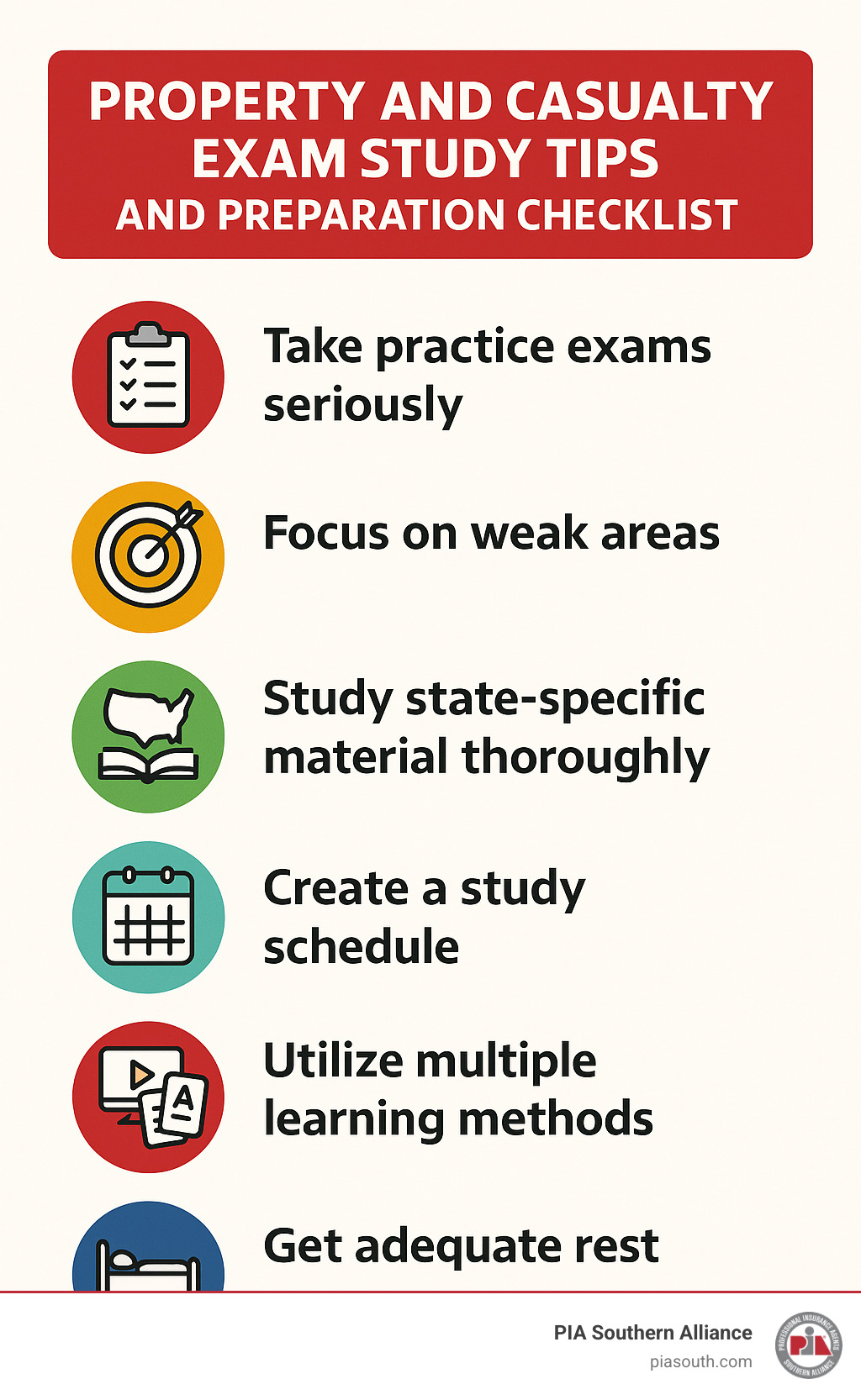
Take practice exams seriously – aim for consistent scores of at least 80% before scheduling your actual test. These practice runs are your best indicator of readiness. When you identify weak areas, double down on those topics until they become strengths.
The state-specific material often proves most challenging for new agents, so give this section extra attention during your property casualty insurance classes and study sessions.
Frequently Asked Questions about Property Casualty Insurance Classes
Who needs to take property and casualty courses to sell insurance?
If you’re dreaming of a career selling homeowners, commercial property, auto, or liability insurance, you’ll need proper licensing first. Everyone who sells property casualty insurance must complete several important steps:
First, you’ll need to complete your state’s required pre-licensing education. Then comes the state licensing exam. After that, you’ll submit to a background check and finally apply for your license through your state insurance department.
In Georgia, Alabama, and Mississippi, you can choose to be licensed for property only, casualty only, or get the combined property and casualty license that most agents prefer. The combined license gives you the most flexibility to serve your clients’ needs.
How long do I keep access to online study materials?
Access to your study materials varies depending on what you’re taking:
Most property casualty insurance classes for pre-licensing give you 60-100 days of access, which is plenty of time for most students to prepare thoroughly. Exam prep tools typically provide 30-90 days of access, while continuing education courses usually remain available until you complete them, plus a grace period.
At PIA Southern Alliance, we understand that life doesn’t always go according to plan. That’s why we offer reasonable extensions when needed. We’re committed to your success, not rushing you through the material before you’re ready.
Are money-back guarantees real if I don’t pass the exam?
Yes, they absolutely are! Many quality providers, including PIA Southern Alliance, stand behind their property casualty insurance classes with genuine pass guarantees.
Just be sure to read the requirements, which typically include completing the entire course, achieving at least 80% on practice exams, taking your state exam shortly after finishing the course, and providing proof if you don’t pass. These guarantees reflect our confidence in our teaching methods and materials.
How do I maintain my property and casualty license once I obtain it?
Keeping your license active requires a few ongoing commitments:
In Georgia, Alabama, and Mississippi, you’ll need to complete 24 hours of continuing education every two years, including ethics training. You’ll also need to pay renewal fees to your state’s insurance department when they come due.
Don’t forget to maintain any required bonds or errors and omissions insurance, and always update your information promptly if you change agencies or addresses.
What’s the difference between property insurance and casualty insurance?
Though often mentioned together, these are two distinct types of protection that complement each other:
Property insurance focuses on protecting physical assets like buildings, contents, and equipment from risks such as fire, theft, and weather events. When a client’s home is damaged by a tornado or their business inventory is stolen, property insurance responds.
Casualty insurance, on the other hand, addresses liability exposures—legal responsibility for harm to others or damage to their property. If a client is sued because someone slipped on their sidewalk or their employee causes an auto accident while on company business, casualty coverage steps in.
Conclusion
As you’ve seen throughout this guide, becoming a successful property and casualty insurance agent isn’t just about passing an exam—it’s about building a foundation of knowledge that will serve you and your clients for years to come. The insurance landscape continues to evolve, with new risks emerging and coverage options expanding. Your education journey doesn’t end with licensing; it’s a career-long commitment to excellence.
At PIA Southern Alliance, we take pride in being your educational partner at every stage of your insurance career. Whether you’re just starting out and need pre-licensing guidance, or you’re an established agent looking to expand into new specialty markets, we’ve designed our property casualty insurance classes to meet your specific needs in Georgia, Alabama, and Mississippi.
What sets our approach apart is our commitment to teaching both the technical aspects of insurance and the practical business skills you need to succeed. Understanding policy forms and exclusions is essential, but so is the ability to explain complex concepts to clients in terms they can understand. Our courses bridge this gap, creating well-rounded professionals who excel at both risk analysis and client communication.
The investment you make in quality education today will pay dividends throughout your career. Agents who commit to ongoing learning consistently outperform their peers in client retention, cross-selling, and overall production.
Ready to lift your expertise and earning potential? Explore our comprehensive Professional Designations page to find how specialized education can transform your practice and set you apart in a competitive marketplace.
In the insurance industry, your knowledge truly is your most valuable asset. By investing in quality property casualty insurance classes, you’re not just preparing for an exam—you’re building the foundation for a rewarding, successful career serving the protection needs of your community.
The PIA Southern Alliance team is here to support your growth every step of the way, with regional expertise specifically custom to the unique insurance landscapes of Georgia, Alabama, and Mississippi. Your success is our mission, and we’re committed to providing the educational resources you need to thrive as an independent agent.