
If you’re looking to grasp the essentials of an insurance premium funding loan, you’re in the right place. This financial arrangement involves taking out a loan to cover insurance premiums, allowing businesses to maintain their cash flow while securing necessary coverage.
Quick Takeaways:
– Insurance premium funding loans enable businesses to pay high premiums without liquidating assets.
– They offer a solution for managing large premium expenses while keeping capital available for other investments.
– Potential benefits include: improved cash flow, asset retention, and improved financial flexibility.
In the field of insurance premium financing, businesses, especially in the Southeast, can steer complex commercial claims more effectively by leveraging specialized loans. This tool helps maintain operational momentum and protects valuable assets.
In summary, whether you’re an insurance agency owner or a business seeking financial strategy, understanding the nuances of insurance premium financing can equip you with the knowledge to make informed choices that bolster your agency offerings.
As part of the PIA Southern Alliance, we are committed to elevating Southeast insurance agencies by providing top-notch educational resources and guidance. Insurance premium funding loans are part of our strategy to ensure agencies can safeguard their clients while growing their business.
Understanding Insurance Premium Funding Loan
An insurance premium funding loan is a financial tool that helps businesses manage their insurance costs without straining their cash flow. This type of loan allows businesses to pay their insurance premiums over time, rather than all at once.
How Does It Work?
When a business takes out an insurance premium funding loan, it borrows money from a lender to pay for its insurance policy. This loan is typically secured by the insurance policy itself, acting as collateral. The business then repays the lender in installments, which can be more manageable than a large upfront payment.
Why Use Premium Financing?
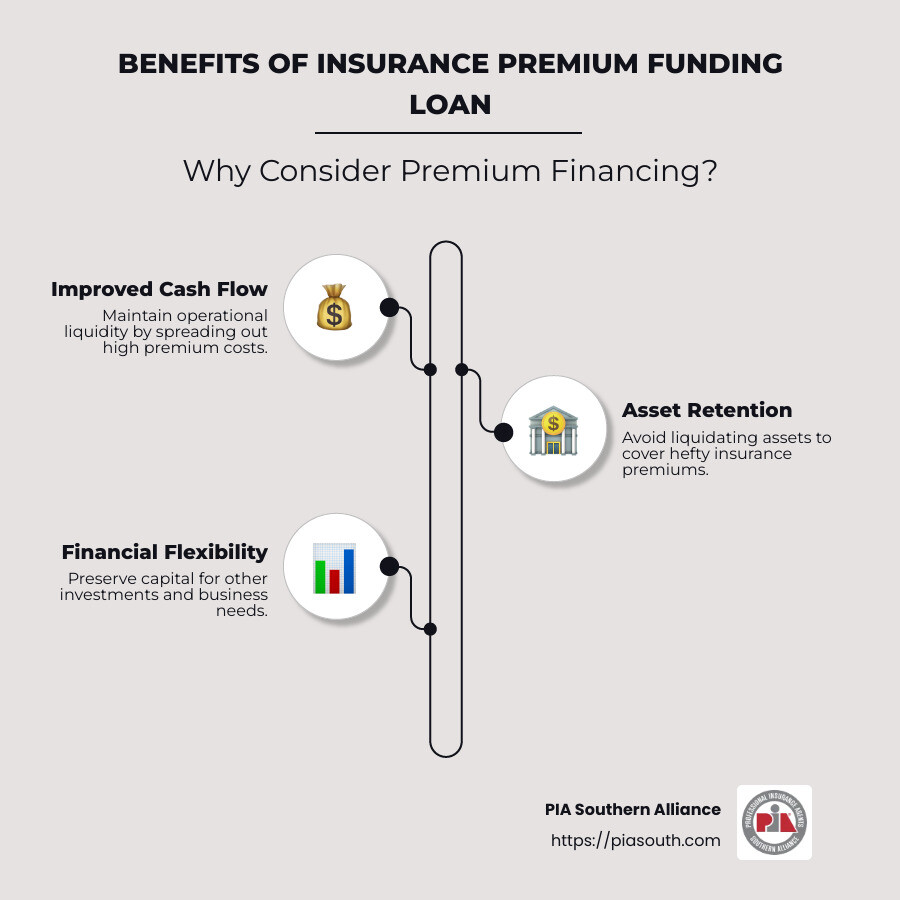
Cash Flow Management: By spreading out payments, businesses can keep more cash on hand for daily operations or other investments. This is crucial for maintaining liquidity and ensuring that funds are available when needed.
Asset Retention: Businesses can avoid selling assets to cover insurance costs, preserving their investment portfolio and other resources.
Financial Flexibility: With premium financing, businesses can adjust their financial strategies without being hampered by large insurance expenses.
Real-Life Application
In states like Georgia, Alabama, and Mississippi, where industries vary from agriculture to manufacturing, managing cash flow is vital. For example, a manufacturing company facing seasonal fluctuations in revenue can use a premium funding loan to maintain steady coverage without disrupting its financial stability.
Key Components
Loan Terms: These loans usually come with specific terms regarding interest rates and repayment schedules. It’s important to understand these terms to avoid unexpected costs.
Collateral: The insurance policy itself often serves as collateral. If the business defaults, the lender may have the right to claim the policy.
Considerations
While premium financing offers clear benefits, businesses should be aware of potential risks, such as fluctuating interest rates and the need for collateral. It’s essential to assess these factors before proceeding.
Understanding the ins and outs of insurance premium funding loans can empower businesses to make informed decisions that support their long-term financial health. By leveraging this tool, businesses can continue to thrive while ensuring they have the necessary protection in place.
Let’s move on to explore how insurance premium financing works in more detail.
How Insurance Premium Financing Works
Insurance premium financing is like getting a loan to pay for your insurance. This helps businesses manage their costs better without using up all their cash at once. Here’s a simple breakdown of how it works:
Third-Party Loan
When a business decides to finance its insurance premium, it gets a loan from a third-party lender. This lender can be a private bank or a finance company. The loan covers the cost of the insurance policy, allowing the business to keep its money free for other needs.
Collateral
To secure the loan, the insurance policy itself acts as collateral. This means if the business can’t pay back the loan, the lender can take over the insurance policy. Sometimes, if the policy’s value isn’t enough, other assets might be needed as extra collateral.
- Policy as Collateral: The insurance policy’s cash value is often used to back the loan.
- Additional Assets: In some cases, businesses might need to offer more than just the policy to secure the loan.
Repayment Options
Repaying the loan is straightforward. The business makes regular payments to the lender. These payments usually include both the loan amount and interest.
- Installment Payments: Businesses pay back the loan in smaller, regular amounts instead of a big lump sum.
- Interest Payments: Some programs allow interest to accumulate, but this comes with risks, like higher overall costs.
Real-Life Example
Consider a farming business in Georgia. They might face cash flow issues during off-seasons. By using an insurance premium funding loan, they can spread out their insurance payments throughout the year. This way, they don’t have to worry about a big payment when their income is lower.
Key Takeaways
- Flexibility: Businesses can keep cash available for other opportunities or emergencies.
- Protection: Ensures that a company remains insured without financial strain.
- Strategic Planning: Allows businesses to plan their finances more effectively.
In summary, insurance premium financing offers a smart way for businesses to handle their insurance costs, ensuring they stay protected while managing their cash flow efficiently. Next, let’s look at the benefits of using insurance premium financing.
Benefits of Insurance Premium Financing
Insurance premium financing is more than just a convenient way to pay for insurance. It offers several key benefits that can help businesses in Georgia, Alabama, and Mississippi manage their finances more efficiently. Let’s explore these benefits:
Tax Efficiency
One of the standout advantages of insurance premium financing is its potential for tax efficiency. When structured correctly, the insurance proceeds from a financed policy may be exempt from certain taxes. This means more money stays in your pocket or is available for your heirs.
- Estate Tax Benefits: If your business’s insurance policy is part of an estate plan, the proceeds can help reduce estate taxes, ensuring your wealth is preserved for future generations.
- Tax-Deferred Growth: The cash value within the policy can grow on a tax-deferred basis, which can be a strategic advantage for long-term financial planning.
Asset Protection
Insurance premium financing can also offer a layer of asset protection. By using the policy as collateral, businesses can avoid selling valuable assets to pay for insurance premiums. This is particularly beneficial for businesses with significant investments in property and equipment.
- Preserve Business Assets: Keep your business assets intact while still securing necessary insurance coverage.
- Protect Heirs: Ensure that your heirs won’t need to liquidate assets to cover taxes or debts after your passing.
Financial Flexibility
Financial flexibility is crucial for any business, and insurance premium financing provides just that. By spreading out premium payments, businesses can maintain liquidity and invest in growth opportunities.
- Cash Flow Management: Businesses can manage their cash flow more effectively by avoiding large, upfront premium payments.
- Investment Opportunities: With more available capital, businesses can invest in new projects, equipment, or other opportunities that may arise.
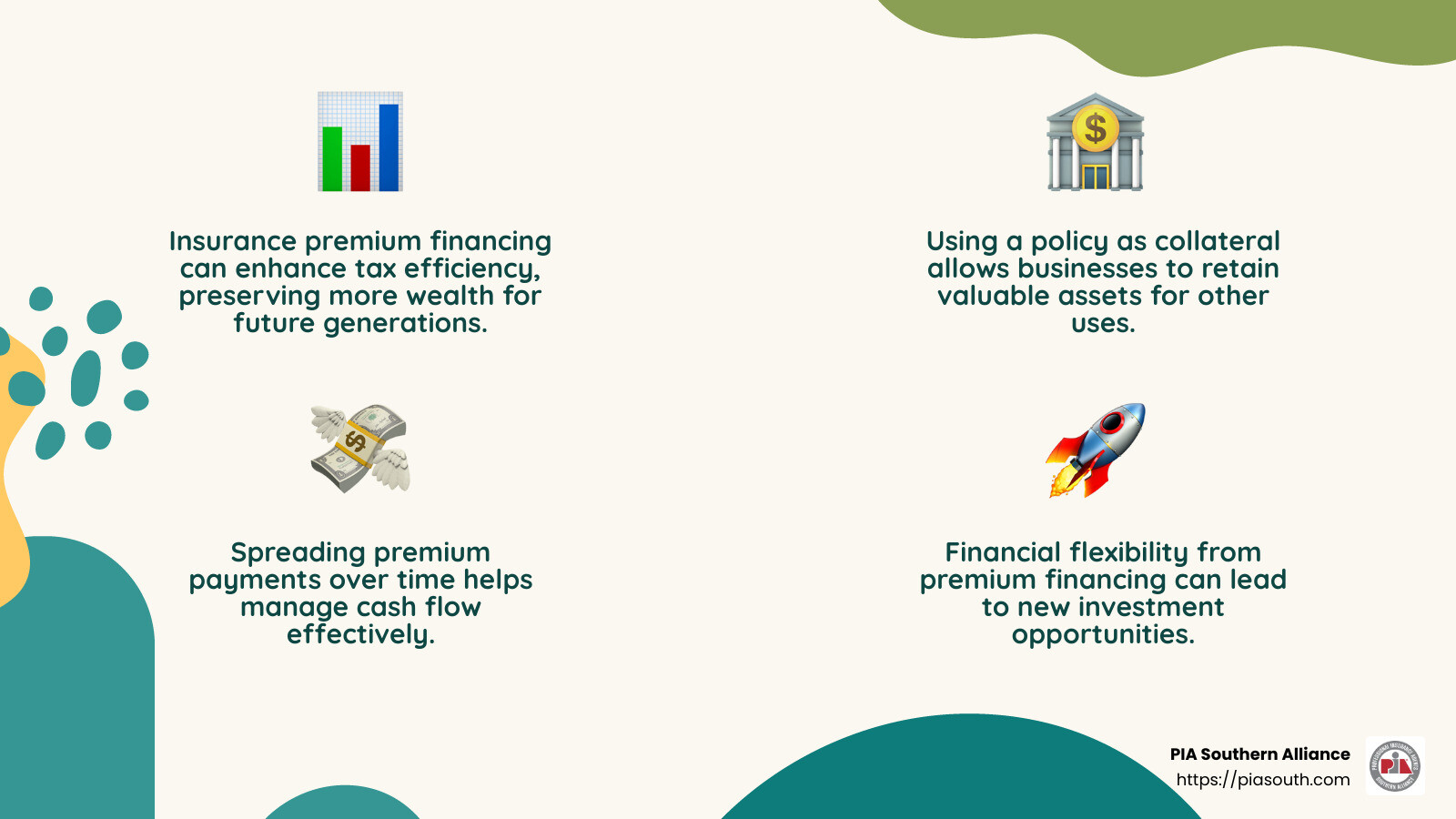
Insurance premium financing isn’t just about spreading out payments—it’s a strategic financial tool that can improve tax efficiency, protect assets, and provide the financial flexibility needed to grow and thrive.
Next, we’ll explore some potential risks and considerations involved in insurance premium financing.
Potential Risks and Considerations
While insurance premium financing offers several benefits, it’s important to be aware of the potential risks and considerations that come with it. Let’s break down the key areas you should keep an eye on:
Interest Rates
Interest rates are a crucial factor in any loan, and insurance premium funding loans are no exception. These loans often have variable interest rates, which means they can fluctuate over time.
- Rising Rates: As seen in recent times, interest rates can rise unexpectedly. For instance, the one-month LIBOR rate jumped from 0.09% to 3.35% over 12 months. Such increases can significantly raise the cost of borrowing.
- Long-Term Impact: Since most repayments occur over a long period, even small rate increases can lead to substantial additional costs due to compound interest.
Collateral Requirements
Collateral is often required to secure an insurance premium funding loan. This means you’ll need to pledge assets as security for the loan, which introduces its own set of risks.
- Asset Fluctuation: If the value of your collateral decreases, the lender may require additional collateral. This can strain your financial resources.
- Asset Liquidity: Using illiquid assets as collateral can complicate your financial situation, especially if the lender demands more secure or less volatile assets.
Policy Performance
The performance of the insurance policy itself is another critical consideration.
- Cash Value Growth: Many policies are expected to grow in cash value over time. However, if the policy underperforms, there may not be enough cash value to cover the loan, leading to a shortfall.
- Market Volatility: In years where market performance is poor, some policies might not earn any credit, potentially requiring you to provide additional collateral to satisfy loan terms.
In summary, while insurance premium financing can be a strategic tool for managing finances, be aware of these potential risks. Understanding interest rates, collateral requirements, and policy performance can help you make informed decisions and avoid pitfalls.
Next, we’ll address some frequently asked questions about insurance premium funding loans.
Frequently Asked Questions about Insurance Premium Funding Loan
What is an insurance premium finance loan?
An insurance premium funding loan is a special type of loan designed to help businesses and individuals pay for their insurance premiums without needing to pay the full amount upfront. Instead, you can spread the cost over time, making it easier to manage your cash flow. This is especially helpful for businesses in Georgia, Alabama, and Mississippi that face cash flow challenges.
Here’s how it works: A third-party lender provides the funds to pay your insurance premium. You then repay the lender in monthly installments, which can be more manageable than a single large payment.
How does premium funding help with cash flow challenges?
Premium funding can be a lifesaver for businesses struggling with cash flow. By turning a large, upfront insurance cost into smaller, monthly payments, it frees up cash that can be used for other important expenses.
Improved Liquidity: You don’t have to sell assets or dip into savings to cover insurance costs.
Budget-Friendly Payments: Monthly repayments allow you to better predict and manage your expenses, making budgeting easier.
This flexibility ensures that businesses can maintain their insurance coverage without financial strain, allowing them to focus on growth and operations.
What are the potential pitfalls of premium financing?
While premium financing offers many benefits, there are some pitfalls to watch out for:
Interest Rates: As mentioned earlier, interest rates on these loans can be variable. If rates rise, your monthly payments could increase, affecting your budget.
Collateral Requirements: To secure the loan, you may need to put up collateral. If the value of your collateral falls, you might have to provide additional assets, which can be a financial burden.
Policy Performance: If the insurance policy underperforms, you may face a shortfall, requiring more collateral or additional payments.
Understanding these risks can help you decide if premium financing is the right choice for your financial situation. Always consider the terms and conditions carefully and consult with financial advisors to avoid any surprises down the road.
Conclusion
Navigating insurance premium financing can seem daunting, but with the right resources and guidance, it becomes a powerful tool for financial management. At PIA Southern Alliance, we are committed to empowering independent insurance agencies in Georgia, Alabama, and Mississippi. Our focus is on providing educational resources and development programs that improve strategic decision-making.
Educational Resources and Strategic Decision-Making
We believe that well-informed agents are better equipped to serve their clients and grow their businesses. That’s why we offer specialized webinars and courses designed to improve your cross-selling abilities and strategic decision-making skills. These resources are custom to help you tackle the complexities of the insurance landscape with confidence.
By leveraging these resources, you can better understand the nuances of insurance premium funding loans and how they can be used to maintain liquidity and support business growth. This knowledge not only aids in making informed decisions but also improves your ability to advise clients effectively.
For more information on how PIA Southern Alliance can support your journey in the insurance industry, explore our professional agents funding page today. Let us be your partner in building a successful and resilient agency.
In conclusion, while insurance premium financing presents both opportunities and challenges, with the right guidance and resources, you can harness its benefits to achieve financial stability and growth.