
Insurance premium funding interest rates are a vital topic for any business considering managing their cash flow efficiently, especially for independent insurance agency owners in the Southeast. With growing challenges in cross-selling and dealing with complex commercial claims, understanding how premium funding works can be a game changer. Here’s a concise rundown:
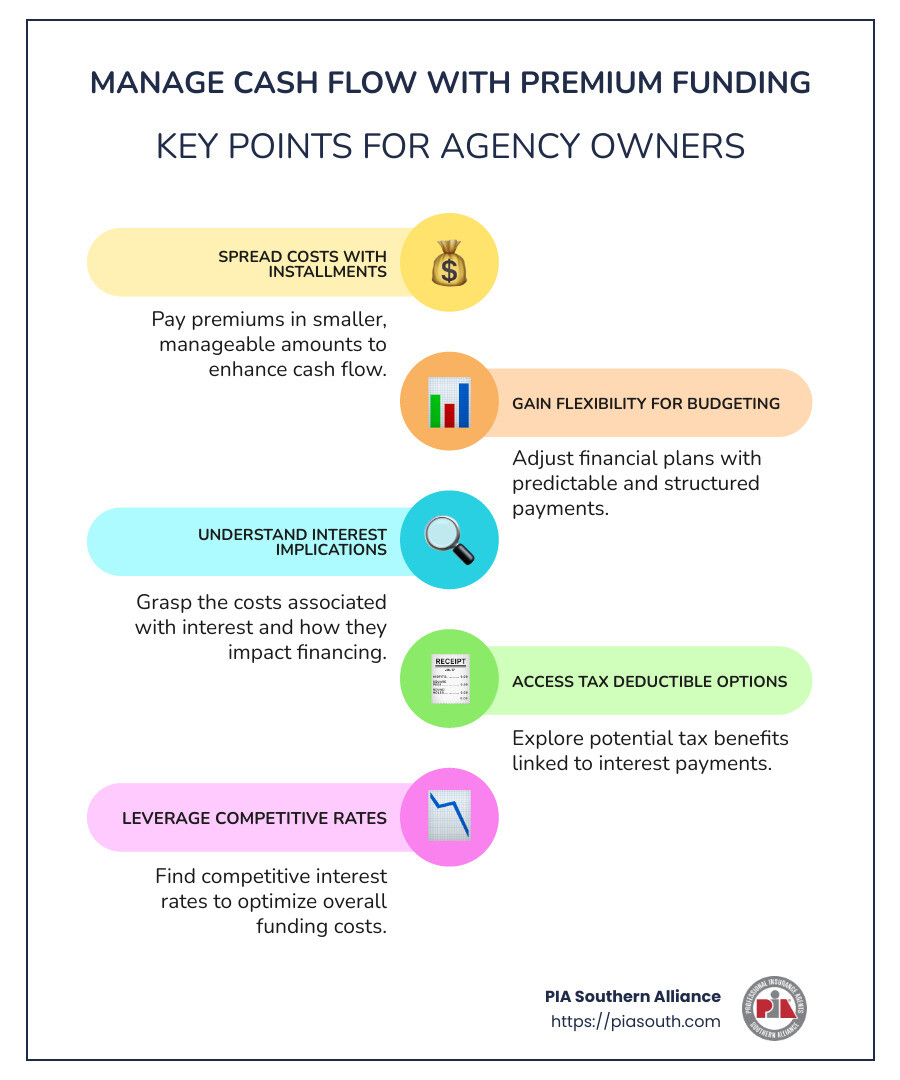
- Insurance premium funding helps spread out costs, allowing businesses to maintain better cash flow.
- It involves paying your insurance premiums in manageable installments instead of one lump sum.
- This typically incurs added interest, which forms the core of insurance premium funding interest rates.
- Benefits include flexibility, potential tax deductions, and freeing up capital for other business needs.
Navigating the intricacies of insurance premium funding interest rates can enable your agency to thrive. By tapping into competitive interest rates and understanding the full scope of financing options available, you empower your business to make informed financial decisions.
With uncertainties in the economic landscape, premium funding offers a viable solution to stabilize your cash flow, ensuring you can focus on serving your clients effectively.
PIA Southern Alliance is dedicated to equipping members with the necessary resources and strategic insights to understand these financial tools better. Don’t miss the opportunity to improve your agency’s financial health and client offerings through educated decision-making.
Find more about insurance premium funding interest rates:
– can an insurance agency finance a premium
– insurance premium funding loan
Understanding Insurance Premium Funding
Insurance premium funding is a strategic tool that allows businesses, especially independent insurance agencies, to manage their cash flow more effectively. Instead of paying a hefty annual insurance premium upfront, businesses can opt for installment payments, spreading the cost over time. This approach is particularly beneficial for agencies in Georgia, Alabama, and Mississippi, where managing cash flow can be crucial due to varying economic conditions.
How does it work?
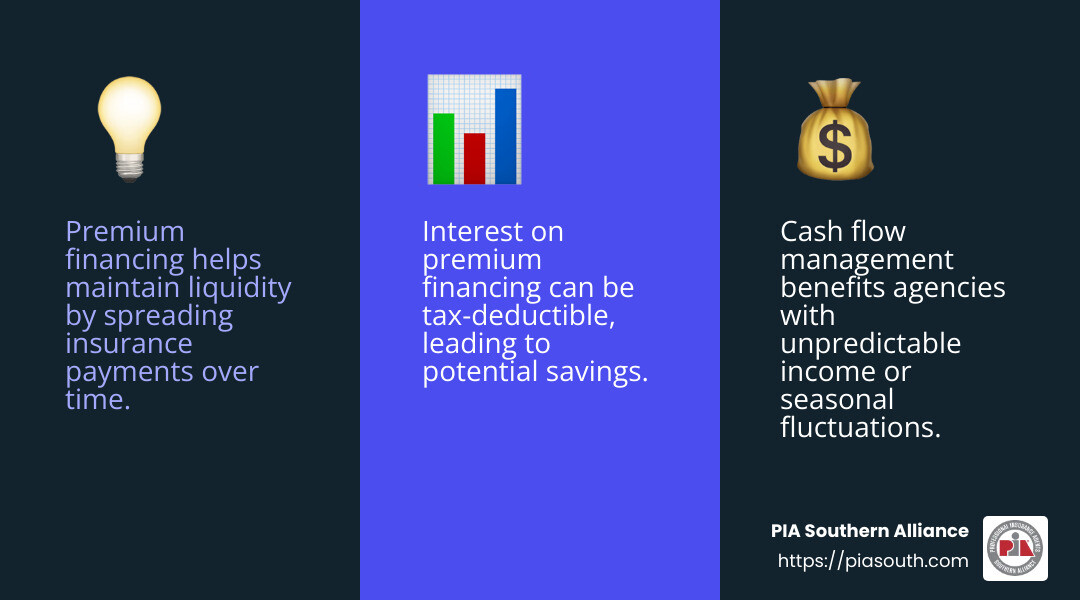
Premium Financing: At its core, premium financing involves borrowing funds to pay insurance premiums. This means your agency can maintain liquidity and allocate funds to other pressing business needs.
Cash Flow Management: By choosing premium funding, you can avoid tying up large sums of money in a single payment. Instead, you make smaller, regular payments, which helps stabilize your cash flow. This is especially useful for agencies dealing with unpredictable income or seasonal fluctuations.
Installment Payments: The flexibility of making monthly or quarterly payments allows agencies to plan their finances better. While this method incurs interest, the benefit of improved cash flow often outweighs the interest costs.
Why consider premium funding?
Flexibility: Adjust your payment schedule to align with your cash flow. This flexibility can be a lifesaver during lean months.
Tax Advantages: In some cases, the interest paid on premium financing can be tax-deductible, offering potential savings.
Capital Allocation: Free up capital for other business investments, like expanding your services or investing in technology.
Is it right for you?
Deciding whether to use premium financing depends on your agency’s unique needs. If managing a large upfront premium payment is challenging, or if you prefer to keep more cash on hand for other expenditures, premium funding could be a smart choice.
PIA Southern Alliance is committed to supporting its members with the tools and insights needed to steer premium funding options. Understanding how to leverage these financial strategies can help your agency maintain a healthy cash flow and focus on what matters most—serving your clients and growing your business.
The Role of Interest Rates in Premium Funding
When it comes to insurance premium funding interest rates, understanding the role they play is crucial. Interest rates directly influence the cost of borrowing, and in premium funding, this can affect your agency’s cash flow and overall financial health.
Understanding Interest Rate Risk
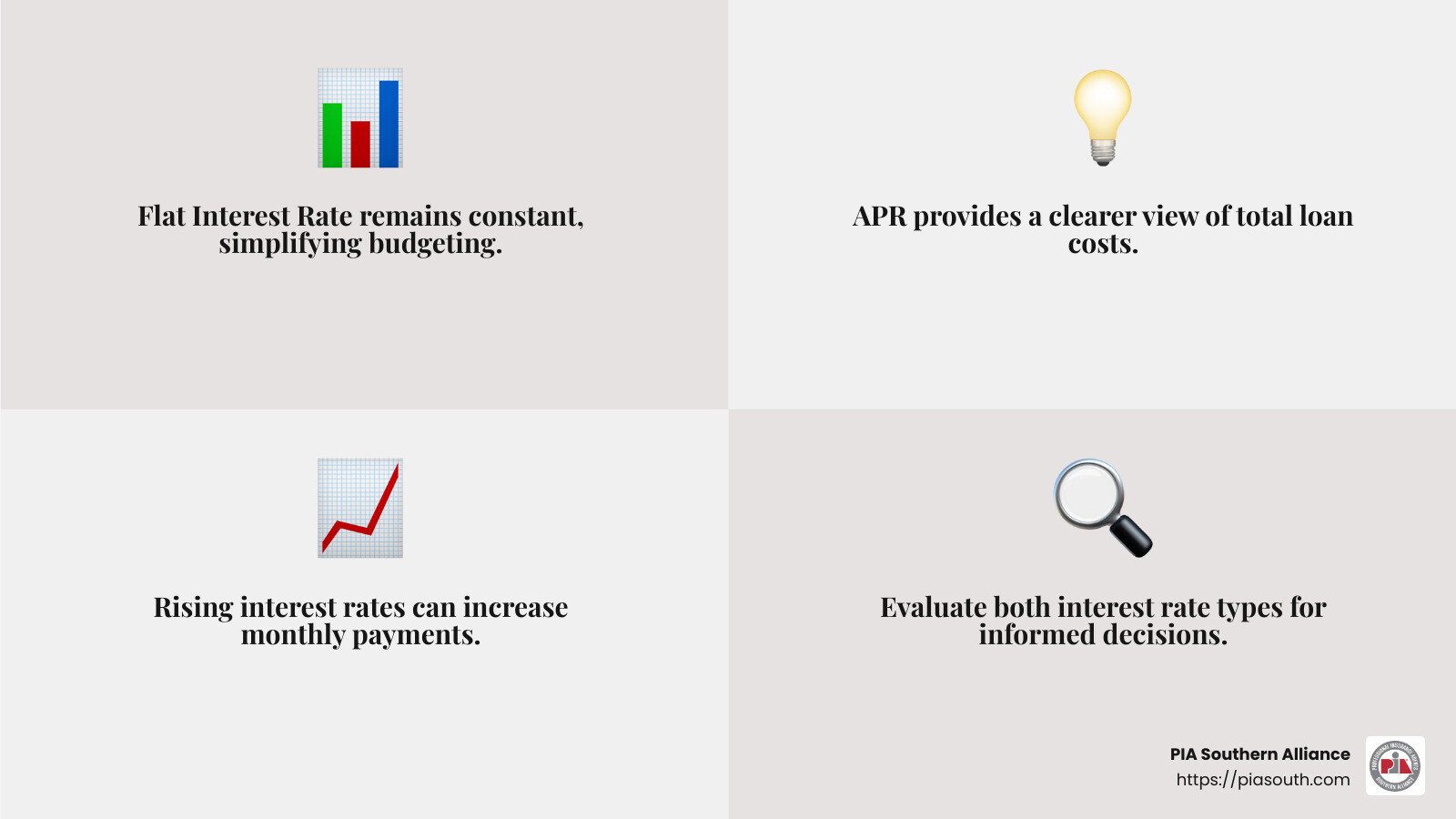
Interest rate risk is the chance that changes in interest rates will impact the cost of your premium financing. For agencies in Georgia, Alabama, and Mississippi, where economic conditions can vary, this risk is something to consider carefully. If interest rates rise, the cost of your monthly payments could increase, affecting your budget.
Flat Interest Rate vs. Annual Percentage Rate (APR)
Two common ways to express interest rates in premium funding are the flat interest rate and the annual percentage rate (APR).
Flat Interest Rate: This rate is consistent throughout the loan period. It’s calculated on the initial loan amount, meaning you pay the same interest every month, regardless of how much principal you’ve already repaid. This can make budgeting simpler, but it doesn’t reflect the true cost of borrowing.
Annual Percentage Rate (APR): The APR provides a more comprehensive picture. It includes both the interest rate and any additional costs or fees spread over the loan term. The APR decreases as you pay down the principal, offering a clearer view of what you’re actually paying.
Why is this important?
An APR might appear higher than a flat rate at first glance, but it offers a truer reflection of borrowing costs. For instance, a loan might show a flat rate of 4% and an APR of 8.63%, yet the total interest paid over the loan’s lifetime remains the same in both cases. Understanding these differences can help your agency make informed decisions about premium financing.
Managing Interest Rate Changes
Interest rate changes can affect your premium funding strategy. When rates are low, borrowing is cheaper, making premium financing more attractive. However, if rates rise, your costs could increase. It’s essential to monitor these changes and adjust your strategy accordingly.
PIA Southern Alliance supports its members by providing insights and guidance on managing interest rate risks. By understanding the nuances of interest rates and their impact on premium funding, your agency can make strategic decisions that align with your financial goals.
Benefits and Risks of Insurance Premium Funding
Insurance premium funding can be a valuable tool for managing cash flow, but it’s important to weigh the benefits against the risks. Let’s break it down.
Cash Flow Benefits
One of the main advantages is improved cash flow. By spreading out insurance payments over time, agencies can avoid large upfront costs. This is especially helpful for small businesses in Georgia, Alabama, and Mississippi, where cash flow can be tight. Instead of paying a hefty premium all at once, you pay in manageable installments. This leaves more cash available for other business needs.
Tax Deductions
Tax benefits can also come into play. The interest paid on a premium financing loan may be tax-deductible. However, this isn’t a given. It’s crucial to consult a tax specialist to see how this applies to your specific situation.
Interest Costs
Interest costs are a key consideration. While premium funding helps with cash flow, it does come with interest and fees. These can add up, making the total cost of insurance higher than paying upfront. Agencies need to evaluate if the cash flow benefits outweigh the additional costs.
Collateral Requirements
Collateral is another factor to consider. Some lenders may require you to put up collateral to secure the loan. This could be a risk if your agency faces financial difficulties, as you might lose the collateral if you can’t meet the loan obligations.
In summary: Insurance premium funding offers clear cash flow advantages and potential tax deductions. But be aware of the interest costs and collateral requirements. Balancing these factors can help your agency decide if premium funding is the right choice.
Frequently Asked Questions about Insurance Premium Funding Interest Rates
What is the funding interest rate?
The funding interest rate is the rate charged by lenders when you finance your insurance premiums. This rate is influenced by several factors, including the Prime Rate, which acts as a starting point for most loan interest rates. However, it’s not the only player in the game. Other short-term indexes like the federal funds rate and short-term treasury bills also come into play.
For example, if the Prime Rate is high, expect the funding interest rate to be higher as well. This means the cost of borrowing to pay your insurance premiums will increase. It’s essential to understand these rates because they directly affect how much you’ll end up paying over time.
Do interest rates affect insurance premiums?
Yes, interest rates can indirectly affect insurance premiums. While the premium itself isn’t directly tied to interest rates, the cost of financing that premium is. When interest rates rise, the cost of borrowing money to pay your premiums also goes up. This can make financed premiums more expensive over time.
It’s like buying a car on a loan. The sticker price of the car doesn’t change, but the overall cost increases with higher interest rates. The same concept applies to financing your insurance premiums.
What is a premium interest rate?
A premium interest rate often refers to the interest rate applied to premium bonds, which are bonds trading above their face value. These bonds have a higher coupon rate than the current market rates, making them more attractive to investors.
In the context of insurance premium funding, a premium interest rate might mean a higher rate than typical due to the nature of the loan or the creditworthiness of the borrower. Just like with premium bonds, you might pay a bit more because you’re getting something in return—in this case, the ability to finance your insurance premiums and manage cash flow more effectively.
Understanding these terms and how they interact can help you make informed decisions about financing your insurance premiums. As always, consult with financial advisors to tailor these insights to your specific needs.
Conclusion
At PIA Southern Alliance, we understand that navigating insurance premium funding can be complex. That’s why we’re here to support independent insurance agencies in Georgia, Alabama, and Mississippi with the tools they need to succeed.
Strategic decision-making is crucial in managing insurance premium funding, especially when it comes to understanding the role of interest rates. We offer specialized webinars and courses designed to improve agents’ abilities to make informed choices. By honing your skills in cross-selling and cash flow management, you can better serve your clients and grow your agency.
Our educational resources are custom to improve your strategic planning and decision-making skills. Whether you’re seeking to boost agency profitability or improve your team’s potential, we provide the guidance you need. With PIA Southern Alliance as your partner, you can confidently tackle the complexities of the insurance landscape.
Ready to lift your agency’s capabilities? Explore our professional designations and educational programs today and let us help you build a successful agency.