
Insurance certification programs can be a game-changer for anyone in the insurance industry looking to boost their career. Whether you’re just beginning or you’ve been in the industry for years, certifications can open doors to improved knowledge, better service for clients, and improved career prospects. Here are some top certifications to consider:
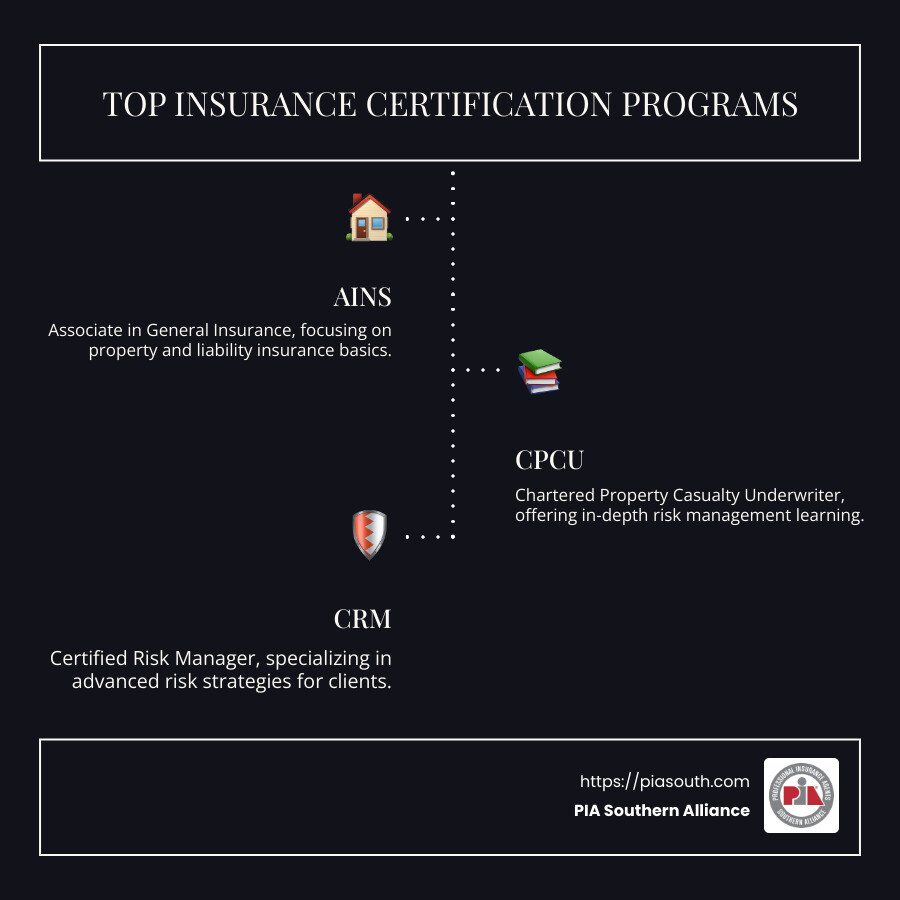
- AINS (Associate in General Insurance)
- CPCU (Chartered Property Casualty Underwriter)
- CRM (Certified Risk Manager)
In a dynamic industry like insurance, staying updated with the latest skills and knowledge is crucial. Being certified in specialized areas not only offers a competitive edge but also builds trust and credibility with clients.
As a passionate supporter of insurance agents, particularly in Georgia, Alabama, and Mississippi, I encourage agency owners to consider these programs. They offer profound insights and improved skills that can improve your agency’s offerings and grow your business effectively.
Insurance certification programs terms made easy:
– certified insurance counselor certification
– cic agency management
– how does an insurance agent get the cic designation
Understanding Insurance Certification Programs
Insurance certification programs are vital for anyone looking to excel in the insurance industry. These programs not only provide a strong foundation in general insurance but also offer professional designations that signify expertise and dedication.
General Insurance
General insurance covers a wide range of policies, from property and casualty to liability insurance. By understanding the basics, you can offer comprehensive solutions to your clients. For example, the AINS (Associate in General Insurance) program provides a solid grounding in these principles, making it an excellent starting point for newcomers.
Professional Designations
Earning a professional designation is like adding a badge of honor to your career. Designations such as CPCU (Chartered Property Casualty Underwriter) demonstrate a deep understanding of the industry. They are recognized as the gold standard, akin to earning a master’s degree in insurance. These credentials help you stand out and can lead to better job opportunities and higher salaries.
Ongoing Training
The insurance industry is constantly evolving, with new regulations and market trends. This makes ongoing training essential. Programs like the CRM (Certified Risk Manager) ensure that you stay current with industry changes. Continuous learning not only improves your skills but also ensures that you provide the best service to your clients.
By investing in these insurance certification programs, you can significantly boost your career, offering better service and gaining the trust of your clients. This commitment to excellence is what sets top professionals apart in the competitive insurance landscape.
Top Insurance Certification Programs
In insurance, certification programs are your ticket to success. They help you gain specialized knowledge and improve your credibility. Let’s explore some of the top programs that can propel your career forward.
AINS: Associate in General Insurance
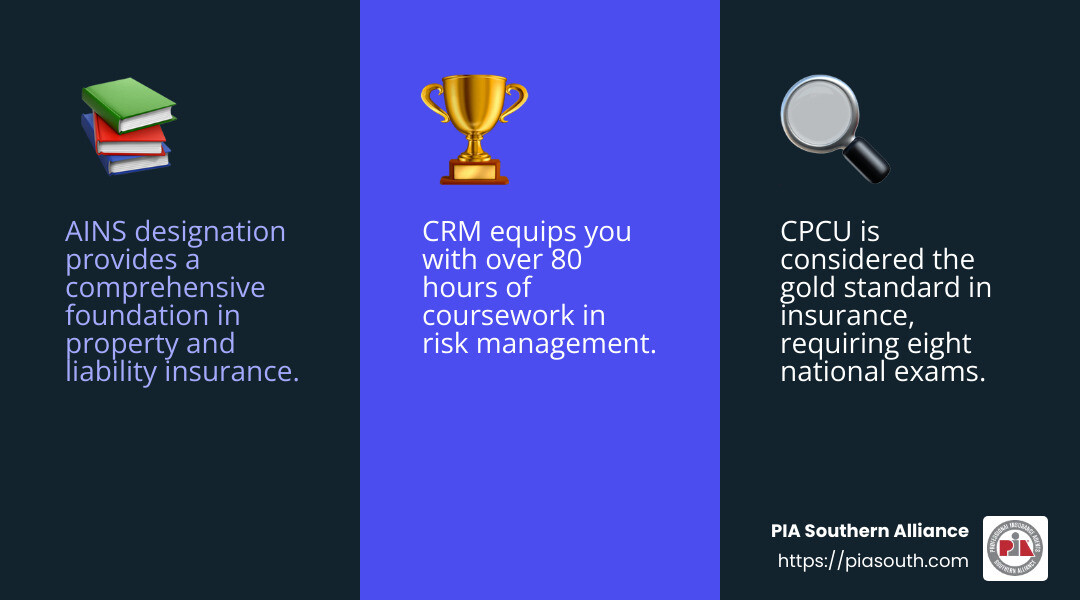
The AINS program is a great starting point for anyone new to the insurance field. Offered by The Institutes, it focuses on general property and liability insurance, providing a comprehensive foundation. You can choose an elective to tailor your learning to your interests. Completing the AINS designation takes about nine to fifteen months, but the knowledge you gain is invaluable.
CPCU: Chartered Property Casualty Underwriter
Considered the gold standard in insurance, the CPCU designation shows your expertise in risk management and property-casualty insurance. This prestigious program involves passing eight national exams and adhering to a Code of Professional Ethics. It usually takes two to three years to complete but is well worth the investment for those looking to advance their careers significantly.
CRM: Certified Risk Manager
For those interested in risk management, the CRM designation is a perfect fit. Offered by The National Alliance, this program covers over 80 hours of coursework. It equips you with the skills to prevent, minimize, and eliminate risks, making you an asset to any organization.
CISR: Certified Insurance Service Representative
The CISR designation is designed for insurance professionals who want to improve their technical knowledge and customer service skills. With nine courses available, you must complete five to earn the designation. This program emphasizes practical applications, making it ideal for those who interact directly with clients.
CWCA: Certified Workers Compensation Advisor
The CWCA program is custom for professionals who specialize in workers’ compensation. This certification ensures you can provide expert advice and solutions for businesses navigating the complexities of workers’ compensation policies.
AAI: Accredited Adviser in Insurance
The AAI designation is perfect for those who want to deepen their understanding of agency operations and sales management. It focuses on the practical aspects of running an insurance agency, making it an excellent choice for aspiring managers and agency owners.
By choosing the right insurance certification program, you can align your learning with your career goals. Whether you’re just starting or looking to specialize, these programs provide the education and recognition you need to succeed in the insurance industry.
Benefits of Certification
Earning an insurance certification is more than just a credential. It’s a powerful tool for career advancement, providing specialized knowledge and enhancing client service. Let’s break down these benefits.
Career Advancement
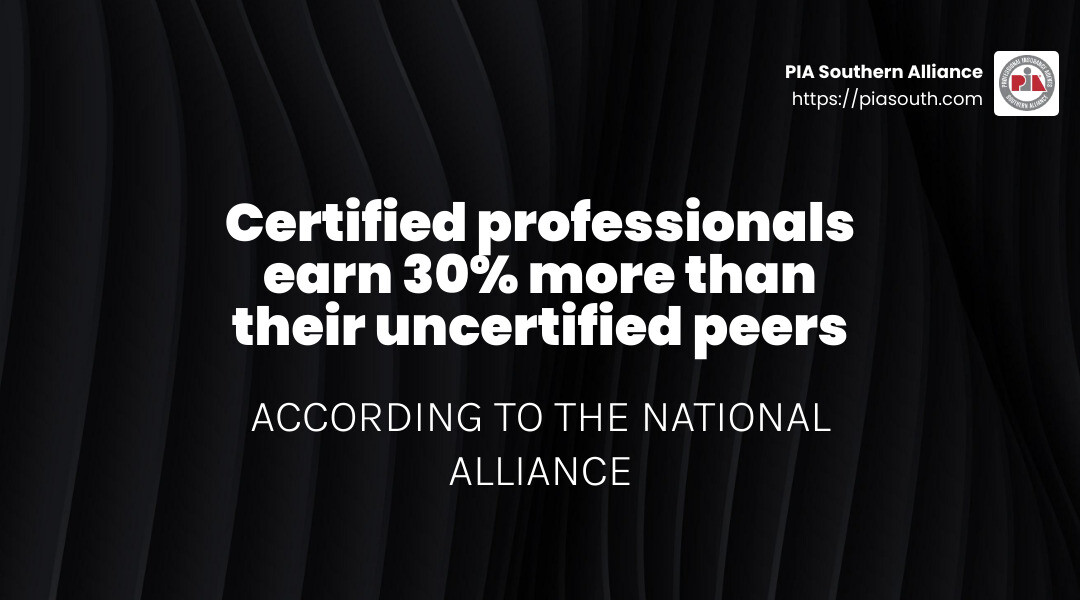
Certifications open doors. They show employers and clients that you’re committed to your profession and willing to go the extra mile. For example, insurance professionals with the CPCU designation often find themselves in leadership roles or receive higher salaries compared to their uncertified peers. This is because certifications demonstrate your expertise and dedication, making you a valuable asset to any team.
Specialized Knowledge
Each certification program offers unique insights into the insurance industry. Whether you choose the AINS for general insurance knowledge or the CRM for risk management expertise, you’ll gain a deeper understanding of complex topics. This specialized knowledge allows you to steer the ever-changing insurance landscape confidently. It equips you to handle challenging situations, make informed decisions, and provide informed advice to your clients.
Improved Client Service
Certifications also improve your ability to serve clients. With the CISR designation, for example, you’ll develop essential skills in account management and customer service. This means you can better understand your clients’ needs, offer custom solutions, and build stronger relationships. When clients see that you’re certified, they trust your expertise and are more likely to rely on your guidance.
By investing in an insurance certification program, you’re not just advancing your career. You’re becoming a trusted advisor who can offer top-notch service and solutions. This not only benefits you but also improves the experience of your clients, leading to long-term success in the insurance field.
How to Choose the Right Program
Selecting the right insurance certification program can set the stage for a successful career in the insurance industry. But how do you decide which program is the best fit for you? Consider these key factors: career goals, time commitment, and professional experience.
Career Goals
Start by aligning the certification with your career aspirations. Are you aiming for a leadership role, or do you want to specialize in a specific area like risk management or property and casualty insurance? For instance, if you’re looking to deepen your expertise in risk management, the CRM designation might be the right choice. On the other hand, if your goal is to gain a broad understanding of insurance principles, the AINS certification could be ideal. Knowing what you want to achieve in your career will help you choose a program that supports those objectives.
Time Commitment
Different programs require varying levels of time commitment. Some certifications, like the CPCU, can take up to two or three years to complete due to the rigorous coursework and exams. Others, like the AINS, might be completed in as little as nine months. Consider how much time you can realistically dedicate to studying while balancing work and personal responsibilities. If you’re in Georgia, Alabama, or Mississippi, factor in any state-specific requirements that might affect your schedule.
Professional Experience
Your current level of experience in the insurance industry can also influence your choice. If you’re new to the field, you might benefit from starting with an entry-level certification like the AINS. However, if you already have some experience, you might opt for more advanced programs like the CPCU or CRM to further specialize your skills. Additionally, think about how a certification can complement your existing expertise and help you grow in your current role.
By carefully considering your career goals, the time you can commit, and your professional background, you can select an insurance certification program that not only fits your current situation but also propels you towards your future aspirations.
Frequently Asked Questions about Insurance Certification Programs
What are the different types of insurance certifications?
Insurance is a vast field, and there are many insurance certification programs designed to help professionals specialize in different areas. Here are some popular ones:
RHU (Registered Health Underwriter): Focuses on health insurance, but it’s important to note that it’s not directly related to property and casualty insurance.
CISR (Certified Insurance Service Representative): Perfect for those looking to improve their skills in client service and technical knowledge, especially in property and casualty insurance.
AIC (Associate in Claims): Ideal for those who want to specialize in claims handling and assessment. It’s a great choice if you’re interested in understanding the claims process in-depth.
CPCU (Chartered Property Casualty Underwriter): Known as one of the most prestigious designations in the industry, it covers risk management and property-casualty insurance extensively.
AIDA (Associate in Insurance Data Analytics): Focuses on data analytics in insurance, which is becoming increasingly important in today’s data-driven world.
These certifications not only improve your knowledge but also make you more valuable to potential employers.
Which insurance license is the best?
The best insurance license really depends on what you want to do in your career. If you’re interested in liability insurance, focusing on programs that specialize in this area might be beneficial. For those in workers compensation or auto liability, certifications like the AIC can be quite useful.
In the states of Georgia, Alabama, and Mississippi, there might be specific licenses that are more in demand depending on the local industry needs. It’s crucial to research which license aligns best with your career goals and the regional market.
How much does it cost to get certified?
The cost of getting certified can vary widely depending on the program and location. Here are some typical expenses you might encounter:
Application Fees: These are standard fees you pay when applying for a certification program. They vary based on the program’s prestige and complexity.
Transaction Charges: Some programs might have additional charges for materials, exams, or other administrative costs.
County-Based Fees: In certain areas, there may be extra fees based on local regulations or requirements, particularly in states like Georgia, Alabama, and Mississippi.
It’s important to budget for these costs and consider them when choosing a certification program. Investing in the right certification can pay off significantly in career advancement and salary potential.
Conclusion
Navigating insurance can be overwhelming, but with the right guidance and resources, success is within reach. That’s where PIA Southern Alliance comes in. Our mission is to empower independent insurance agencies in Georgia, Alabama, and Mississippi with the tools they need to thrive.
Educational resources are at the heart of what we offer. We provide specialized webinars and courses that focus on enhancing strategic decision-making skills. Whether it’s about improving agency profitability through strategic planning or boosting your team’s potential with effective talent acquisition strategies, we are here to guide you every step of the way.
Strategic decision-making is crucial for a successful insurance agency. With a focus on commercial property insurance, we help agents hone their cross-selling abilities and make informed choices that lead to growth. By leveraging our resources, you can tackle the complexities of the insurance landscape with confidence.
Ready to lift your agency’s capabilities? Explore our professional designations and educational programs today and let PIA Southern Alliance be your partner in building a successful agency.