
Why Alabama Insurance Producers Need Modern Best Practices
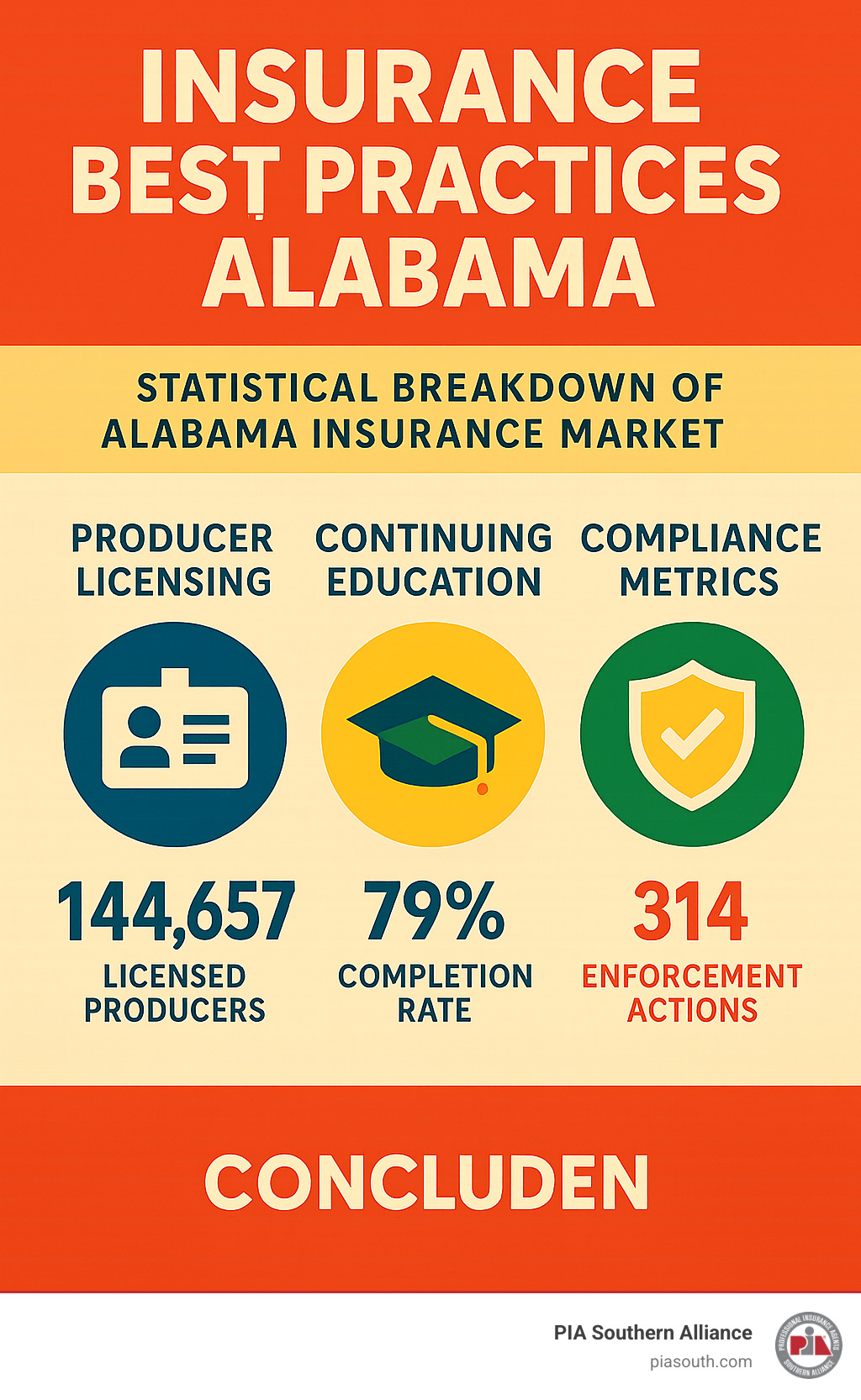
Insurance best practices Alabama are essential for independent agencies navigating the state’s complex regulatory landscape while serving clients in an increasingly challenging market. Alabama insurance producers must maintain licenses, complete 24 hours of continuing education every two years, follow strict claims timelines, and keep detailed records for at least three years.
Key Alabama Insurance Best Practices:
• Licensing: Age 18+, fingerprints, controlled business limits
• Continuing Education: 24 hours every 2 years (including 3 hours ethics)
• Claims Handling: 15-day acknowledgment, 30-day payment deadlines
• Recordkeeping: 3-year retention minimum for all documentation
• Consumer Protection: $10 inducement limit, fair settlement practices
• Speciality Products: 4-hour annuity training for suitability requirements
The Alabama Department of Insurance recovered $8.4 million for consumers in 2025, highlighting the importance of proper compliance and consumer protection. With Alabama’s minimum auto insurance requirements at 25/50/25 and the Insurance Guaranty Association protecting policyholders up to $300,000 in total benefits, understanding state-specific regulations isn’t optional—it’s critical for agency survival and growth.
Why This Matters Now
Alabama’s insurance market faces unique challenges from natural disasters, evolving regulations, and increased consumer expectations. The state’s “file-and-use” policy system means producers can implement forms immediately while maintaining compliance. However, with the Commissioner conducting insurer audits every three years and maintaining broad enforcement powers, agencies can’t afford compliance gaps.
We’ve spent years helping independent agencies across Alabama, Georgia, and Mississippi implement insurance best practices Alabama producers need to thrive in today’s market. Through PIA Southern Alliance, we’ve seen how proper compliance and strategic best practices transform struggling agencies into market leaders.

Licensing & Continuing Education Essentials
Getting your Alabama insurance license is like earning your driver’s license—it’s just the beginning of your journey, not the destination. The state has clear requirements that might seem straightforward, but the details matter more than you’d think.
Starting with the basics: You need to be at least 18 years old to get licensed in Alabama. Unlike some professions that require years of college, insurance welcomes people who are ready to learn and serve their communities. A risk management degree offers the best foundation for insurance work, but it’s not required to get started.
The fingerprint requirement trips up more new agents than any other step. Here’s what actually happens: you pass your exam, feel great, then realize you have exactly 30 days to get those fingerprints submitted through Fieldprint. Miss that window, and your exam results become worthless. We’ve seen too many promising agents have to restart because they thought they had more time.
Citizenship verification is another step that catches people off guard. Have your documentation ready before you start the process. Any delays here can eat into that crucial 30-day fingerprint window.
The controlled business rules exist for good reasons. You can’t write excessive insurance for yourself, family members, or business associates. It’s about maintaining trust and market integrity—two things that keep our industry strong.
More info about Continuing Education for Insurance Agents
Meeting Your First Alabama License Requirements
Think of the licensing process like assembling furniture—everything needs to happen in the right order, or you’ll end up frustrated and starting over. Alabama doesn’t require formal pre-licensing courses for residents, which is both good news and potentially dangerous. You can jump straight to the exam, but preparation is still crucial.
The smart approach starts with scheduling your exam only when you’re truly ready. Once you pass, the clock starts ticking. Get those fingerprints submitted immediately—don’t celebrate for a week first. We recommend calling Fieldprint the same day you pass your exam.
Your license application needs to be complete and accurate. Double-check every field, especially your address and contact information. The Alabama Department of Insurance will use this information for all future correspondence, including renewal notices.
Citizenship documentation must be current and properly formatted. If you’re unsure about your documents, verify them before taking your exam. There’s nothing worse than passing the test only to find your paperwork won’t work.
The fee structure is straightforward, but make sure you have payment ready when you submit your application. Delays in payment can push you past that 30-day fingerprint deadline.
Staying Compliant After You’re Licensed
Getting licensed is like getting married—the real work starts after the ceremony. Alabama requires 24 hours of continuing education every two years, including 3 hours of ethics training. This isn’t busy work; it’s what keeps you sharp and your clients protected.
License renewals happen every two years by your birth month. Mark this date in multiple places because missing it costs you. There’s a $50 late fee if you renew during the 30-day grace period. Let it lapse completely, and you’re back to square one with the entire licensing process.
Quality continuing education makes a real difference in your practice. Look for courses that teach you something useful, not just ones that meet the minimum requirements. The best insurance best practices Alabama agents use CE as a chance to grow their skills and knowledge.
Reporting changes within 30 days isn’t optional. New address? Report it. Name change after marriage? Report it. The Department of Insurance needs current information to communicate with you about renewals, regulatory changes, and other important matters.
Tracking your CE credits throughout the two-year period saves stress and ensures compliance. Don’t be the agent scrambling to complete 24 hours in the final month before renewal. Spread it out, choose quality courses, and use the education to actually improve your practice.
Alabama Insurance Continuing Education
Insurance Best Practices Alabama: Compliance, Recordkeeping & Ethics
Following proper insurance best practices Alabama means mastering the details that separate professional agencies from those struggling with compliance issues. The state doesn’t just require you to get licensed and forget about it—Alabama demands ongoing attention to recordkeeping, ethical standards, and business practices that protect both your clients and your agency’s reputation.
Think of recordkeeping as your professional insurance policy. Alabama requires you to maintain complete and accurate records for a minimum of three years at your place of business. This isn’t just policy documents sitting in a filing cabinet—we’re talking about client files, policy documentation, claims correspondence, and every piece of business-related paperwork that tells the story of your client relationships.
Here’s what makes this requirement serious: the Department of Insurance has the right to inspect these records at any time. They don’t need to give you weeks of notice to get organized. Your records need to be ready for inspection right now, which means proper organization and storage aren’t optional—they’re essential for staying in business.
The $10 inducement limit might seem like small change, but Alabama takes it seriously. You cannot offer or accept inducements over $10 to secure insurance business. This covers everything from expensive meals to gift cards, entertainment tickets, or any other items of value. The rule exists to keep competition fair and ensure clients choose coverage based on quality and service, not because someone bought them a fancy dinner.
Unfair trade practices cast a wide net over prohibited behaviors. Misrepresentation, discrimination, false advertising, and defamation aren’t just legal technicalities—they represent the professional standards that keep our industry trustworthy. When one agent cuts corners or misleads clients, it damages the reputation of every professional producer in Alabama.
| Requirement | Time Period | Key Details |
|---|---|---|
| Producer Licensing | Every 2 years | Renewal by birth month, $50 late fee |
| Continuing Education | 24 hours/2 years | 3 hours ethics required |
| Record Retention | 3 years minimum | All business records, DOI inspection rights |
| Fingerprint Validity | 30 days | Must complete application within window |
Privacy and data security have become increasingly important as agencies digitize their operations. Alabama expects you to protect client information with the same care you’d want for your own personal data. This means secure storage systems, limited access protocols, and proper disposal of sensitive documents when the retention period expires.
Core insurance best practices Alabama for Producers
Understanding Alabama’s “file-and-use” policy system forms the backbone of effective insurance best practices Alabama producers need to master. This system allows you to implement new policy forms immediately upon filing with the Department of Insurance, but don’t mistake speed for a lack of oversight—those forms must still comply with state law and regulations.
Audit readiness should become second nature, not something you panic about when you hear the Department of Insurance is coming. The Commissioner audits insurers every three years and can audit producers whenever necessary. Your records, procedures, and documentation need to be inspection-ready every single day.
Smart agencies conduct internal audits to catch compliance gaps before regulators do. We recommend quarterly reviews of client files, documentation procedures, and staff compliance training. This proactive approach turns potential violations into learning opportunities and process improvements.
Policy form compliance requires constant attention even under the file-and-use system. Just because you can implement forms quickly doesn’t mean you should skip the compliance review. Work closely with your carriers and legal counsel to ensure all forms meet current Alabama requirements. A small oversight in form language can create big problems down the road.
The three-year documentation requirement covers more than just keeping papers in boxes. Every client interaction, policy change, claim discussion, and business decision should be documented in a way that tells a complete story. If something goes wrong three years from now, your documentation needs to explain exactly what happened and why.
Recordkeeping & Reporting: Insurance Best Practices Alabama in Action
Modern insurance best practices Alabama agencies often rely on digital record systems, which offer significant advantages over traditional paper files. However, digital doesn’t mean different rules—your electronic records must meet the same retention and accessibility requirements as physical documents. The Department of Insurance must be able to inspect your records in a reasonable format, whether they’re stored on servers or in filing cabinets.
Claim files deserve special attention because they involve multiple parties, extended timelines, and complex documentation requirements. Every phone call with an adjuster, every email to your client, and every decision made during the claims process should be documented. This protects both your agency and your clients when disputes arise or when someone questions how a claim was handled.
Your recordkeeping system should capture complete client application and underwriting information, including all the details that influenced coverage decisions. Policy delivery documentation and acknowledgments prove your clients received and understood their coverage. All correspondence with clients, carriers, and third parties creates a timeline of your professional relationship.
Claims documentation and communication logs become crucial when disputes arise. Premium payment records and accounting details protect against billing questions and regulatory inquiries. Compliance training records for all staff members demonstrate your commitment to professional standards and ongoing education.
The three-year retention requirement represents a minimum, not a maximum. Many successful agencies keep records longer to support ongoing client relationships and defend against potential claims or regulatory actions. The cost of extra storage space is minimal compared to the protection comprehensive records provide.
Digital logs make searching and organizing records much easier, but they require proper backup systems and security measures. Whether you choose cloud storage, local servers, or hybrid systems, make sure your technology supports the Department of Insurance’s inspection rights and your agency’s long-term needs.
Elevating Agency Performance & Client Service
Top-performing agencies don’t just meet compliance requirements—they exceed client expectations through systematic approaches to service delivery and relationship management. We’ve studied agencies across Alabama, Georgia, and Mississippi to identify the practices that consistently drive growth and client satisfaction.
Workflow automation eliminates routine tasks and reduces errors while freeing staff to focus on high-value client interactions. Modern agency management systems can automate policy renewals, certificate requests, and routine correspondence while maintaining detailed activity logs.
Cross-selling opportunities multiply when agencies understand their clients’ complete risk profiles. Rather than viewing each policy as a separate transaction, successful agencies develop comprehensive risk management relationships that naturally lead to additional coverage needs.
Key Performance Indicators (KPIs) provide objective measures of agency success. Track metrics like client retention rates, average client value, new business conversion rates, and claims satisfaction scores. These numbers tell the story of your agency’s health and growth trajectory.
Client onboarding sets the tone for the entire relationship. Develop standardized processes that ensure new clients understand their coverage, know how to file claims, and feel confident in your agency’s ability to serve their needs.
Insurance Agency Best Practices
Best Practices research on top agencies

Building a High-Performance Culture
Sales training goes beyond product knowledge to include consultative selling skills, risk assessment techniques, and relationship management strategies. The best agencies invest in ongoing training that helps staff become trusted advisors rather than just policy sellers.
Staff continuing education benefits extend beyond individual license requirements. When your entire team understands current market conditions, regulatory changes, and emerging risks, they can better serve clients and identify new opportunities.
Regular team meetings should include compliance updates, market trend discussions, and client service improvements. Create an environment where staff feel comfortable asking questions and sharing insights about client needs and market opportunities.
Recognition programs that celebrate both compliance excellence and sales achievements reinforce the importance of doing things right while growing the business. Balance is key—neither compliance nor sales should dominate at the expense of the other.
Commercial Insurance Sales Training
Data-Driven Growth Strategies
Customer Relationship Management (CRM) systems provide the foundation for data-driven decision making. Track client interactions, policy renewal dates, claims history, and communication preferences to deliver personalized service that builds loyalty.
Retention rate analysis reveals patterns that help predict which clients might be at risk of leaving. Early intervention with at-risk accounts often prevents cancellations and strengthens relationships.
Renewal pipeline management ensures no policies fall through the cracks while identifying opportunities for coverage reviews and updates. Systematic renewal processes reduce errors and improve client satisfaction.
Revenue per client metrics help identify opportunities for account growth and reveal which client segments provide the best long-term value. Focus your marketing and retention efforts on the most profitable relationships.
Insurance Agency Growth Strategies
Fair Claims Settlement & Consumer Protection
When your client files a claim, Alabama’s consumer protection laws kick in to ensure fair treatment and timely resolution. These aren’t just bureaucratic requirements—they’re your roadmap for helping clients steer what’s often the most stressful part of their insurance experience.
Insurance best practices Alabama producers need to understand include the 15-day acknowledgment rule, which requires insurers to acknowledge receipt of claims within 15 days. This timeline starts ticking the moment the insurer receives notice, not when they decide the claim is “complete.” If payment isn’t made within those 15 days, the acknowledgment must be in writing or documented in the claim file.
The 30-day payment or denial deadline is where things get serious. Once an insurer accepts liability and receives all necessary documentation, they have 30 days to either cut a check or formally deny the claim. Extensions are allowed, but they must include specific reasons and revised timelines—no generic “we need more time” letters.
Alabama’s storm claim mediation program offers a lifeline when disaster strikes. This non-binding process helps resolve disputes over hurricane, tornado, and other disaster claims without heading to court. We’ve seen this save clients thousands in legal fees while getting claims resolved faster.
The state takes bad faith seriously, recognizing both traditional bad faith (intentionally refusing to pay without legitimate reason) and “abnormal” bad faith (reckless investigation or manufacturing reasons to deny coverage). Understanding these standards helps you advise clients when something doesn’t smell right.
For auto claims, Alabama’s 75% total loss threshold eliminates guesswork. When damage equals or exceeds 75% of the vehicle’s value, it’s automatically considered a total loss. This bright-line rule prevents disputes over borderline cases.
The Alabama Insurance Guaranty Association protects policyholders with coverage limits up to $300,000 in total benefits when insurers become insolvent. The consumer hotline provides direct access to the Department of Insurance for reporting problems or asking questions about claims handling.

Meeting Alabama’s Claims Deadlines
Documentation becomes your best friend when claims get complicated. Communication logs should capture every phone call, email, and meeting with dates, times, participants, and key discussion points. Think of this as building an unshakeable paper trail that protects both you and your clients.
When insurers need more time, their extension notices must be specific. They can’t just say “we need more time”—they must explain exactly why additional time is needed and provide a realistic timeline for completion. Generic extension letters don’t cut it under Alabama law.
Catastrophe rules provide flexibility after major disasters, but they don’t make deadlines disappear entirely. When the Governor declares a disaster, normal claims procedures may be modified, but insurers still have obligations to communicate clearly with policyholders about any changes.
Advance expense payments can be a lifesaver after disasters. These payments help clients start recovery immediately while final settlements are still being worked out. They’re not final settlements, but they provide crucial assistance for emergency repairs and temporary housing.
Handling Disputes & Complaints
When claims go sideways, mediation offers a structured path forward without the expense and stress of litigation. While the process is non-binding, it often resolves disputes faster and cheaper than court battles. We’ve seen skilled mediators help parties find common ground when emotions are running high.
The Department of Insurance complaint portal gives consumers a direct line to report insurer misconduct or claims handling violations. As an agent, knowing how this process works helps you guide clients when they’re facing legitimate problems with their insurers.
Fraud reporting isn’t just about protecting the insurance system—it’s about protecting honest policyholders from higher premiums caused by fraudulent claims. You have both legal and ethical obligations to report suspected fraud to appropriate authorities.
Consumer education prevents more problems than it solves. Clients who understand the claims process and their rights are more likely to be satisfied with outcomes. Take time to explain how claims work before your clients need to file one—it builds trust and reduces anxiety when claims actually happen.
Suitability, Annuities & Other Specialized Rules
Annuity sales in Alabama require a completely different approach than traditional property and casualty transactions. The state’s suitability regulations create best-interest obligations that transform producers from salespeople into financial advisors for these complex products.
The best-interest standard means you must put your client’s needs ahead of your own compensation or your agency’s interests. This isn’t just good business practice—it’s a legal requirement that carries serious penalties for violations. Unlike selling auto or home insurance where coverage needs are relatively straightforward, annuity recommendations require deep analysis of your client’s complete financial picture.
Before you can even discuss annuities with clients, Alabama requires 4-hour specialized training that covers product types, tax implications, contract features, and suitability requirements. This one-time training isn’t busy work—it’s essential preparation for handling products that can impact a client’s retirement security for decades.
Disclosure forms from the regulation’s appendices aren’t optional paperwork. These forms ensure clients understand exactly how you’re compensated, what conflicts of interest might exist, and what role you’re playing in their financial decisions. The transparency these forms provide protects both you and your clients from misunderstandings that could lead to complaints or legal issues.
Conflict-of-interest management becomes particularly important when annuity commissions vary significantly between products. If one annuity pays you twice as much as another, your client needs to know that before making a decision. This level of transparency might feel uncomfortable initially, but it builds the kind of trust that creates long-term client relationships.

Applying Suitability Principles to P&C Products
The careful analysis required for annuity suitability actually provides a perfect model for insurance best practices Alabama producers should apply to all their sales. While property and casualty transactions don’t carry the same regulatory requirements, adopting similar approaches lifts your professionalism and client outcomes.
Replacement analysis becomes crucial whenever you’re recommending changes to existing coverage. Just like with annuities, you need to evaluate what your client might lose by making a change. Are there surrender charges on their current policy? Will they lose valuable endorsements or coverage features? Sometimes staying put is the best advice, even if it means no commission for you.
Building comprehensive customer profiles helps you understand not just what coverage clients need today, but how their needs might evolve. A young family buying their first home has different long-term needs than empty nesters approaching retirement. Understanding these trajectories helps you provide advice that serves clients’ best interests over time.
Transparent compensation discussions might seem unnecessary for routine property and casualty sales, but they demonstrate professional integrity that sets you apart. When clients understand how you’re paid and what motivates your recommendations, they trust your advice more completely.
The detailed documentation requirements for annuity transactions provide an excellent template for complex property and casualty sales. Maintaining records of client needs assessments, coverage options discussed, and reasons for final recommendations protects you if questions arise later and demonstrates the thoroughness of your professional service.
Frequently Asked Questions about Insurance Best Practices in Alabama
What are the penalties for non-compliance with Alabama insurance laws?
The Alabama Insurance Commissioner wields significant enforcement powers that can dramatically impact your career and agency operations. Insurance best practices Alabama producers follow aren’t just suggestions—they’re requirements backed by real consequences.
For minor violations, you might receive a warning or small fine. But don’t let that fool you into thinking compliance is optional. The Commissioner can impose license suspension or revocation, issue cease and desist orders, levy substantial fines, and order formal hearings that can drag on for months.
Serious violations like fraud or misrepresentation can end your insurance career permanently. We’ve seen producers lose their licenses and face criminal charges for violations they thought were “no big deal.” The Commissioner also has authority to order restitution to affected consumers, which can cost thousands of dollars beyond any fines.
Repeat violations face escalating penalties. The Commissioner maintains detailed records of all enforcement actions, and a pattern of violations can result in permanent license revocation and industry prohibition. Civil penalties for corporate violations can reach significant amounts, and individual producers face personal liability for their actions.
The best protection is prevention through proper compliance procedures and ongoing training. It’s much easier to follow the rules than to explain to the Commissioner why you didn’t.
How long must producers keep client records and why?
Alabama requires producers to maintain complete and accurate records for a minimum of three years at their place of business. This includes all client files, policy documentation, claims correspondence, and business records. Notice we said minimum—many successful agencies keep records much longer.
The three-year rule covers everything related to your insurance business. Client applications, policy delivery receipts, premium payment records, claims files, and all correspondence with clients, carriers, and third parties must be readily available for inspection.
The Department of Insurance has the right to inspect these records at any time. There’s no advance notice requirement, so your records need to be organized and accessible every day. We recommend digital storage systems with proper backup and security measures, but paper files work fine as long as they’re properly organized.
Many agencies keep records for five to seven years because client relationships often span decades. You never know when you’ll need to reference an old claim or policy change to help a long-term client. Plus, some legal claims can arise years after the original transaction, and having complete records protects both you and your clients.
When should an agency file forms or rates with the Department of Insurance?
Here’s where Alabama’s “file-and-use” system creates some confusion. Most agencies don’t file forms or rates directly—this responsibility typically falls on insurance carriers. However, understanding the process helps you ensure you’re using properly filed and compliant forms.
Insurance carriers can implement new policy forms immediately upon filing with the Department of Insurance. They don’t need to wait for approval, but the forms must still comply with all applicable state laws and regulations. If the Department later determines a form violates state law, the carrier must stop using it immediately.
Rate filings follow similar procedures but may require additional documentation, especially for significant increases. The Department scrutinizes rate changes more closely than form modifications because they directly impact consumer costs.
Your role is ensuring you only use properly filed forms. Work with your carriers’ underwriting departments to verify that any forms you’re using have been properly filed. When in doubt, ask for written confirmation that forms comply with Alabama requirements.
Using non-compliant forms can create coverage disputes and expose you to regulatory violations. It’s not worth the risk when a simple question to your carrier can provide the assurance you need.
Conclusion
Mastering insurance best practices Alabama isn’t just about checking compliance boxes—it’s about building the kind of agency that clients trust, regulators respect, and competitors admire. After working with hundreds of independent agencies across Alabama, Georgia, and Mississippi, we’ve seen how the right practices transform struggling agencies into market leaders.
The regulatory framework we’ve covered might seem overwhelming at first. Twenty-four hours of continuing education every two years, three-year record retention, 15-day claim acknowledgments, and $10 inducement limits all matter. But these requirements exist for good reasons—they protect consumers and create a level playing field where professional agencies can thrive.
Real success comes from going beyond minimum requirements. The agencies that excel don’t just meet the 24-hour CE requirement; they invest in training that genuinely improves their team’s skills. They don’t just keep records for three years; they organize them so well that any audit becomes a non-event. They don’t just acknowledge claims in 15 days; they use that time to set proper expectations and demonstrate their value to clients.
Alabama’s insurance landscape continues evolving with new technologies, changing weather patterns, and shifting consumer expectations. The state’s resilience initiatives, including programs focused on strengthening homes and reducing disaster risks, create opportunities for forward-thinking agencies to better serve their communities while growing their businesses.
We at PIA Southern Alliance understand these challenges because we live them alongside you. Our educational resources, development programs, and advocacy efforts focus on practical solutions that work in the real world. We’ve seen agencies transform their operations by implementing systematic approaches to compliance, client service, and business growth.
Your next steps matter more than perfect knowledge of every regulation. Start by reviewing your current compliance procedures against the standards we’ve outlined. Are your CE credits on track? Do your recordkeeping systems meet the three-year requirement? Can your team explain claim timelines to anxious clients?
Then look at your client service standards. Are you using modern workflow systems to eliminate routine errors? Do you have systematic approaches to cross-selling that feel natural rather than pushy? Are you tracking the metrics that actually predict business success?
The Alabama Department of Insurance’s recovery of $8.4 million for consumers in 2025 proves that proper oversight benefits everyone. When agencies operate professionally and insurers handle claims fairly, the entire system works better. Your commitment to insurance best practices Alabama contributes to this positive outcome while building a stronger foundation for your own success.
Compliance is your foundation, but excellence in client relationships is what builds lasting prosperity. The agencies that thrive understand this balance and use regulatory requirements as springboards for even better service.