
Why Understanding Insurance Agent Salary Matters More Than Ever
Insurance agent salary figures can feel like a moving target—one day you’re reading about $50K averages, the next you’re seeing six-figure success stories. Here’s what you actually need to know:
Quick Insurance Agent Salary Facts:
– Median annual wage: $60,370 (2024)
– Mean salary: $79,650
– Entry-level range: $31,530 – $38,065
– Top 10% earn: Over $135,660
– Property & casualty focus: Often higher earning potential than life/health only
The truth? Your insurance agent salary depends on way more than just showing up and selling policies. Whether you’re running an independent agency in Georgia, Alabama, or Mississippi, or you’re a captive agent grinding it out in commercial lines, understanding the real money flows can make or break your financial future.
“Your income in insurance sales is all about your performance. The better you sell, the more you earn,” but that’s only part of the story. Commission structures, renewal income, and regional factors all play huge roles in what actually hits your bank account.
As someone who has spent years working with independent agencies across Georgia, Alabama, and Mississippi, I’ve seen how insurance agent salary expectations often clash with reality—and how the right strategies can bridge that gap. My experience with PIA Southern Alliance has shown me exactly what separates struggling agents from those building real wealth in property and casualty insurance.
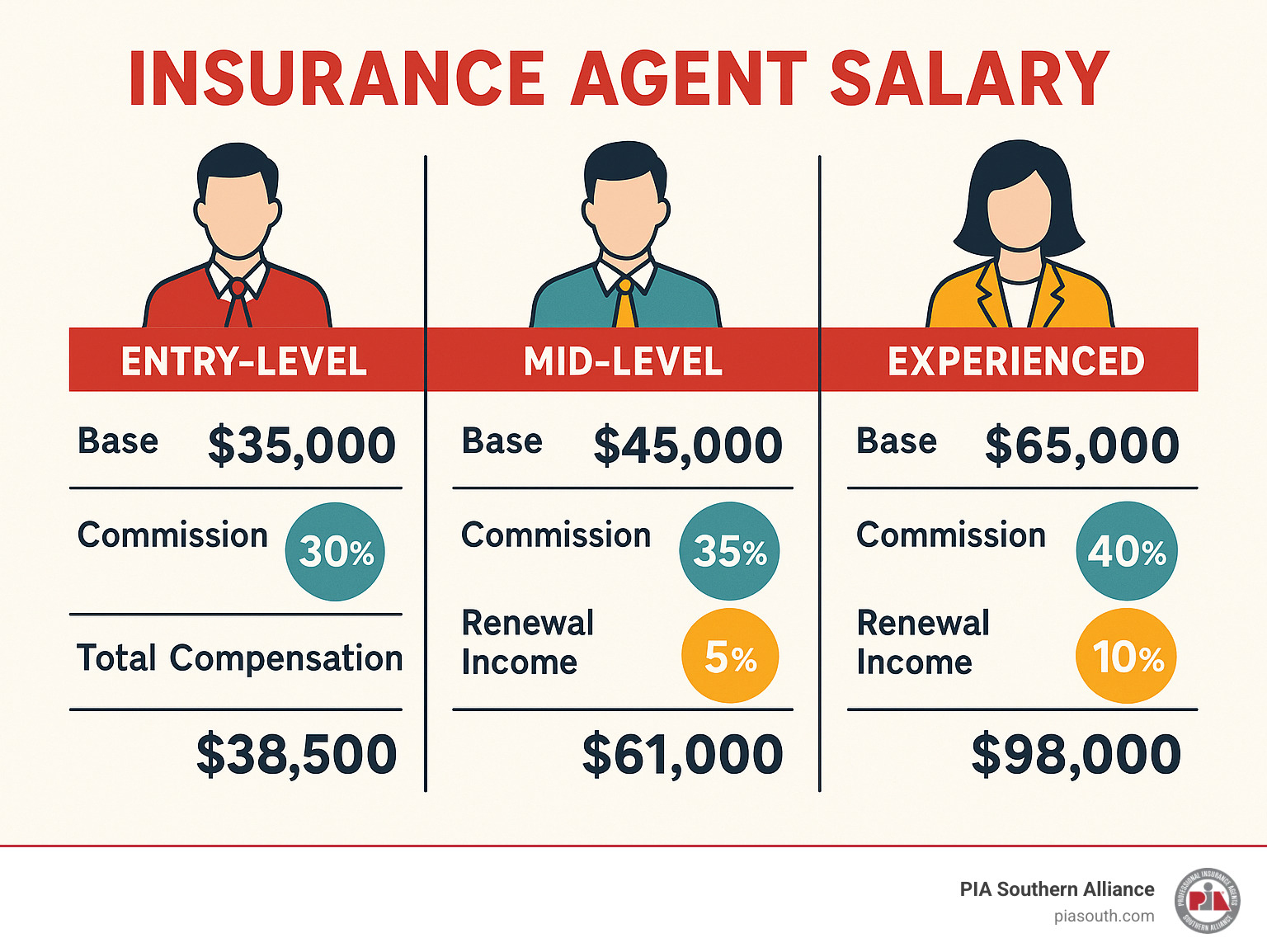
Insurance Agent Salary 2025 Snapshot
Let’s talk real numbers without the fluff. The Bureau of Labor Statistics shows the median insurance agent salary hit $60,370 in May 2024, but here’s where things get interesting—the mean salary jumps to $79,650. That $19,000 gap? It tells us there’s serious money waiting for agents who figure out the game.
Here’s what the salary ladder actually looks like:
The bottom 10% of agents earn around $31,530 (hey, we all start somewhere), while the 25th percentile sits at $43,440. The median insurance agent salary of $60,370 represents that middle ground, but climb to the 75th percentile and you’re looking at $83,420. The top 10%? They’re pulling in over $130,350 annually.
Now, when we zero in on property and casualty agents specifically, the numbers shift in your favor. P&C agents often outpace their life and health counterparts, especially those handling commercial lines or specialty coverage. Think coastal homeowners insurance here in Georgia, Alabama, and Mississippi—where hurricane risks drive both premium volumes and commission opportunities.
The commission structure tells its own story. Captive agents typically earn 5-10% on new policies, while independent agents average around 15%. But here’s the real wealth builder: renewal commissions that keep paying at 2-5% rates year after year. It’s like planting financial seeds that keep growing.
Why “Insurance Agent Salary” Headlines Keep Changing
Ever wonder why insurance agent salary articles seem to contradict each other? One day you’re reading about $46K averages, the next you’re seeing $79K means, and your neighbor swears their cousin makes $150K selling insurance. There’s actually good reason for this confusion.
Inflation keeps moving the goalposts. What $50K bought in 2020 versus today is dramatically different. The BLS updates their data annually, but market conditions change faster than government statistics can track them.
Commission swings create wild variations. Unlike your typical 9-to-5 salary, agent income rides a roller coaster based on market conditions, disaster years (hello, hurricane seasons!), and economic cycles. A fantastic year can skew averages upward, while a tough year brings them crashing down.
Regional differences matter more than you’d think. An agent in Atlanta might earn 40% more than one in rural Alabama, simply due to cost of living and market density differences. The latest BLS data tool shows these variations clearly when you dig into state-specific numbers for Georgia, Alabama, and Mississippi.
The bottom line? Those changing headlines reflect a changing industry where your insurance agent salary depends far more on your strategy, location, and specialization than on any single national average.
How Do Insurance Agents Make Money?

Here’s something most insurance agent salary articles won’t tell you: we don’t just have one paycheck. Think of your income like a river with multiple streams flowing into it. The more streams you build, the stronger your financial flow becomes.
Base salary forms the foundation for many agents, especially those starting out. Captive agents often receive anywhere from $35,000 to $50,000 annually as guaranteed income. It’s not going to make you rich, but it keeps the lights on while you’re building your client base.
New business commission is where things get exciting. Every time you write a policy, you earn a percentage of that premium. Picture this: you write a $3,000 annual commercial auto policy and earn 15% commission—that’s $450 in your pocket right away. Write enough of these, and you’re looking at some serious money.
But here’s the real magic: renewal commission. That same $3,000 policy keeps paying you year after year as long as the client stays with you. Usually around 2-5% annually, these renewals become your financial safety net. After five years of consistent writing, many agents find their renewal income alone covers their basic living expenses.
Bonuses and profit sharing add the cherry on top. Hit your production goals, maintain good loss ratios, or help your agency reach certain milestones, and you’ll often see extra money flow your way. Some agencies in Georgia, Alabama, and Mississippi tie bonuses directly to cross-selling success—exactly the kind of skill development PIA Southern Alliance focuses on.
“Insurance Agent Salary” vs. Commission-Only Reality
When people Google “insurance agent salary,” they’re usually thinking about traditional employee paychecks. But here’s the thing—most successful property and casualty agents operate more like small business owners than typical employees.
Salary plus commission arrangements give you the best of both worlds. You might start with a $40,000 base salary plus 5% commission on new business and 2% on renewals. It’s a safety net that lets you take calculated risks while building your book.
Residual income changes everything once it kicks in. Those renewal commissions start small, but they compound year after year. Agents who’ve been writing quality business for a decade often have renewal income that covers their mortgage, car payments, and more—before they even write a single new policy that year.
Profit sharing programs recognize that your success and your agency’s success are tied together. When the agency does well, you do well. It’s a partnership approach that many independent agencies in the Southeast accept.
Captive vs. Independent: Pay & Perks
The choice between captive and independent affects every dollar you earn. Captive agents typically earn 5-10% commission but enjoy the comfort of benefits, marketing support, and that crucial base salary. You’re trading some earning potential for security and structure.
Independent agents usually earn around 15% commission but carry more responsibility. You’re essentially running your own business, which means higher earning potential but also higher risk. You’ll pay for your own health insurance, handle your own marketing costs, and manage multiple carrier relationships.
Pros of going captive: Steady base salary, health benefits, established brand recognition, marketing materials provided, and clear territory assignments.
Cons of going captive: Lower commission rates, limited product options, less pricing flexibility, and corporate oversight on most decisions.
Pros of going independent: Higher commission rates, multiple carrier relationships, complete pricing flexibility, true business ownership, and unlimited growth potential.
Cons of going independent: No base salary, pay your own benefits, handle all marketing costs, and manage complex carrier relationships.
Both paths can lead to six-figure incomes, but independent agents typically have higher long-term earning potential if they can steer the startup challenges successfully.
What Shapes Your Paycheck in GA, AL & MS?
Working across Georgia, Alabama, and Mississippi gives us unique insights into regional insurance agent salary factors. Our local economy, disaster risk profile, and regulatory environment all impact earning potential.
Local Economic Factors: Atlanta’s booming commercial market supports higher commercial lines commissions than rural areas. But don’t overlook smaller markets—less competition can mean better client relationships and higher retention rates.
Disaster Risk Premium: Hurricane and tornado exposure drives higher property premiums across our region. More premium = more commission. Coastal agents in Georgia and Alabama often out-earn their inland counterparts simply due to higher risk-adjusted pricing.
Product Mix Matters: Property and casualty agents focusing on commercial lines typically earn more than personal lines specialists. A single commercial account can generate more commission than 20 personal auto policies.
Licensing Requirements: Georgia, Alabama, and Mississippi each have specific continuing education requirements that impact your ability to earn. Stay current or risk losing your income stream entirely.
High-Earning Lines Inside Property & Casualty
Not all property and casualty business pays equally. Here’s where the smart money focuses in our region:
Commercial Auto: Fleet accounts and transportation companies pay premium rates. One trucking company account can generate $5K+ annual commission.
Specialty Liability: Professional liability, cyber coverage, and directors & officers insurance command higher commission rates due to complexity and risk.
Coastal Homeowners: Wind and hail coverage along Georgia and Alabama coastlines carries premium pricing that translates to premium commissions.
Experience, Education & Designations

Risk Management Degree: While not required, a risk management degree provides the best foundation for understanding property and casualty insurance complexities. It’s the most closely aligned educational path for serious agents.
Continuing Education: Georgia, Alabama, and Mississippi all require ongoing CE hours. Smart agents use this as a growth opportunity, not just a compliance checkbox.
Professional Designations: Certifications like CIC (Certified Insurance Counselor) can boost your insurance agent salary by 15-25% by demonstrating expertise to clients and carriers. More info about CIC Insurance Designation Salary
The data shows agents with professional designations consistently out-earn their non-certified peers. It’s not just about the knowledge—it’s about the credibility and confidence that comes with expertise.
Boosting Your Insurance Agent Salary Without Losing Your Sanity

Let’s be real—you didn’t get into insurance to work 80-hour weeks for peanuts. After years of working with agents across Georgia, Alabama, and Mississippi, we’ve seen what actually moves the needle on your insurance agent salary without turning you into a stressed-out zombie.
The secret isn’t working harder; it’s working smarter. Strategic networking is where most successful agents start. Join your local chamber of commerce, attend business after-hours events, and actually participate instead of just showing up. One solid referral source can easily add $10,000+ to your annual income. Think about it—one contractor who refers you three commercial accounts beats cold-calling for weeks.
Cross-selling mastery is your hidden goldmine. That personal lines client who trusts you with their home and auto? They probably own a small business that needs commercial coverage. Adding commercial lines to an existing relationship can triple your commission from that client. Plus, commercial clients stick around longer and refer more business.
Here’s where technology actually helps instead of complicating your life. CRM systems and automated follow-up tools let you handle more business without living at the office. Set up automated birthday emails, policy renewal reminders, and check-in sequences. Your clients feel cared for, and you’re not manually tracking hundreds of details.
Social media presence matters more than you think, especially in our relationship-driven Southern markets. Join local Facebook groups, share helpful insurance tips on LinkedIn, and post educational content. When someone needs insurance, you want to be the first name that comes to mind. It’s not about being salesy—it’s about being helpful and visible.
Goal setting might sound boring, but here’s the truth: top-earning agents track everything obsessively. Know your closing ratios, average commission per policy, and renewal rates. If you don’t know these numbers, you’re flying blind. You can’t improve what you don’t measure.
Proven Growth Moves for Southern Agents
Referral programs work brilliantly when done right. Offer existing clients something meaningful for referrals—maybe a $50 gift card or a discount on their next renewal. When that referral generates a $2,000 annual commission, that $50 investment looks pretty smart.
Community events are pure gold in Georgia, Alabama, and Mississippi. Sponsor the local little league team, participate in chamber mixers, and host educational seminars at the library. Southerners do business with people they know and trust. The more visible you are in positive ways, the more business flows your way.
Disaster preparedness workshops position you as the expert when it matters most. Host seminars on hurricane preparation, tornado safety, or flood protection. When disaster strikes (and it will in our region), you’re the first person they call. More info about Insurance Agency Growth Strategies
Education Pays—Literally
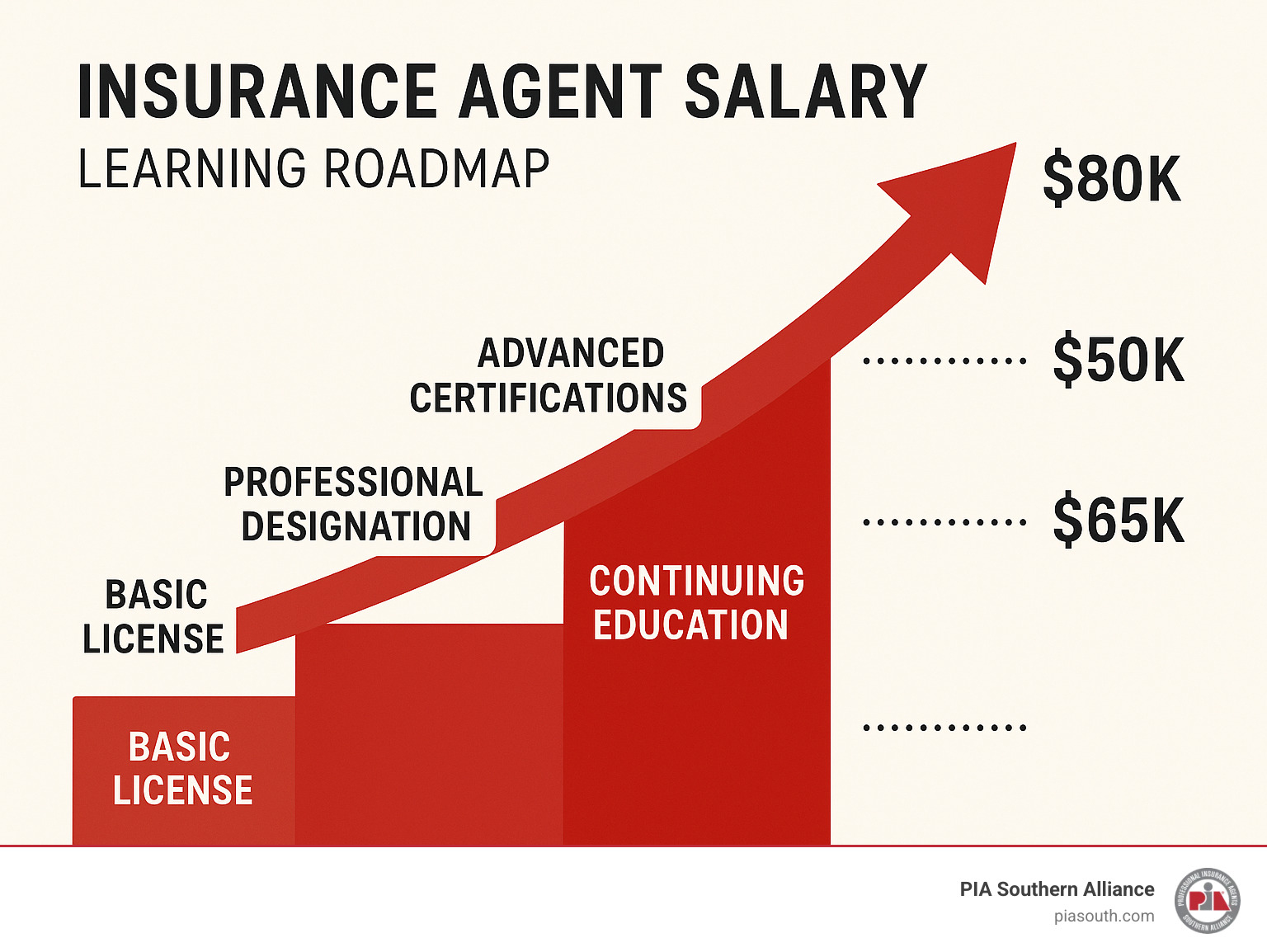
Here’s something that might surprise you: continuous learning isn’t just feel-good advice—it directly impacts your insurance agent salary. Agents who invest in education consistently out-earn those who coast on basic licensing knowledge.
Webinars and online training offer the biggest bang for your buck. They’re convenient, focused, and usually cost-effective. PIA Southern Alliance offers specialized training that directly applies to our regional market conditions and opportunities. Instead of generic national training, you get insights that actually work in Georgia, Alabama, and Mississippi.
Industry certifications might require some upfront investment, but each designation you earn typically correlates with 10-20% higher earnings. The math is simple—if a certification costs $1,500 but increases your annual income by $8,000, that’s a no-brainer investment that pays for itself quickly.
Specialized knowledge sets you apart from every other agent in town. Become the go-to expert in cyber liability for small businesses, flood insurance for coastal properties, or commercial transportation coverage. When you’re the specialist, you can command premium pricing and attract better clients. More info about insurance certification programs
The bottom line? Growing your income doesn’t require sacrificing your sanity or your family time. It requires being strategic, staying educated, and building genuine relationships in your community. The agents who figure this out early are the ones still thriving after 20 years in the business.
Frequently Asked Questions About “Insurance Agent Salary”
How much can a rookie expect in year one?
Let’s be real here—your first year as an insurance agent is going to test your patience and your bank account. Most entry-level agents earn between $31,131-$38,065 annually, but here’s the thing: that number includes all the folks who threw in the towel after six months when they realized selling insurance isn’t as easy as it looks on TV.
If you stick with it and get proper training, you’re looking at hitting $40K-$50K by year’s end. The agents who make it past that crucial first year tell us the same thing—months 1-7 were rough, but something clicked around month 8, and suddenly the pieces started falling into place.
Our advice? Have at least six months of living expenses saved up before you start. This business rewards persistence, but it doesn’t pay the bills while you’re learning the ropes. The insurance agent salary you earn in year two will make those lean early months worth it.
Does selling more policies always mean higher income?
This might surprise you, but absolutely not—and understanding this difference separates successful agents from those spinning their wheels. You could write 100 personal auto policies and still earn less than your colleague who placed 10 solid commercial accounts.
Here’s the math that’ll change how you think about your insurance agent salary: One commercial account with a $10,000 annual premium at 15% commission nets you $1,500. Compare that to 20 personal auto policies averaging $800 premium each at 8% commission—you’re looking at only $1,280 total, and you’ve done twice the work.
The smartest property and casualty agents we work with track their commission per hour, not just total policies written. Focus on building relationships with business owners who need commercial coverage, and watch your income grow without working yourself to death.
Which P&C niche pays the most in the Southeast?
After years of working with independent agencies across Georgia, Alabama, and Mississippi, we’ve seen which specialties consistently generate the highest insurance agent salary numbers.
Commercial transportation leads the pack—trucking companies, logistics firms, and fleet accounts pay premium rates because of the complexity and risk involved. One transportation client can generate more annual commission than 50 personal lines customers.
Coastal property coverage is huge money in our region, especially along Georgia and Alabama coastlines where wind and hail coverage commands premium pricing. Professional liability for healthcare, legal, and technology sectors also pays well, particularly around Atlanta’s growing tech scene.
Specialty liability lines like cyber coverage, employment practices liability, and directors & officers insurance are growing fast. These policies require expertise to sell properly, which means higher commission rates and less competition.
The highest earners don’t pick just one niche—they become known for two or three specialties and cross-sell between them. A business owner who trusts you with their commercial property is much more likely to buy their cyber coverage from you too.
Conclusion
Here’s the truth about insurance agent salary potential in Georgia, Alabama, and Mississippi: you’re not stuck with whatever number you saw in that Bureau of Labor Statistics report. The agents earning $135K+ didn’t get there by accident—they figured out how the money really works and positioned themselves to capture it.
The beauty of commission-based income is that it grows with your expertise and effort. While your friends in corporate jobs celebrate their annual 3% raises, smart property and casualty agents can double their income in a single breakthrough year. We’ve seen it happen countless times across our region.
Your geographic advantage is real. The Southeast offers unique opportunities that many agents don’t fully leverage. Atlanta’s booming commercial market, coastal property needs along Georgia and Alabama shores, and the growing logistics industry throughout our region create multiple paths to six-figure earnings.
But let’s be honest—none of this happens by just showing up and hoping for the best. The agents who build real wealth in property and casualty insurance invest in continuous learning, build strategic relationships, and develop deep market knowledge. They understand that every professional designation, every networking event, and every educational opportunity compounds their earning potential.
That’s exactly why PIA Southern Alliance exists. We’ve built our programs specifically for independent agents who want to maximize these regional opportunities. Our educational resources, development programs, and specialized training help agents improve their cross-selling abilities and make smarter strategic decisions. More info about insurance certification programs
Your insurance agent salary journey isn’t just about understanding today’s market—it’s about positioning yourself for tomorrow’s opportunities. The property and casualty landscape keeps evolving, with new risks like cyber liability and climate-related exposures creating fresh revenue streams for prepared agents.
The opportunity is sitting right there in front of you. The question isn’t whether you can build a substantial income in insurance—it’s whether you’re ready to invest in the knowledge and relationships that make it happen. Your future self will thank you for starting today.