
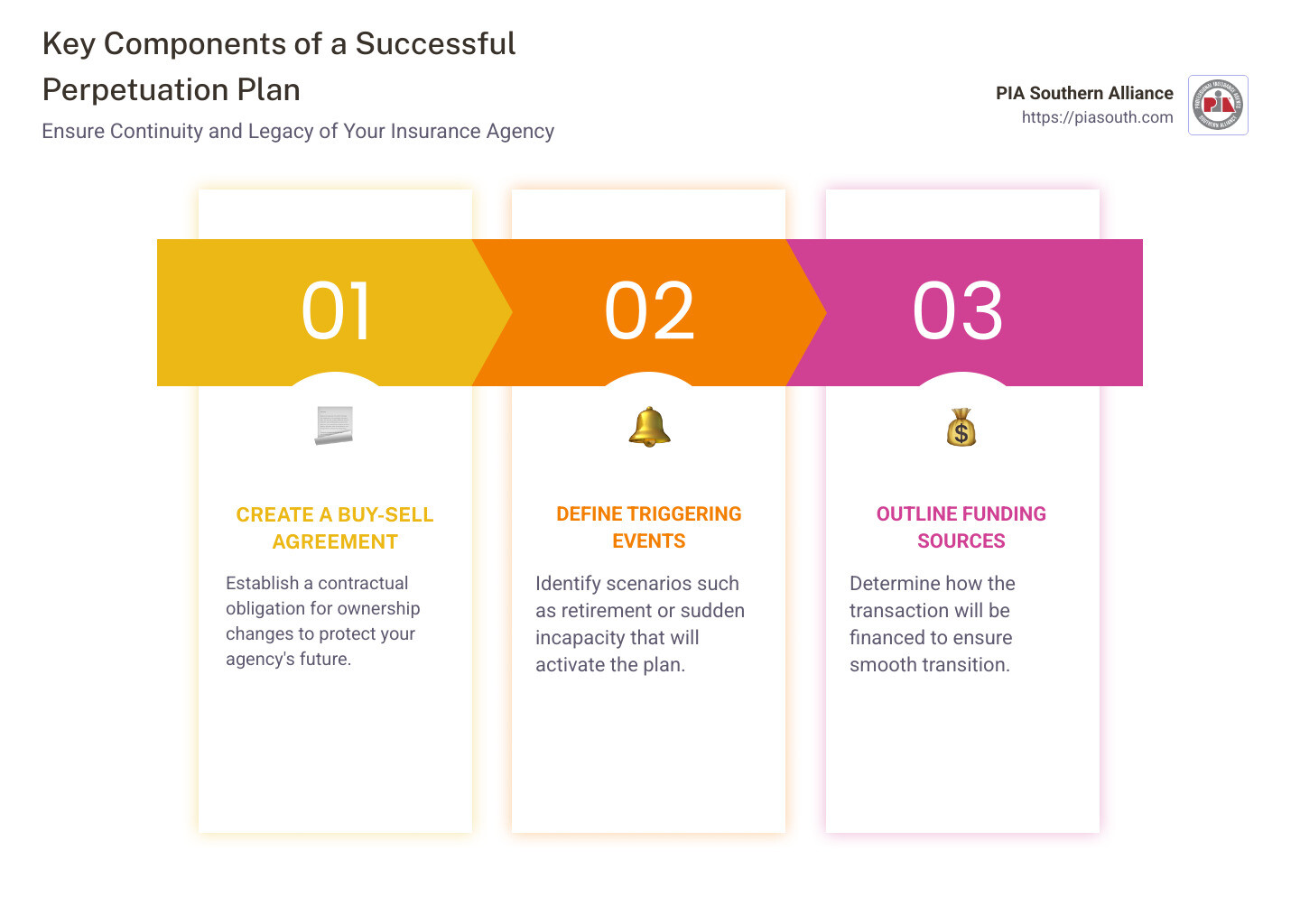
An insurance agency perpetuation plan is a strategic roadmap to ensure that your agency thrives, even in the face of unexpected events. Whether you’re preparing for retirement or planning for unforeseen circumstances, a perpetuation plan is vital for maintaining business continuity. It involves:
- Creating a buy-sell agreement to manage ownership changes.
- Defining triggering events that activate the plan.
- Outlining funding sources for the transaction.
Perpetuation planning is essential for every stage of the agency lifecycle. It safeguards your clients, secures your family’s financial future, and protects your agency’s legacy.
As a representative of the PIA Southern Alliance, I bring years of experience in promoting the growth and protection of independent insurance agencies. Let’s explore how a well-crafted insurance agency perpetuation plan can secure the future of your agency while ensuring that your clients in Georgia, Alabama, and Mississippi continue to receive outstanding service.
Understanding Insurance Agency Perpetuation Plans
Creating a perpetuation plan is like building a roadmap for your agency’s future. It’s about ensuring a smooth transition when ownership changes hands. Whether you’re considering retirement or planning for unexpected events, having a plan in place is crucial. Let’s break down the key components that make up an effective insurance agency perpetuation plan.
Key Components of a Perpetuation Plan
1. Contingency Buy-Sell Agreement
Think of a contingency buy-sell agreement as your agency’s safety net. It’s a legal document that outlines how ownership will be transferred if a triggering event occurs. This could be anything from the owner deciding to retire to an unexpected death. Having this agreement in place ensures that there is a clear plan for succession.
2. Triggering Events
Triggering events are the specific circumstances that activate your perpetuation plan. These events can include retirement, death, disability, or even a decision to leave the business. By clearly defining these events, you set the stage for a seamless transition of ownership.
3. Funding Sources
Funding is a critical part of the perpetuation process. You need to determine where the money will come from to facilitate the ownership transfer. Common funding sources include life insurance policies, personal savings, or financing arrangements. Ensuring that funds are available when needed can prevent financial strain on the agency.
4. Roadmap to Succession
A well-defined roadmap is essential for a smooth succession. This involves identifying potential successors, whether they are family members, current employees, or external buyers. The roadmap should also include timelines and steps for transitioning responsibilities and leadership roles.
5. Transition of Ownership
The transition of ownership is the final step in the perpetuation plan. It’s about transferring control of the agency while maintaining business continuity. This process should be gradual and well-structured to ensure that clients continue to receive excellent service without disruption.
By incorporating these key components into your insurance agency perpetuation plan, you’re not just planning for the future—you’re securing it. This proactive approach can help protect your clients, preserve your agency’s legacy, and ensure financial stability for your family.
As we dig deeper into the topic, we’ll explore the differences between internal and external perpetuation methods.
Internal vs. External Perpetuation
When planning for the future of your insurance agency, you’ll need to decide between internal and external perpetuation strategies. Each has its own set of challenges and benefits, so understanding these options is crucial for making the right choice for your agency’s future.
Internal Perpetuation Challenges
Internal perpetuation often involves passing the agency to a family member or trusted employee. This approach can seem ideal but comes with its own problems.
Family Succession: While passing the agency to a family member might seem straightforward, it’s not always smooth sailing. Do they have the passion and skill for the business? According to Family Business Magazine, only 13% of family businesses make it through three generations.
Financial Obstacles: Many internal perpetuation plans fall apart due to financial issues. Your successor might not have the funds to buy you out. Consider creative solutions, like a payment plan that functions like a pension. However, this can be risky, as your retirement depends on their ability to manage the agency successfully.
Mentorship: Before stepping down, it’s crucial to mentor your successor. This helps ensure they are ready to take over and can maintain the agency’s success.
Selling Your Book of Business
If internal perpetuation isn’t feasible, you might opt to sell your book of business to an external party.
Valuation: The first step in selling is determining the value of your book of business. This involves a detailed analysis of your agency’s financial health and potential for future earnings.
Findy Call: The process typically begins with a findy call with potential buyers. This is where you gauge interest and discuss preliminary terms.
Official Agreement: Once a buyer is interested, you’ll move to formalize the deal with an official agreement. This includes detailed terms of the sale and ensures both parties are clear on the transition process.
For those not ready to fully exit, a hybrid model might be the answer. This involves partnering with another agency, allowing you to gradually phase out while still being involved. You receive a large upfront payment and continue to earn income until the full transition is complete.
Choosing between internal and external perpetuation requires careful consideration of your agency’s unique circumstances, financial health, and long-term goals.
Next, we’ll discuss why early planning is essential to protect your agency’s value and client relationships.
The Importance of Early Planning
Planning for the future of your insurance agency isn’t just a good idea—it’s essential. Early planning ensures that your agency can thrive even when faced with unexpected challenges. Let’s explore why starting early is crucial for client care, maintaining agency value, and preparing for unforeseen circumstances.
Client Care
Your clients trust you to be there when they need help. But what happens if you’re suddenly unable to run your agency? Without a well-thought-out insurance agency perpetuation plan, your clients might be left without the support they need. This is why have a transition strategy in place long before you plan to step down.
Continuity of Service: By planning early, you ensure that your clients continue to receive the high-quality service they expect. Whether you’re passing the agency to a family member or selling it, a clear plan keeps the client experience seamless.
Client Trust: Knowing that you’ve planned for the future can boost client confidence in your agency. It shows that you prioritize their needs and have taken steps to secure their future with your agency.
Agency Value
Your agency is more than just a business—it’s a valuable asset. When you plan ahead, you protect and even improve its value.
- Maximizing Value: Without a perpetuation plan, agencies often sell at a discount during a crisis. Planning early allows you to maximize your agency’s worth by preparing for a smooth transition. You can negotiate better terms and ensure a fair price for your life’s work.

- Attracting Buyers: If selling is your plan, a well-documented perpetuation strategy makes your agency more attractive to potential buyers. It shows that your agency is organized and ready for a change in leadership.
Unforeseen Circumstances
Life is unpredictable. Health issues, family emergencies, or sudden changes in the market can force you to step down sooner than expected. Having a perpetuation plan means you’re ready for anything.
Peace of Mind: Knowing that you have a plan in place can reduce stress and provide peace of mind, not just for you, but for your family and employees as well.
Flexibility: A perpetuation plan gives you the flexibility to adapt to life’s changes. Whether it’s a sudden decision to retire or an unexpected health issue, you’re prepared.
In summary, early planning is about more than just preparing for retirement—it’s about ensuring your agency’s continued success, protecting your clients, and safeguarding your legacy.
Next, we’ll dive into some frequently asked questions about insurance agency perpetuation plans to further clarify this essential topic.
Frequently Asked Questions about Insurance Agency Perpetuation Plans
What is an agency perpetuation plan?
An insurance agency perpetuation plan is a roadmap that ensures the smooth transition of your agency’s ownership when you’re ready to retire or if unforeseen events occur. It’s about keeping the business running seamlessly, protecting your clients, and ensuring the agency’s legacy continues.
Business Continuity: At its core, a perpetuation plan guarantees that your agency can continue to operate without interruption, even if you’re no longer at the helm. This continuity is crucial for maintaining client trust and service quality.
Succession Planning: This involves identifying who will take over your agency. Whether it’s a family member, a trusted employee, or an external buyer, having a clear succession plan is essential to avoid disruptions.
How do you create a perpetuation plan?
Creating a perpetuation plan involves several strategic steps to ensure a smooth transition of leadership and ownership:
Buy-Sell Agreements: These legal documents outline the terms under which ownership can be transferred. They specify the conditions, such as retirement or unexpected events, that trigger the sale or transfer of the agency.
Leadership Transition: Identify potential leaders within your agency and provide them with the necessary training and mentorship. This prepares them to take over when the time comes.
Documentation: Clearly document every aspect of your perpetuation plan. This includes the buy-sell agreements, succession plans, and any other relevant details. Proper documentation ensures everyone involved knows their roles and responsibilities.
Why is a perpetuation plan necessary?
A perpetuation plan is vital for several reasons, all aimed at protecting your agency, clients, and financial interests:
Client Protection: Your clients rely on your agency for their insurance needs. A perpetuation plan ensures they continue to receive the support and services they expect, even if you’re no longer leading the agency.
Agency Legacy: Your agency is a testament to your hard work and dedication. A perpetuation plan preserves this legacy, allowing it to thrive under new leadership.
Financial Security: By planning ahead, you secure the financial future of your agency and yourself. This includes negotiating fair terms for the transfer or sale of your agency, ensuring you receive the value your agency is worth.
An insurance agency perpetuation plan is about safeguarding the future—yours, your clients’, and your agency’s. It’s a strategic move that ensures your life’s work continues to flourish.
Next, we’ll explore the resources available for those looking to develop their perpetuation plans and make informed strategic decisions.
Conclusion
At PIA Southern Alliance, we understand that planning for the future of your insurance agency is no small task. That’s why we’re committed to supporting agencies in Georgia, Alabama, and Mississippi with the educational resources and tools necessary to steer the complexities of perpetuation planning.
Educational Resources: We offer specialized webinars and courses designed to improve your strategic decision-making skills. Our resources are custom to help you improve agency profitability, strengthen your leadership, and ensure a successful transition of ownership. Whether you’re preparing for an internal succession or considering an external sale, our programs provide the knowledge and guidance you need.
Strategic Decision-Making: Making informed decisions is crucial when it comes to perpetuation planning. Our focus on commercial property insurance equips agents with the skills to make strategic choices that align with their long-term goals. From understanding the nuances of buy-sell agreements to navigating the financial aspects of a transition, we are here to help you every step of the way.
By leveraging the resources we provide, you can confidently tackle the challenges of perpetuation planning and ensure the continued success of your agency.
Ready to take the next step? Explore our agency resources and let PIA Southern Alliance be your partner in building a successful and enduring agency.