
Insurance agency digital change is reshaping how agencies operate, ensuring they’re ready for the digital age. This change involves integrating advanced technologies like AI and machine learning, which improve efficiency, improve customer experience, and boost profitability. For those seeking quick answers:
- Improved Customer Experience: Faster service through mobile and digital tools.
- Increased Efficiency: Automation of repetitive tasks.
- Competitive Edge: Keeping up with industry trends and consumer demands.
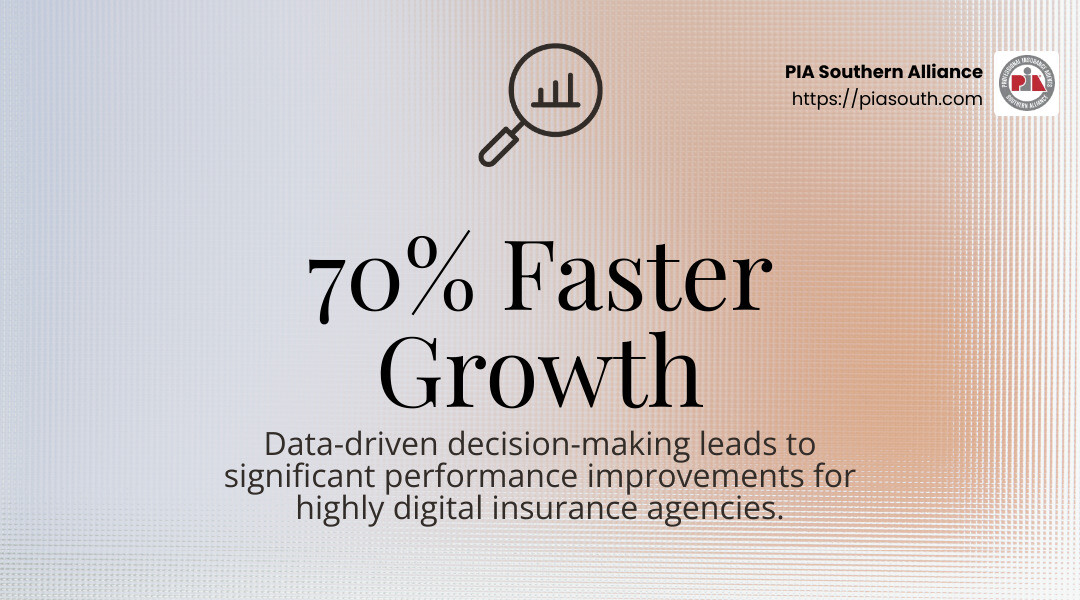
In today’s world, digital change is no longer optional for insurance agencies. As observed, highly digital agencies grow 70% faster than their less digital counterparts. From operational efficiencies to personalized customer service, technology paves the way for resilience and growth in the competitive insurance market. The COVID-19 pandemic accelerated this trend, making digital-first interactions the norm. Agencies that accept these changes can expect better client engagement and satisfaction.
I’m Scott Hansard, deeply invested in the field of insurance agency digital change. With a commitment to promoting high standards, I focus on helping agencies in Georgia, Alabama, and Mississippi leverage digital change for sustainable growth. Let’s explore how these trends can impact your business strategy.

Important insurance agency digital change terms:
– insurance agency client retention
– insurance agency performance metrics
– commercial insurance agent training
Understanding Digital Change in Insurance
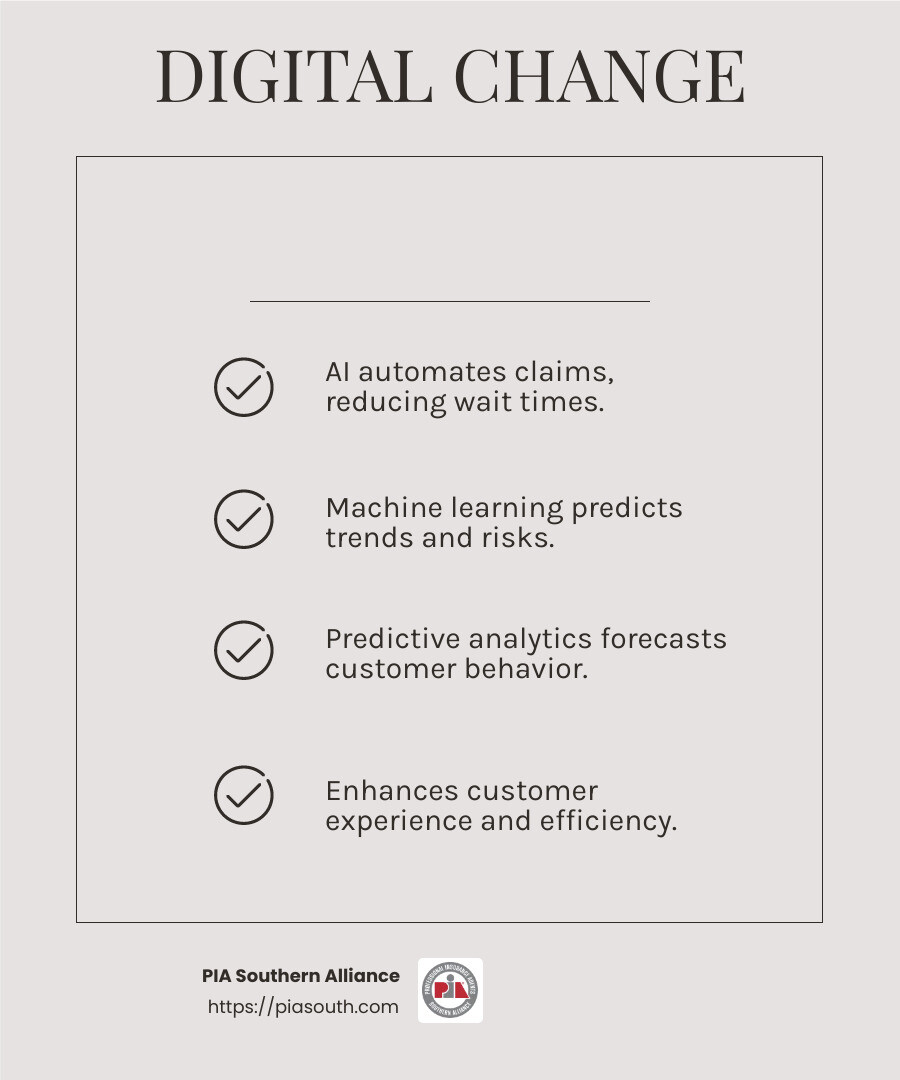
Digital change is changing the insurance industry, making it more efficient and customer-focused. At the heart of this change are artificial intelligence (AI), machine learning, and predictive analytics. These technologies are not just buzzwords; they are powerful tools that are reshaping how insurance agencies operate.
AI and Machine Learning: These technologies help automate routine tasks, allowing agents to focus on more complex issues. For example, AI can quickly process claims, reducing the time customers wait for their money. Machine learning can analyze vast amounts of data to identify patterns and predict future trends. This helps insurers price their products more accurately and identify potential risks before they become problems.
Predictive Analytics: This involves using data to make predictions about future events. In insurance, predictive analytics can forecast customer behavior, helping agents tailor their services to individual needs. For instance, if an insurer knows a customer is likely to file a claim during a particular season, they can offer custom advice to prevent incidents before they happen.
These technologies offer several advantages:
Improved Customer Experience: With faster service and personalized interactions, customers feel valued and understood.
Operational Efficiency: Automation reduces errors and speeds up processes, saving time and money.
Better Risk Management: By predicting potential issues, insurers can take proactive steps to mitigate risks.
In Georgia, Alabama, and Mississippi, insurance agencies embracing digital change are seeing significant benefits. They’re not just keeping up with the competition; they’re leading the way in innovation and customer satisfaction. As the industry continues to evolve, staying ahead of these trends will be crucial for success.
In the next section, we’ll dive into the key areas where digital change is making the biggest impact in insurance agencies.
Key Areas of Digital Change in Insurance Agencies
Digital change is reshaping insurance agencies, especially in the areas of automation, data analytics, IoT devices, and customer experience.
Automation
Automation is revolutionizing how insurance agencies operate by taking over repetitive and time-consuming tasks. This allows agents to focus on more strategic activities. For example, automated systems can handle claims processing, reducing human error and speeding up response times. This shift not only improves efficiency but also leads to significant cost savings.
Data Analytics
Data analytics is a game-changer for insurance agencies. By analyzing large volumes of data, agencies can gain insights into customer behavior and risk patterns. This information helps in making informed decisions about policy pricing and risk management. According to a study by Bain & Company, insurance companies currently collect only about 60% of the data needed for underwriting. Embracing data analytics can help bridge this gap, leading to more accurate and competitive offerings.
IoT Devices
The Internet of Things (IoT) is playing an increasingly important role in insurance. IoT devices, such as telematics in vehicles, provide real-time data that can improve risk assessment and underwriting processes. These devices help insurers move from risk protection to risk prevention by detecting potential issues before they escalate. However, the integration of IoT requires robust analytics to handle the real-time data effectively, driving further innovation in the industry.
Customer Experience
Digital change is also enhancing the customer experience in profound ways. With the rise of digital tools like mobile apps and online portals, customers can manage their policies and claims anytime, anywhere. This level of convenience is becoming a standard expectation. Additionally, chatbots and AI-driven customer support offer instant assistance, improving satisfaction and loyalty.
In summary, insurance agencies in Georgia, Alabama, and Mississippi are leveraging these digital tools to stay competitive and meet the evolving needs of their clients. By focusing on automation, data analytics, IoT, and customer experience, agencies can transform their operations and deliver exceptional service.
Next, we’ll explore the benefits of embracing digital change in insurance agencies.
Benefits of Insurance Agency Digital Change
Digital change is not just a trend; it’s a necessity for insurance agencies to thrive in today’s world. Let’s explore the key benefits of embracing digital change in the insurance industry, focusing on efficiency, personalization, scalability, and agility.
Efficiency
Digital tools make insurance processes faster and more reliable. Tasks like claims processing, policy management, and customer service can be automated, reducing the time needed and minimizing errors. For instance, claims can now be processed instantly through apps, allowing agents in Georgia, Alabama, and Mississippi to handle more clients without increasing their workload.
This boost in efficiency not only saves time but also cuts operational costs, making agencies more profitable.
Personalization
Customers today expect services custom to their individual needs. Digital change empowers agencies to offer personalized experiences by leveraging data analytics and AI. With these tools, agencies can gather insights into customer preferences and behaviors, offering customized policies and targeted marketing efforts.
For example, using AI-driven analytics, an agency can identify a customer’s specific coverage needs and suggest personalized policy options. This level of service not only meets customer expectations but also builds loyalty and trust.
Scalability
Digital change equips insurance agencies with the ability to grow and adapt without being bogged down by outdated processes. With cloud-based systems and IoT devices, agencies can handle increased data and client demands seamlessly. This flexibility allows agencies to expand their services and reach more clients across different regions.
Moreover, scalable digital systems help agencies introduce new products quickly, keeping them competitive in a rapidly changing marketplace.
Agility
The insurance landscape is constantly evolving, and agencies must be agile to keep up. Digital tools provide the flexibility needed to adapt to new challenges and opportunities. For example, AI and predictive analytics can help agencies anticipate market trends and customer needs, enabling them to adjust their strategies proactively.
By being agile, agencies can stay ahead of the curve, ensuring they are always ready to meet the demands of their clients and the industry.
In conclusion, embracing digital change offers insurance agencies a competitive edge by enhancing efficiency, personalization, scalability, and agility. As these agencies continue to evolve, they can deliver better services and achieve sustainable growth.
Next, we’ll dig into how implementing digital tools can further improve agency performance.
Implementing Digital Tools for Improved Agency Performance
To transform your insurance agency and boost performance, embracing digital tools is crucial. Let’s explore how automation, AI, machine learning, and data analytics can revolutionize your operations.
Automation
Automation is a game-changer for insurance agencies. By automating routine tasks like data entry, claims processing, and policy renewals, agencies can save time and reduce human error. This frees up agents to focus on more strategic activities, such as building client relationships and expanding their market reach.
For instance, in Alabama, agents using automated systems can process claims faster, providing customers with quicker resolutions and improving satisfaction. Automation not only improves productivity but also helps in maintaining a competitive edge.
Artificial Intelligence (AI)
AI is changing the way insurance agencies operate by enhancing decision-making processes. AI-driven chatbots can handle customer inquiries 24/7, providing instant support and freeing up agents for more complex tasks. This ensures that clients in Georgia and Mississippi receive timely assistance, improving their overall experience.
Moreover, AI can analyze vast amounts of data to identify patterns and trends, helping agencies make informed decisions about risk assessment and policy pricing. This not only optimizes operations but also ensures fair pricing and risk management.
Machine Learning
Machine learning, a subset of AI, empowers insurance agencies to predict customer behavior and market trends. By analyzing historical data, machine learning algorithms can forecast future claims, enabling agencies to adjust their strategies proactively.
For example, agencies can use machine learning to identify potential fraud cases by recognizing unusual patterns in claims data. This proactive approach not only saves money but also protects the agency’s reputation.
Data Analytics
Data analytics is the backbone of modern insurance operations. By leveraging data from various sources, agencies can gain valuable insights into customer needs and preferences. This allows for more personalized marketing campaigns and custom policy offerings.
In Mississippi, agencies utilizing data analytics can better understand regional risks and customer demographics, enabling them to offer customized solutions that resonate with their audience. This targeted approach not only increases customer satisfaction but also boosts retention rates.
Implementing these digital tools can dramatically improve agency performance by streamlining processes, enhancing decision-making, and personalizing customer interactions. As insurance agencies continue to evolve, these technologies will play a pivotal role in maintaining competitiveness and driving growth.
Next, we’ll address some frequently asked questions about digital change in the insurance industry.
Frequently Asked Questions about Insurance Agency Digital Change
What is the digital change of the insurance industry?
Digital change in the insurance industry is about using technology to improve how agencies operate and serve their clients. This change involves policy management, automation, and real-time tracking. By digitizing these processes, agencies can offer faster, more efficient services. For example, real-time tracking helps clients in Georgia, Alabama, and Mississippi monitor their claims status instantly, enhancing transparency and trust.
How to digitize an insurance company?
To digitize an insurance company, start by adopting data analytics, cloud technology, and CRM software. These tools help agencies manage vast amounts of data, streamline operations, and improve customer relationships.
- Data analytics can uncover insights about customer preferences and market trends, allowing agencies to tailor their services.
- Cloud technology ensures secure data storage and easy access, enabling remote work and collaboration.
- CRM software helps manage client interactions, ensuring personalized service and improved satisfaction.
What are the main areas of digital change?
Digital change in insurance agencies spans several key areas, including business model, process, domain, and organization.
- Business model: Agencies are shifting to digital-first models, focusing on online platforms and services to meet customer demands.
- Process: Automation and AI streamline routine tasks, freeing up agents to focus on strategic activities.
- Domain: The use of IoT devices and data analytics expands the scope of services, offering clients more value.
- Organization: Agencies are restructuring to integrate digital tools, promoting agility and scalability.
By embracing these changes, insurance agencies can improve their efficiency, offer personalized services, and stay competitive in an evolving market.
Conclusion
The digital revolution is reshaping the insurance landscape, and at PIA Southern Alliance, we are committed to helping agencies in Georgia, Alabama, and Mississippi steer this change successfully. Our educational resources and development programs are designed to improve strategic decision-making, ensuring that your agency not only adapts but thrives in a digital-first world.
Strategic decision-making is key to using the benefits of digital tools. By investing in automation, AI, and data analytics, agencies can improve efficiency, personalize client interactions, and scale operations seamlessly. These technologies are not just about keeping up with the competition; they’re about setting your agency apart as a leader in the industry.
Our specialized webinars and courses focus on commercial property insurance, helping agents develop cross-selling abilities and make informed choices that lead to growth. We provide the knowledge and skills needed to tackle the complexities of the insurance landscape with confidence and agility.
Ready to transform your agency and accept the future of insurance? Explore our educational programs and resources today and let PIA Southern Alliance be your partner in building a successful, digitally-savvy agency.