
Understanding the Foundation: The Role of a Buy-Sell Agreement
The insurance agency buy sell process is a significant moment for any agency owner, whether you’re looking to grow your business or plan your exit. It involves careful planning and execution to ensure a smooth transition and maximize value.
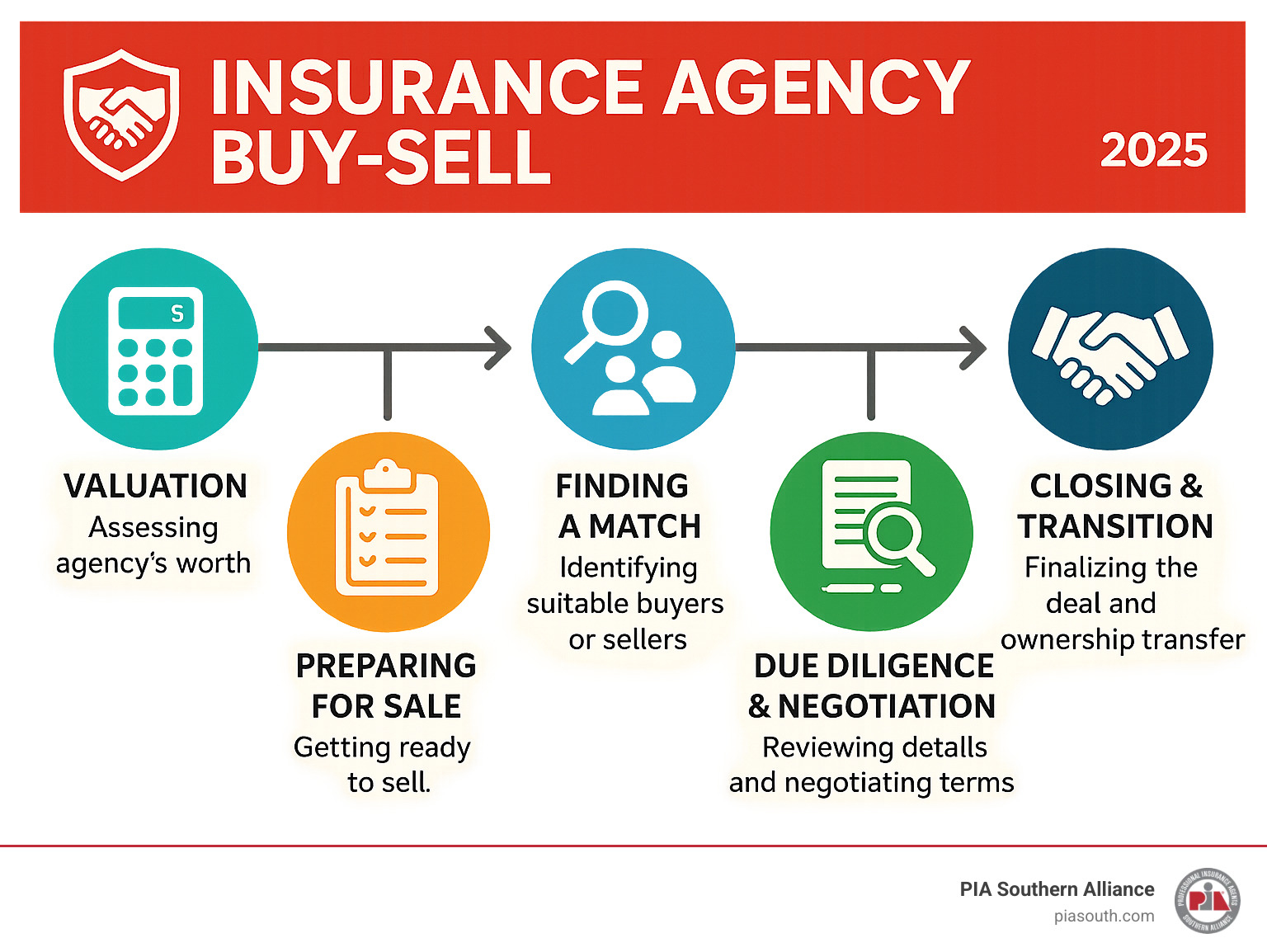
Key steps in an insurance agency buy sell transaction typically include:
- Valuation: Determining the agency’s worth based on financial metrics and market conditions.
- Agreement: Drafting a robust buy-sell agreement that outlines terms and trigger events.
- Preparation: Getting your agency’s financials, operations, and client data in order.
- Finding a Match: Connecting with suitable buyers or sellers, often through specialized platforms or brokers.
- Due Diligence: Thoroughly reviewing financial, legal, and operational details of the agency.
- Negotiation & Closing: Finalizing terms, legal agreements, and transitioning ownership.
This guide will walk you through each critical step.
Whether you’re ready to retire or expand your reach, successfully navigating an agency transaction can secure your legacy and open up new opportunities. For many, selling an agency is a once-in-a-lifetime event, while buyers often engage in multiple acquisitions. This difference underscores the importance of being well-prepared.
This comprehensive guide is brought to you by PIA Southern Alliance, an organization deeply committed to the success and sustainability of independent insurance agencies. With a focus on promoting the highest standards and providing essential resources, we are uniquely positioned to help agencies steer the intricacies of an insurance agency buy sell transaction, ensuring your agency’s prosperity.
Before diving into the complexities of valuation and finding buyers, it’s crucial to understand the foundation of any successful insurance agency buy sell transaction: the buy-sell agreement. This document serves as the roadmap for how ownership changes will be handled, providing clarity and protection for all parties involved.
What is a Buy-Sell Agreement and Why is it Crucial for P&C Agencies?
A buy-sell agreement is a legally binding contract that establishes the terms and conditions for the future sale of business interests between owners. For property and casualty insurance agencies, this agreement is particularly important because it ensures business continuity during unexpected events and provides a clear framework for ownership transitions.
The agreement typically outlines several key triggering events that would activate the buy-sell provisions:
- Death of an owner
- Disability that prevents an owner from working
- Retirement or voluntary departure
- Divorce affecting ownership interests
- Involuntary termination or breach of contract
Without a buy-sell agreement, agencies in Georgia, Alabama, and Mississippi could face significant challenges. Imagine a scenario where one partner in a two-owner agency passes away unexpectedly. Without proper documentation, the surviving partner might find themselves in business with the deceased owner’s spouse or children, who may have no interest in or knowledge of the insurance business.
For more detailed information about structuring these agreements, consider exploring our Insurance Agency Perpetuation Plan resources.
Exploring the Cross-Purchase Buy-Sell Agreement
One of the most effective structures for smaller agencies is the cross-purchase buy-sell agreement. This arrangement works particularly well when two people own a business together and want to ensure continuity if something happens to one of them.
Here’s how it works: Each co-owner purchases a life insurance policy on the other owner, pays the annual premiums, and serves as the beneficiary. When one owner dies, the surviving owner receives the life insurance proceeds tax-free and uses these funds to purchase the deceased owner’s business interest from their estate.
Consider Joe and Sarah, who each own 50% of a property and casualty agency in Atlanta valued at $2 million. They establish a cross-purchase agreement where Joe buys a $1 million life insurance policy on Sarah, and Sarah buys a $1 million policy on Joe. When Sarah passes away, Joe receives $1 million tax-free and uses it to buy Sarah’s 50% share from her estate, becoming the sole owner of the agency.
| Feature | Cross-Purchase Agreement | Entity-Purchase Agreement |
|---|---|---|
| Policy Owner | Individual Co-owners | The Business Entity |
| Premium Payer | Individual Co-owners | The Business Entity |
| Beneficiary | Individual Co-owners | The Business Entity |
| Tax Treatment | Generally tax-free proceeds | May trigger Corporate AMT |
| Creditor Protection | Protected from business creditors | Subject to business creditors |
| Basis Credit | Full basis credit for survivor | Limited basis credit |
| Best For | 2-3 owners | Multiple owners |
Benefits and Key Considerations
The cross-purchase structure offers several advantages for insurance agencies:
Creditor Protection: Life insurance policies owned by individuals are generally not subject to business creditors, providing an extra layer of protection for the funds needed to complete the buyout.
Avoiding Corporate AMT: Unlike entity-purchase agreements, cross-purchase arrangements don’t trigger Corporate Alternative Minimum Tax because the policies are owned by individuals rather than the corporation.
Basis Credit: The surviving shareholder receives full basis credit for the purchase of the stock, which reduces future capital gains tax if they later sell the business.
However, there are considerations to keep in mind. Cross-purchase agreements work best with fewer owners—typically two or three. With more owners, the number of required policies increases exponentially, making administration complex. Additionally, premium payments must be managed carefully to ensure fairness among owners.
For agencies looking to implement these structures, our Sample Insurance Agency Perpetuation Plan provides practical examples and guidance.
Determining Your Agency’s Worth: A Guide to Valuation

Getting a realistic price tag on your agency is the linchpin of any insurance agency buy sell discussion. Forget one-size-fits-all rules; value is driven by the quality of your revenue, not just its size.
Key Drivers of Value
- Book Quality & Retention – A smaller book that renews at 92-95 % is generally worth more than a larger but leaky one. Buyers pay for predictability.
- Revenue Mix & Carrier Spread – Diversified personal and commercial lines, plus multiple A-rated carriers, lower risk and increase multiples.
- Staff & Systems – Trained employees and documented workflows mean the new owner steps into a turnkey operation.
- Location & Growth Trend – Agencies in expanding metros or fast-growing rural areas of Georgia, Alabama, or Mississippi bring a premium.
For tips on improving these drivers, see our Insurance Agency Performance Metrics guide.
Valuation Methods in Plain English
- EBITDA Multiple – Calculate EBITDA, then multiply by 4-8×. Well-run agencies often show 15-25 % EBITDA margins.
- Revenue Multiple – Annual revenues × 1.4-2.2×. Quick, but less precise.
- Seller’s Discretionary Earnings (SDE) – Best for smaller, owner-operated shops; sales typically close at 2-3× SDE.
- Earned Commission Multiple – A rule-of-thumb of 1-1.5× earned commissions if you just need a ballpark.
Professional appraisers blend several approaches to arrive at a defensible number. Understanding how each works arms you for negotiations and helps avoid sticker shock.
Market Benchmarks (Median of 197 Recent Sales)
- Asking price: $617 K
- Annual revenue: $390 K
- SDE: $179 K
- Revenue multiple: 1.8×
- SDE multiple: 3.0×
High-growth agencies with stellar retention and solid carrier contracts can, of course, beat these medians. To dial up your own multiple, explore our Insurance Agency Growth Strategies.

Navigating the Transaction: The Insurance Agency Buy Sell Process

With valuation in hand, it’s time to execute. Most transactions stretch 6-12 months and follow the same broad choreography.
Seller Checklist (Cliff-Notes Version)
- Clean Financials – Three years of tidy P&Ls, balance sheets, and cash-flow statements.
- Document Vault – Carrier contracts, client lists (de-identified until NDA signed), HR files, and licenses in one secure folder.
- Assemble Pros – CPA, attorney, and—if desired—a broker who specializes in agencies. Skimping here is penny-wise, pound-foolish.
- Quiet Marketing – Use blind listings or trusted intermediaries to protect staff and clients.
See additional pointers in our Insurance Agency Best Practices.
Buyer Playbook
- Financing First – SBA, local banks, or seller notes; line up options before shopping.
- Define Targets – Geography, book size, personal vs. commercial mix, and cultural fit.
- Due Diligence – Deep dive into finances, retention, carrier relations, E&O history, and tech stack. Patience here prevents post-close regret.
- Competitive Offer & LOI – A concise Letter of Intent outlines price, structure, and timetable.
Funding resources: Insurance Agency Funding Solutions.
Legal & Regulatory Must-Haves
- Purchase Agreement – Covers price, reps & warranties, non-competes, and a transition plan.
- State Filings – Confirm licensing rules in GA, AL, or MS via the NAIC directory.
- Carrier Approval – Notify carriers early; check ratings at AM Best.
Transition Keys
- Communication Plan – Staff first, top clients second, carriers third. Clarity beats rumor every time.
- Seller Support – A 3- to 12-month consulting tail helps preserve relationships and revenue.
By tackling each phase methodically, both sides reduce surprises and keep momentum toward a successful close.
Finding Your Match: Where to Buy and Sell Agencies

Finding the right match in an insurance agency buy sell transaction is like finding the perfect dance partner—it requires patience, the right connections, and sometimes a little luck. The good news is that there are more opportunities than ever to connect buyers and sellers in today’s market.
Whether you’re looking to sell your life’s work or acquire your first agency, success depends on knowing where to look and how to present yourself professionally. The key is understanding that different channels attract different types of buyers and sellers, so a multi-pronged approach often works best.
Online Platforms and Intermediaries
Specialized business brokers have become the backbone of many successful agency transactions. These professionals eat, sleep, and breathe insurance agency deals. They understand that selling an agency in Birmingham isn’t the same as selling a restaurant in Atlanta—the nuances matter, and they know them inside and out.
What makes these brokers valuable isn’t just their buyer databases (though those are impressive). It’s their ability to spot potential deal-breakers early, guide realistic pricing expectations, and manage the emotional aspects of what’s often a once-in-a-lifetime transaction for sellers.
Business-for-sale websites cast a wider net, attracting buyers from various industries who might be interested in insurance agencies. While you’ll get more inquiries through these platforms, you’ll also spend more time educating potential buyers about the insurance industry’s unique characteristics.
Lender-hosted exchanges represent an interesting middle ground. Banks and finance companies that specialize in agency acquisitions often maintain their own marketplaces. The advantage? Most participants have already been pre-qualified financially, which can save weeks of back-and-forth with unqualified buyers.
The beauty of today’s digital landscape is that you can test multiple platforms simultaneously. Many successful transactions begin with online connections that evolve into serious negotiations. For agencies looking to maintain their independence while exploring growth opportunities, our resources on Independent Insurance Agencies provide valuable insights.
Leveraging Industry Networks and Associations
Sometimes the best opportunities come from conversations over coffee at industry events. The insurance community in Georgia, Alabama, and Mississippi is surprisingly tight-knit, and word travels fast when a quality agency hits the market.
Professional associations like the Professional Insurance Agents create natural networking environments where succession planning conversations happen organically. These aren’t just handshaking events—they’re places where genuine business relationships form and deals get done.
Local networking events offer something that online platforms can’t: the ability to look someone in the eye and get a feel for their character. Many successful agency owners will tell you that cultural fit matters just as much as financial terms. You can spot red flags and green lights much faster in person than through email exchanges.
Word-of-mouth referrals remain surprisingly powerful in our digital age. Your carrier representatives, wholesalers, and industry colleagues often know about opportunities before they hit the formal market. These insider connections can give you first access to premium opportunities or help you find that perfect buyer who’s been quietly looking for an agency just like yours.
Carrier networks shouldn’t be overlooked either. Insurance carriers have bird’s-eye views of their agency networks and often know which agencies might be interested in expansion or succession planning. A casual conversation with your carrier representative might reveal opportunities that aren’t publicly advertised.
The most successful insurance agency buy sell transactions often result from combining these approaches. You might find your buyer through a professional broker but close the deal because of the trust built through industry connections. Or you might find an opportunity through association networking but rely on professional intermediaries to handle the complex transaction details.
Finding the right match is just the beginning. The real work happens in the due diligence, negotiation, and transition phases that follow.
Avoiding Pitfalls and Ensuring a Smooth Transition
Even the most carefully planned insurance agency buy sell transactions can hit unexpected bumps along the way. Think of it like driving through Atlanta traffic during rush hour—you know where you’re going, but you need to be prepared for detours and slowdowns.
The good news? Most transaction problems are predictable and preventable. After helping countless agencies through these transitions across Georgia, Alabama, and Mississippi, we’ve seen the same challenges pop up repeatedly. More importantly, we’ve learned how to avoid them.
Common Challenges to Avoid in an Agency Transaction
Inaccurate Valuation remains the number one deal killer. We’ve seen sellers convinced their agency is worth twice the market value, and buyers who lowball offers thinking they’ll get a steal. Neither approach works well.
Professional appraisals provide the reality check everyone needs. When a seller in Birmingham recently insisted their agency was worth $800,000, a professional valuation revealed the realistic market value was $550,000. Rather than being disappointed, the seller used this information to improve operations and actually achieved the higher value two years later.
Neglecting the Transition Plan is like planning a wedding but forgetting about the honeymoon. Everyone focuses on the big day (closing) but forgets about what happens next. Without proper transition planning, client relationships suffer, staff panic, and the agency’s value can evaporate quickly.
Overlooking Cultural Fit causes more post-closing problems than financial issues. Numbers on paper don’t tell you whether the new owner will maintain your client service standards or treat your staff well. A mismatch here often leads to staff turnover and client defections that hurt everyone involved.
Poor Communication creates unnecessary anxiety and rumors. When staff hear about potential ownership changes through the grapevine instead of official channels, they start updating their resumes. When clients learn about transitions from competitors instead of you, they start questioning their coverage.
Ignoring Tax Implications can turn a profitable sale into a tax nightmare. The difference between an asset sale and stock sale, installment payments versus lump sum, and various other structural decisions have major tax consequences. Involve tax professionals early—their fees are tiny compared to the potential savings.
Rushing the Process might seem efficient, but it usually backfires. Pressure to close quickly leads to overlooked details, poor decisions, and deals that fall apart at the last minute. Good transactions take time, and trying to shortcut the process often makes it longer and more expensive.
For insights into building resilient agency strategies that weather transitions successfully, explore our Strategies for Insurance Agency Success resources.
Best Practices for a Seamless Ownership Handover
Develop a Clear Communication Plan that addresses different audiences appropriately. Your staff needs reassurance about job security and career opportunities. They want to know if their benefits will change and whether the new owner shares your management philosophy.
Clients care most about service continuity and coverage protection. They don’t need to know about financing terms or purchase prices—they want to know their agent will still be available and their claims will be handled properly.
Carriers need confirmation that new ownership meets their standards and will maintain the agency’s performance levels. They’re evaluating whether to continue the relationship, so professional communication is essential.
Implement Employee Retention Strategies before anxiety sets in. Key staff members often make or break agency transitions. Consider employment agreements, retention bonuses, or even equity participation for crucial team members.
Address concerns honestly and early. If you’re planning staff changes, be upfront about timing and criteria. If you’re keeping everyone, say so clearly. Uncertainty breeds anxiety, and anxious employees start job hunting.
Plan the Client Notification Process carefully. Clients should learn about ownership changes through official channels, not industry gossip. Coordinate with carriers to ensure proper notification procedures and timing.
Consider joint meetings where the seller introduces the buyer and personally endorses the transition. This personal touch reassures clients and demonstrates continuity of service.
Address Systems and Technology Integration well in advance. Different agencies often use different management systems, accounting software, and technology platforms. These changes can disrupt operations if not handled properly.
Plan for system integration or migration early in the process. Train staff on new systems before go-live dates. Have backup plans for data conversion problems and technical glitches.
Establish Post-Closing Support expectations upfront. Sellers should plan to provide reasonable support during the transition period, whether through formal consulting agreements, training periods, or availability for questions.
Clear expectations and compensation for this support prevent misunderstandings later. Some sellers want to disappear immediately after closing, while others want to stay involved indefinitely. Neither extreme works well.
For comprehensive guidance on navigating technological changes that often accompany ownership transitions, explore our resources on Insurance Agency Digital Change.
Document Everything throughout the process. Maintain detailed records of agreements, communications, and decisions. This documentation helps resolve disputes, provides reference materials for future questions, and ensures compliance with regulatory requirements.
Monitor Key Metrics during the transition period. Track client retention rates, staff turnover, and financial performance closely. Early identification of problems allows for quick corrective action before small issues become major problems.
A successful insurance agency buy sell transaction doesn’t end at closing—it extends through the transition period until the new ownership is fully established. With proper planning and execution, these transitions can strengthen agencies and create new opportunities for growth and success.
Conclusion: Securing Your Legacy and Future Growth
The insurance agency buy sell process represents far more than numbers on a spreadsheet or signatures on contracts—it’s about preserving the dreams you’ve built and creating new opportunities for growth. Whether you’re ready to pass the torch after decades of serving clients or you’re looking to expand your footprint in the independent agency world, success comes down to thoughtful planning and smart execution.
Think of this guide as your roadmap through what can feel like overwhelming territory. We’ve covered the essential building blocks: establishing solid buy-sell agreements that protect everyone involved, understanding what your agency is truly worth beyond just the premium volume, and preparing thoroughly for a process that often takes months to complete properly.
The beauty of a well-executed insurance agency buy sell transaction lies in its ability to create wins for everyone involved. Sellers can step into retirement knowing their clients will continue receiving excellent service. Buyers gain established relationships and proven revenue streams. Most importantly, the independent agency system continues to thrive with fresh energy and perspective.
Professional guidance makes all the difference. The most successful transactions we’ve seen involve teams of experienced professionals—CPAs who understand agency financials, attorneys familiar with business sales, and brokers who know the insurance marketplace. These experts help you avoid the common pitfalls that can derail deals or create problems down the road.
At PIA Southern Alliance, we’ve watched countless agencies steer these transitions across Georgia, Alabama, and Mississippi. The agencies that thrive are those that approach change strategically, invest in their people, and never lose sight of their commitment to client service. Our educational resources and development programs are designed to support agencies at every stage of their journey.
The insurance industry continues evolving, creating both challenges and opportunities for independent agencies. Those who master the art of insurance agency buy sell transactions position themselves to take advantage of these changes rather than being overwhelmed by them.
Your next steps depend on your goals. If you’re considering selling, start by getting your financial house in order and assembling your professional team. If you’re looking to buy, define your criteria clearly and establish financing relationships early. Either way, the best deals happen when both parties feel they’re getting fair value.
Whether you’re buying to expand your market presence or selling to start a new chapter, a well-executed transaction creates the foundation for continued success. The time you invest in proper planning, professional guidance, and thorough execution pays dividends in outcomes that benefit everyone involved.
For ongoing support in making strategic decisions that improve your agency’s value, explore our Strategic Decision Making for Agencies courses. And when you’re ready to explore opportunities, check our PIA Southern Alliance Classifieds for current agency listings in your area.
The independent agency system has thrived for generations because people like you understand that success comes from serving clients well while building sustainable businesses. Insurance agency buy sell transactions are simply the next chapter in that ongoing story—one that continues to create opportunities for dedicated professionals who understand the value of independence and client relationships.