
Improving your team's customer service skills isn't just a "nice to have"—it's a deliberate process that requires a real plan. It starts with an honest look at your current abilities, moves into targeted training, and finishes with practical, everyday application. The goal is to shift customer service from a reactive chore into a proactive strategy for keeping clients and growing your agency.
Why Customer Service Is Your Agency's Greatest Asset

Let’s be honest. In the independent insurance world, policies and products can start to look the same to a client. While price will always be part of the conversation, it’s rarely the only reason someone chooses—or, more importantly, stays with—an agency. Your real edge comes from the relationships you build, and those are forged one great service interaction at a time.
This is more than just answering the phone with a smile. It's a core business strategy that directly fuels your bottom line. Every email, phone call, and meeting is a chance to show your value, build trust, and give that client another reason to stick with you for years to come.
The Real Cost of "Good Enough" Service
Just keeping clients satisfied isn't the win it used to be. Sure, industry satisfaction scores look decent, but a recent report showed that 29% of customers still jumped ship to another insurer in a single year. That’s a massive gap between a client being "satisfied" and being truly loyal.
That kind of churn is a slow, expensive drain on your agency. But here's the flip side: a focused effort to improve client retention can boost your revenue by as much as 95%. That's why figuring out how to improve customer service skills isn't a soft-skill exercise; it's one of the smartest financial moves you can make. You can dive deeper into this in our complete guide to insurance agency client retention.
Investing in your team's service skills is a direct investment in your agency's profitability, stability, and reputation. It's the most reliable way to build a loyal client base that insulates you from market volatility and price-shopping.
Your Agency's Customer Service Improvement Framework
To get this done, we need a simple, actionable plan. We'll use a straightforward, four-part framework to walk you through building a culture of service excellence in your agency.
Below is a quick overview of the framework we'll be using. This table breaks down the core pillars of our approach, making it easy to see how each piece contributes to the bigger picture of creating an exceptional client experience.
| Your Agency's Customer Service Improvement Framework |
| :— | :— | :— |
| Pillar | Objective | Key Action |
| Assess Current Capabilities | Get an honest baseline of your team's current service skills. | Use self-assessments, client surveys, and call reviews to find strengths and weaknesses. |
| Train for Essential Skills | Build high-impact skills that directly improve client interactions. | Focus training on active listening, empathy, problem-solving, and de-escalation. |
| Implement New Techniques | Turn training into consistent, daily habits across the agency. | Develop role-play scenarios, scripts for tough calls, and updated service workflows. |
| Measure the Results | Track progress and prove the financial return on your efforts. | Monitor KPIs like retention rates, first-call resolution, and policies per client. |
This framework provides a clear roadmap. It ensures you're not just guessing but are systematically building a team that makes clients feel valued and understood at every turn.
Mastering the Core Skills for Client Communication

Before your team can handle complex claims or advanced scenarios, they need to be rock-solid on the fundamentals. I'm talking about the three core skills that form the foundation of every client interaction.
These aren't just buzzwords; they're the practical, day-in-day-out tools that build trust and turn a simple policy renewal into a lifelong client relationship. Getting these right is the first real step in improving your agency's customer service for the long haul.
We're focusing on Active Listening, Empathetic Communication, and Comprehensive Product Knowledge. When these three skills work together, they completely change how your agency connects with clients, especially when they need you most. A great starting point for this is understanding the essential call handling best practices that underpin every successful conversation.
The Power of True Active Listening
Let's be clear: active listening isn't just about hearing what the client says. It's about understanding the unspoken fear, frustration, or confusion behind their words. A client rarely calls just to state a fact; they call for reassurance and a solution. Your team's job is to listen for the subtext.
Imagine a longtime client, Sarah, calls about a minor fender-bender. She sounds calm and is just relaying the facts.
- A passive listener hears: "I had a small accident. No one was hurt. I need to file a claim."
- An active listener hears the real questions: "Is this going to be a huge hassle? Will my rates go up? How long will I be without my car?"
The difference is everything. The active listener doesn't just process the claim; they get ahead of the anxieties driving the call. That simple shift builds immediate trust and shows you're on their side.
Key takeaway: Active listening isn't about gathering data. It's about identifying and addressing the client's underlying emotions and concerns. This moves the conversation from a transaction to a genuine partnership.
Practicing Empathetic Communication in a Crisis
Empathy is what separates a good agent from a great one. It’s the ability to truly understand and share what someone else is feeling, and in our business, it's non-negotiable during a crisis. It means moving beyond sympathy ("I'm sorry this happened") to genuine empathy ("I can only imagine how overwhelming this must feel. We're going to walk through this together.").
Think about one of the toughest calls you can get: the Miller family just lost their home in a fire.
How your team responds in those first few moments will define the relationship forever. An empathetic response prioritizes their immediate human needs, not the policy number.
- Wrong Approach: "Okay, I'll need your policy number to start the claim. Do you have a list of damaged items?"
- Empathetic Approach: "Mr. and Mrs. Miller, I am so incredibly sorry to hear this. The most important thing is that you and your family are safe. Let's not worry about paperwork right now. My first priority is making sure you have a safe place to stay tonight."
This empathetic framing instantly positions your agency as an ally, not just a processor. You're showing them they're people, not a claim number.
Turning Product Knowledge into Client Confidence
Finally, we have product knowledge. Without it, even the best listening and empathy skills will fall flat. Clients depend on you to be the expert who can translate confusing insurance jargon into clear, confident advice.
This skill is crucial when explaining complex policy details. For instance, a client is confused about the difference between Replacement Cost Value (RCV) and Actual Cash Value (ACV) on their homeowner's policy.
An unclear explanation sounds like: "RCV is the cost to replace without depreciation, and ACV is the value minus depreciation."
Sure, it's technically correct, but it's also intimidating and unhelpful. It doesn't build confidence.
A clear, confident explanation sounds like this: "That's a great question, and it's one of the most important parts of your policy. Think of it this way: Actual Cash Value is like selling your five-year-old couch on a marketplace—you get what it's worth today. Replacement Cost Value is what it would cost to go to the store and buy a brand new, similar couch. Our goal is to ensure you have replacement cost coverage so you can fully rebuild without having to pay the difference out of pocket."
This simple analogy demystifies the concept, reassures the client, and reinforces your role as a trusted advisor. That kind of clarity is the ultimate form of customer service.
Turning Tough Talks into Wins for Your Agency
Once your team has the basics of good communication down, it’s time to level up. We need to prepare them for the real-world situations that make or break client relationships. These are the moments that test an agency's true character.
Now we're moving past simple courtesy and into two high-stakes areas: mastering First Call Resolution (FCR) and calming down upset clients. Getting these right is what separates a decent agency from one that clients will never leave.
The Power of One-and-Done: Mastering First Call Resolution
First Call Resolution is exactly what it sounds like: you solve the client's problem on their very first contact. This isn't just about being fast; it’s about being effective. When a client has to call back again and again, their frustration skyrockets, and your internal costs start to climb.
Just think about the time your team spends on follow-up calls, chasing down information, and handing issues off to someone else. Every extra touch is a drain on your resources. By empowering your team to solve problems on the spot, you cut that operational drag significantly.
This is a huge metric for top-performing service teams. For instance, it's not uncommon for leading insurance service partners to close 96% of tickets before the end of the first business day. Why? Because when an issue is handled in one go, you eliminate those expensive follow-ups and see your client satisfaction scores jump.
Here's how to start boosting your FCR today:
- Build Quick Reference Guides: Create simple, one-page cheat sheets for common questions about policies, endorsements, or billing. This puts answers at your team’s fingertips so they don't have to put clients on hold to hunt for information.
- Give Your Team Authority: Trust your CSRs to solve common problems up to a certain point without needing a manager’s sign-off. This could be waiving a small late fee or processing a minor policy change.
The A-R-S Framework for Handling Upset Clients
Sooner or later, you're going to get a call from an unhappy client. It’s inevitable. Maybe a claim was denied, a premium shot up, or there was a simple misunderstanding. How your team responds in these moments defines who you are as an agency.
The trick is to have a simple, repeatable plan for de-escalation. Don't throw your team into the fire unprepared. Give them a process they can lean on when the pressure is on. It's also worth noting that strong fundamentals in how to improve problem-solving skills give your team the confidence to handle these tough spots.
I’ve seen this three-part framework work wonders: Acknowledge, Reframe, and Solve.
1. Acknowledge Their Frustration
Before you can fix anything, the client needs to feel heard. This isn't about agreeing with them; it's about validating their feelings. A little empathy goes a long way.
Scenario: A client calls, furious about a big premium increase on their auto policy.
What to Say: "Mr. Smith, I can absolutely see why you're frustrated by that increase. That's a big jump, and I want to walk through exactly what's behind it. Thanks for calling me directly to talk it over."
That simple acknowledgment instantly lowers the temperature. You’re not arguing; you're listening. You've just moved from being an opponent to being an ally.
2. Reframe it as a Shared Problem
Next, you need to shift the conversation from "you versus me" to "us versus the problem." Use collaborative words that position your agent as a partner working with the client to find a solution.
Scenario: Continuing with the premium increase.
What to Say: "Okay, let's pull up your policy together and see what our options are here. My goal is to find you the best possible coverage at the most competitive rate we can."
Words like "let's," "together," and "our" are your best friends here. They reframe the entire dynamic and open the door to actually solving the problem.
3. Find a Solution Together
Now you can get down to business and explore options. Maybe you re-shop their policy, look at adjusting deductibles, or uncover new discounts they qualify for. The key is to present choices and let the client be part of the decision.
Scenario: Finding a path forward.
What to Say: "Okay, I've had a look, and I see a couple of ways we could tackle this. We could increase your deductible, which would bring the premium down by about $25 a month. Or, we could look at bundling your home insurance, which would unlock a multi-policy discount that saves you even more. Which of those sounds like a better fit for you right now?"
By offering options, you give the client back a sense of control. The conversation is no longer a complaint; it’s a consultative review. You’ve just turned a potential crisis into a relationship-building moment.
Building Your In-House Training Program
Mastering a few skills here and there is a great start, but how do you turn those individual wins into consistent, agency-wide habits? You need a structured plan. A dedicated in-house training program is what ensures improving customer service isn't a one-off event, but a core part of your agency's culture.
This isn't about sending everyone to expensive, all-day seminars. It's about creating a sustainable rhythm of learning and improvement that actually fits into your team's already-packed schedule.
The best programs I've seen are always built on a crystal-clear understanding of where the team stands right now. Before you can map out where you're going, you have to know your starting point.
Start with a Skills Assessment
You can't plan a journey without knowing where you are on the map. A simple skills assessment is the crucial first step. Think of it less like a performance review and more like a collaborative tool to spot both strengths and opportunities for growth across the entire team.
Your assessment should be laser-focused on the pillars of excellent service in an insurance agency. I typically see these boil down to:
- Communication Clarity: How well does the team explain complex policy terms or a tricky claims process in simple, everyday language?
- Empathy in Action: When a client is frustrated, does the team genuinely acknowledge and validate their feelings before jumping to a solution?
- Problem-Solving Efficiency: Can team members resolve most common issues on the first call, or do things frequently get escalated?
Once you have this baseline, you can design training that directly targets the specific gaps you’ve found. This ensures every minute and dollar you invest is well-spent. For more ideas on how to structure this, our resources on independent insurance agency training offer some great frameworks.
Develop Role-Specific Training Scenarios
Generic, off-the-shelf training has a pretty limited impact. The real key to making new skills stick is to make the practice as realistic as possible. This means crafting exercises and role-playing scenarios that mirror the actual conversations your team has every single day.
A producer's "difficult conversation" is worlds away from a CSR's.
Consider these role-specific examples:
- For Producers: A role-play where the client is balking at the idea of increasing their liability coverage during a policy review. The goal is to practice articulating value over price and connecting that coverage directly to the client's real-life risks.
- For CSRs: A timed exercise where they have to handle an urgent certificate of insurance request while simultaneously fielding an inbound call about a billing error. This sharpens their ability to multitask and prioritize under pressure.
These tailored scenarios make the training immediately relevant. Team members get to practice new techniques in a safe, low-stakes environment, building the muscle memory and confidence they need to use them in live client interactions.
When things get tense, having a clear de-escalation process is absolutely vital. This simple flow diagram shows a powerful three-step method for turning down the heat on a tough call.
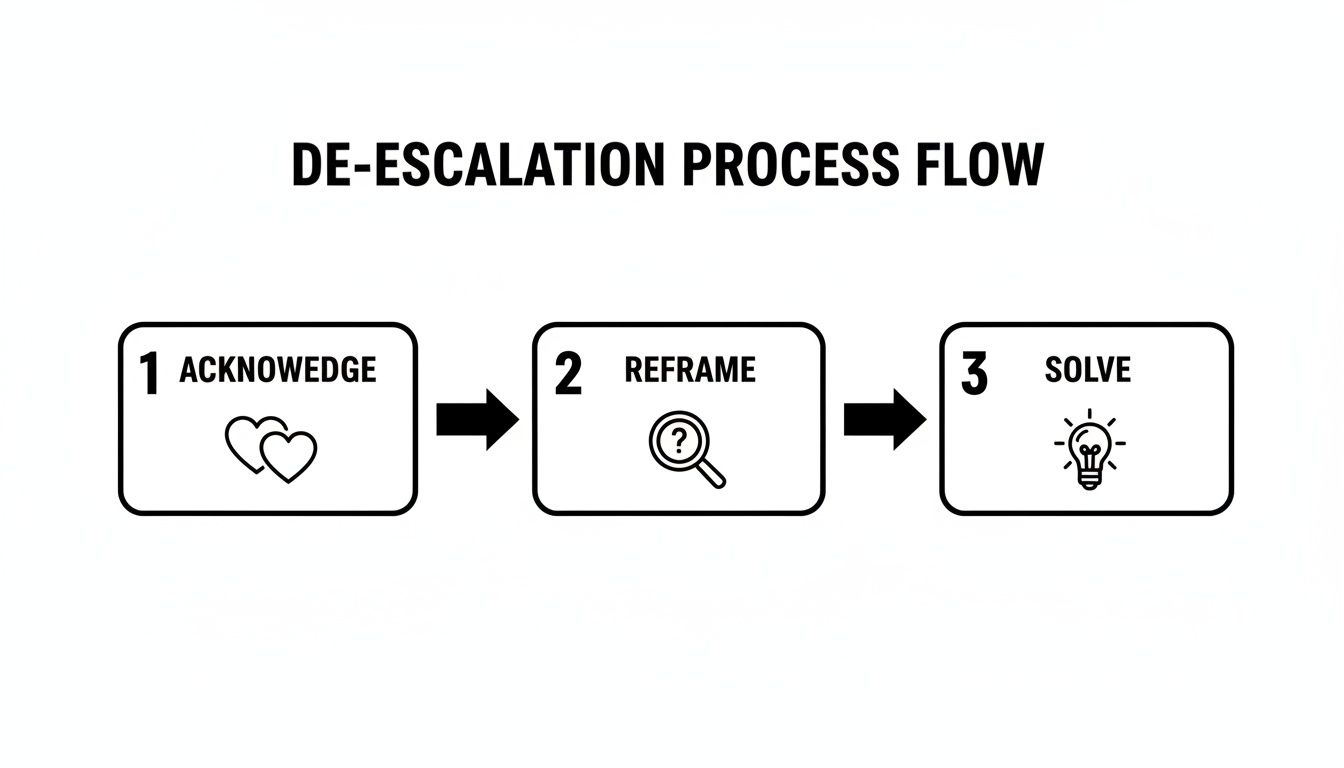
This process can transform a potentially negative interaction into a structured problem-solving session, instantly putting your team member and the client on the same side of the table.
Create a Sustainable Training Schedule
When it comes to training, consistency trumps intensity every time. A sustainable schedule integrates learning into your agency’s normal operations without causing burnout. The goal is frequent, bite-sized learning moments—not infrequent, overwhelming data dumps.
A successful training program isn't an event; it's a system. By building a consistent schedule, you make skill development a natural and expected part of the job, not an afterthought.
A good schedule mixes different formats and topics to keep things fresh and engaging. Here’s a sample quarterly plan that you can easily adapt for your own agency.
Sample Quarterly Customer Service Training Calendar
This table provides a simple framework for focusing on different skills throughout the year, ensuring continuous improvement without overwhelming your team.
| Quarter | Training Focus | Activity Example | Target Role |
|---|---|---|---|
| Q1 | Empathetic Communication | Role-playing workshop for handling difficult claims calls | CSRs, Producers |
| Q2 | Deepening Product Knowledge | "Lunch and Learn" series on new policy endorsements | All Staff |
| Q3 | First Call Resolution | Reviewing call recordings to identify improvement opportunities | CSRs |
| Q4 | Proactive Service & Cross-Selling | Scenario training on identifying coverage gaps during reviews | Producers |
This kind of planned approach ensures you’re continuously reinforcing key skills all year long. It keeps service excellence top-of-mind and allows your team to build on their abilities over time, creating lasting improvements that your clients will absolutely notice.
Using Technology to Enhance the Human Touch

Even the most well-trained team hits a wall without the right tools. In today's market, technology isn’t about replacing the personal connections your agents build; it's about making them better at it. The right tech stack gives your team the power to deliver the kind of seamless, personal service that clients don't just appreciate anymore—they expect it.
Good technology connects the dots between different client interactions, turning them into a single, ongoing conversation. Modern insurance customers are used to this kind of fluid experience everywhere else, and they won't put up with less from you. Clunky, outdated systems that don't talk to each other are becoming a serious liability, making it impossible to keep customer data straight and deliver coordinated service.
The goal here is simple: let the tools handle the routine stuff. This frees up your people to focus on the high-value work that only a human can do, like building real relationships.
Your CRM Is Your Agency's Memory
At the heart of any smart service strategy is a Customer Relationship Management (CRM) system that your team actually uses. A CRM is so much more than a digital address book; it’s your agency’s collective memory. It keeps a running log of every call, email, and meeting, painting a complete picture of each client relationship over time.
This unified client view is the key to proactive service. Instead of just waiting for the phone to ring with a problem, a well-managed CRM helps your team get ahead of things.
- Anticipate Needs: A flag for a client’s 40th birthday can trigger a reminder to have a chat about life insurance options.
- Personalize Interactions: Notes from a previous call about a client’s upcoming family vacation let your agent start the next conversation with a personal touch.
- Ensure Consistency: Any team member can pull up a client's history in seconds. This means the client gets consistent, informed service no matter who they talk to.
A CRM transforms customer service from a string of separate transactions into a continuous, evolving relationship. It gives your team the context they need to make every single client feel like they're your only client.
Automate the Routine, Not the Relationship
Automation is a powerful tool, but you have to use it carefully. The trick is to automate the routine, low-emotion tasks while keeping a human touch for the moments that matter. Think of it as a way to guarantee consistency and efficiency without sounding like a robot.
For instance, automated renewal reminders are a game-changer. They make sure no one falls through the cracks and save your team from making dozens of repetitive calls. The message itself can still feel personal, though—it can come from the client’s dedicated agent and include a friendly invitation to schedule a call if they have any questions. You can see how other agencies are using similar tools by checking out these insights on real-time customer feedback systems.
This approach really does blend the best of both worlds. Technology handles the predictable reminders and administrative legwork, which lets your highly-skilled team members pour their time and energy into complex problem-solving, deep-dive policy reviews, and building the genuine rapport that keeps clients for life.
Common Questions About Agency Customer Service
Even with the best game plan, questions always pop up when you start putting new ideas into action. Agency leaders often run into the same practical hurdles when they decide to get serious about improving their team's customer service skills.
Let's tackle some of the most common questions I hear to help you move from planning to execution with confidence.
What Is the Single Most Important Customer Service Skill for an Agent?
While you need a whole toolkit of skills, active listening is arguably the most critical. It’s the foundation that holds up everything else, from showing empathy to solving complex problems.
Think about it—you can't solve a problem you don't fully understand. You can't show empathy for a feeling you haven't truly heard.
When an agent actively listens, they uncover not just the stated request but the unspoken concerns, the life changes, or the hidden anxieties behind a client's call. This deeper understanding is what leads to accurate advice, meaningful reassurance, and the ability to spot new coverage gaps. Without it, you’re just processing a transaction instead of building a relationship.
How Can I Actually Measure the ROI of This Training?
Measuring the return on investment for service training means you have to track specific Key Performance Indicators (KPIs) before and after you roll out the program. A vague feeling that "things are better" isn't enough. You need hard data to see what’s really working.
Focus on a few key business metrics that are directly tied to the client experience:
- Client Retention Rate: This is your number one indicator of client satisfaction and loyalty. Even a small increase here has a massive impact on your agency's revenue over time.
- First Call Resolution (FCR): A direct measure of your team's efficiency and product knowledge. Improving FCR cuts down on operational costs and makes clients a lot happier.
- Policies per Household: This tells you if better conversations are leading to deeper, more trusted client relationships and successful cross-selling.
- E&O Incident Rate: No question about it—superior communication, documentation, and problem-solving skills directly reduce your agency's errors and omissions exposure.
Track these metrics quarterly. Doing so will help you draw a clear, undeniable line between your investment in training and tangible business growth. This data proves that improving customer service skills is a profit-driver, not just another expense.
How Do I Motivate My Team to Embrace New Standards?
Real motivation rarely comes from a memo. It comes from understanding the "why" behind the change, seeing committed leadership, and feeling a sense of ownership in the outcome.
True team buy-in happens when everyone understands that exceptional service isn't just another task—it makes their jobs easier, creates happier clients, and secures the agency's future. It's a win for everyone involved.
Start by clearly communicating how great service benefits the entire team, not just the agency owner. Then, managers have to consistently model the exact behaviors they expect to see. You can't phone it in.
Finally, weave service excellence into your agency’s culture. Recognize outstanding service in team meetings, share positive client feedback widely, and make it a key part of performance reviews. When the team sees that great service is truly valued and rewarded, they will rise to the occasion.
At PIA Southern Alliance, we provide the resources, training, and community independent agencies need to build resilient, client-focused businesses. Learn how membership can help you implement these strategies and more. Explore PIA Southern Alliance membership benefits today.