
When it comes to georgia insurance long term care continuing education, navigating the requirements can be challenging for insurance professionals. Here’s a quick breakdown for those who simply need the essentials:
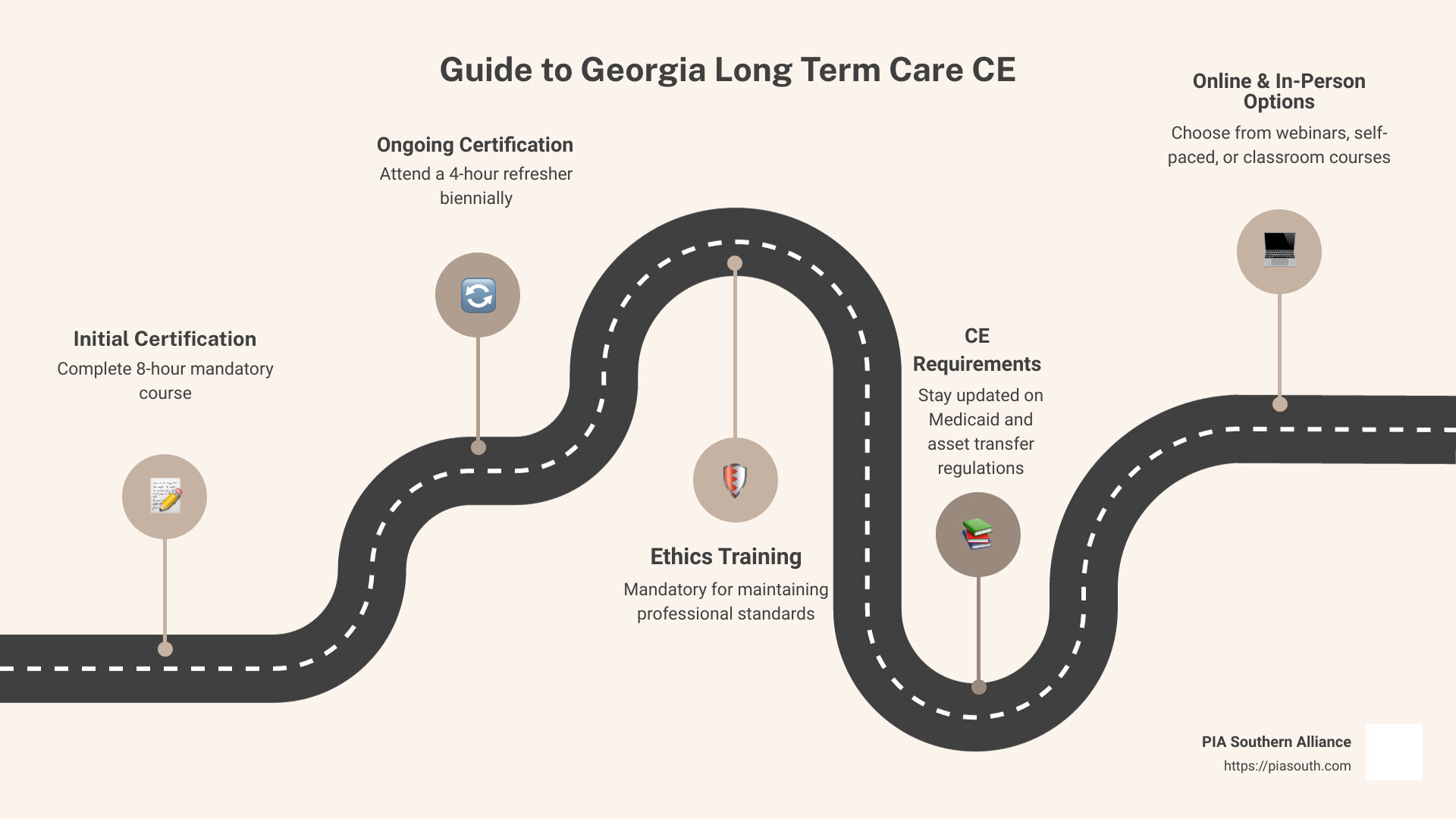
- Initial Certification: 8-hour mandatory course for those starting out in selling Long Term Care Insurance in Georgia.
- Ongoing Certification: After the initial certification, a 4-hour refresher course is required every two years.
- Ethics Training: As part of the ongoing requirements, ethics training remains a cornerstone, ensuring professionals maintain high standards in practice.
Long-term care insurance is vital—it addresses the growing need for comprehensive health coverage as people age, offering peace of mind to policyholders and their families. It’s critical for insurance agents in Georgia, Alabama, and Mississippi to stay informed and compliant with state requirements to provide the best service to their clients.
My role with PIA Southern Alliance involves ensuring that our member agencies are equipped with the necessary resources and knowledge to thrive. By focusing on georgia insurance long term care continuing education, we help agents offer informed and compliant services to their clients, enhancing their ability to grow their businesses.
Basic georgia insurance long term care continuing education terms:
– georgia insurance license continuing education requirements
– insurance continuing education georgia
– life insurance continuing education courses georgia
Understanding Georgia Insurance Long Term Care Continuing Education
Navigating the Georgia insurance long term care continuing education landscape is crucial for insurance professionals. Understanding the requirements and staying compliant ensures you can provide the best service to your clients.
Initial Certification Requirements
To begin selling Long Term Care (LTC) insurance in Georgia, agents must complete an 8-hour initial training course. This course is mandatory and aligns with the National Association of Insurance Commissioners (NAIC) Partnership guidelines. It covers essential topics such as:
- Medicaid Information: Understanding how Medicaid interacts with long-term care insurance is vital. The course dives into this relationship, ensuring agents can guide clients effectively.
- Insurance Regulations: Agents learn about state-specific regulations, helping them steer the complexities of LTC insurance policies.
Completing this initial training is the first step in ensuring compliance and readiness to serve clients in Georgia.
Ongoing Training and Refresher Courses
Once the initial certification is complete, agents must engage in ongoing education to maintain their certification. This involves a 4-hour refresher course every two years. Here’s what you need to know:
- Biennial Renewal: The refresher course must be completed within each two-year license cycle. This ensures that agents remain up-to-date with any changes in regulations or industry practices.
- Alternating Versions: To avoid repeating the same course, agents have the option to alternate between different versions of the refresher course. This approach not only meets compliance requirements but also broadens the agent’s knowledge base.
By keeping up with these requirements, agents demonstrate their commitment to professional development and ethical practice, which ultimately benefits their clients.

Staying informed about the Georgia insurance long term care continuing education ensures that you, as an insurance professional, are always ready to provide the best possible service while adhering to state regulations.
Key Components of Long Term Care CE
It’s essential to grasp the critical elements of Georgia insurance long term care continuing education. This knowledge not only ensures compliance but also empowers you to offer informed guidance to your clients.
Long Term Care Insurance Policies
Long Term Care Insurance Policies are designed to cover expenses not typically covered by health insurance, such as nursing home care, home health care, and personal or adult daycare.
Features and Benefits:
- Inflation Protection: Long-term care policies often include options to protect against inflation, ensuring that benefits keep pace with rising costs.
- Comprehensive Coverage: These policies can cover a wide range of services, from in-home care to specialized facility care.
- Consumer Suitability Standards: Understanding these standards helps ensure that the policy fits the client’s needs and financial situation.
Premiums:
- Premiums for long-term care insurance can vary based on factors like age, health, and the level of coverage chosen. It’s crucial to weigh the cost against potential benefits to determine the best fit for your clients.
Alternative Funding Options
Exploring Alternative Funding Options can provide clients with flexible choices when planning for long-term care needs.
Annuities:
- Annuities can be a strategic tool for funding long-term care. They offer a steady income stream that can help cover care costs. Understanding how annuities work and their benefits can help you guide clients effectively.
Tax Incentives:
- There are federal and state tax incentives available for long-term care insurance. These incentives can make purchasing a policy more attractive by reducing the overall cost. Being aware of these incentives allows you to provide comprehensive advice to your clients.
Medicaid Coverage and Asset Transfer
Medicaid Coverage:
- Medicaid plays a significant role in long-term care funding. Understanding Medicaid eligibility and the services it covers is vital for advising clients who may rely on this program.
Asset Transfer:
- The concept of asset transfer is crucial when planning for Medicaid eligibility. It’s important to know the rules surrounding the transfer of assets to avoid penalties or disqualification from Medicaid benefits.
Insurance Regulations:
- Staying informed about the latest insurance regulations ensures that you are compliant and can offer the best advice to your clients. These regulations can affect policy features, premiums, and the overall structure of long-term care insurance.
By mastering these components, you can steer the complexities of long-term care insurance and provide valuable insights to your clients. This expertise not only improves your professional credibility but also ensures that your clients receive the best possible guidance.

In the next section, we’ll dive into the practical aspects of completing your continuing education requirements, including proctor rules and exam details.
Completing Your CE Requirements
Online and In-Person Options
Navigating the process of completing your continuing education (CE) requirements is crucial for maintaining your insurance license in Georgia. Whether you prefer the flexibility of online learning or the structure of in-person classes, there are several options available to help you meet your CE obligations.
Proctor Rules and Exam Details
When taking online courses, Georgia requires a disinterested third-party proctor to oversee your exams. This ensures that the integrity of the exam process is maintained. The proctor cannot be a family member or have any vested interest in your exam outcome. This rule applies to all online CE exams, so plan accordingly to arrange for a suitable proctor.
For those who prefer in-person exams, the process is straightforward. Simply attend a scheduled session at a designated location, where proctoring will be provided as part of the exam setup.
Course Completion
Once you’ve completed a course, your provider will report your credit hours directly to the state. It’s important to keep your certificates of completion for your records, as you may need them in case of a CE audit.
Webinars and Self-Paced Courses
Online learning offers two main formats: webinars and self-paced courses. Webinars provide live instruction, often with interactive elements like Q&A sessions, allowing you to engage with instructors in real-time. This format is excellent for those who benefit from a classroom-like environment but prefer the convenience of online access.
Self-paced courses offer maximum flexibility, allowing you to complete your studies at your own speed. This option is ideal for busy professionals who need to fit learning into their schedules. You can start and pause as needed, making it easy to balance work, life, and education.
Classroom Training
For those who thrive in a traditional learning environment, classroom training remains a viable option. Attending in-person classes can be beneficial if you prefer direct interaction with instructors and peers. This format often includes group discussions and collaborative learning experiences, which can improve understanding and retention.
By understanding these options, you can choose the best path to fulfill your CE requirements effectively. Whether online or in-person, each method offers unique benefits to accommodate different learning styles and schedules.
Next, we’ll address some frequently asked questions about long-term care CE in Georgia, providing answers to common queries about credit hours and the significance of the NAIC Model Acts.
Frequently Asked Questions about Long Term Care CE in Georgia
How many hours of CE are required for license renewal?
In Georgia, the requirements for continuing education (CE) hours vary based on experience. Resident licensees with less than 20 years of service need to complete 24 hours of CE every two years, including 3 hours dedicated to ethics. If you’ve been licensed for over 20 years, the requirement drops to 20 hours, still including the ethics component. For those engaged in long-term care insurance, there is an additional requirement of completing an 8-hour initial training and a 4-hour refresher every two years. These requirements ensure that insurance professionals remain knowledgeable and compliant with current standards.
What is the significance of the NAIC Model Acts?
The NAIC Model Acts play a crucial role in shaping long-term care insurance regulations. These acts provide a standardized framework that states, including Georgia, use to develop their insurance laws and regulations. They address critical aspects like consumer protection, policy standards, and underwriting practices. By aligning with the NAIC Model Acts, Georgia ensures that its insurance practices are consistent with national standards, offering a balance between regulatory oversight and market flexibility. This alignment helps protect consumers while enabling insurance professionals to operate within a clear set of guidelines.
How can I check my CE credits for insurance?
To keep track of your CE credits, Georgia insurance professionals can use the Sircon platform. This online resource allows you to view your completed courses, check your credit status, and ensure you’re on track with your CE requirements. It’s important to regularly monitor your credits, especially since Georgia mandates that CE requirements must be completed biennially by the last day of your birth month. By staying informed about your credit status, you can avoid last-minute rushes and ensure your license remains in good standing.
Conclusion
At PIA Southern Alliance, we are dedicated to empowering insurance agents across Georgia, Alabama, and Mississippi. Our mission is to provide comprehensive educational resources that improve your strategic decision-making and cross-selling abilities. Navigating the complexities of Georgia insurance long term care continuing education can be daunting, but with our support, success is within your reach.
We offer a variety of specialized webinars and courses designed to keep you informed and compliant with state requirements. Our programs focus on key areas like commercial property insurance, ensuring you have the knowledge needed to excel in a competitive industry. By leveraging our resources, you can confidently tackle the challenges of long-term care insurance and beyond.
We understand the importance of staying up-to-date with the latest regulations and industry trends. That’s why our educational offerings are continuously updated, providing you with the tools necessary to make informed decisions that benefit both your clients and your business.
For more information on how PIA Southern Alliance can support your journey in mastering insurance education in Georgia, explore our Licensing Information page. Together, we can steer the complexities of the insurance industry and ensure that you remain compliant while building a successful agency.