
Insurance agency growth strategies are essential for independent agents looking to expand and thrive in today’s competitive market. To foster this growth, it’s crucial to nurture a growth mindset and seize every opportunity to evolve from an individual agent to a successful agency owner. Whether you are looking to diversify your offerings, invest in marketing, or streamline your operations, adopting a strategic approach is key.
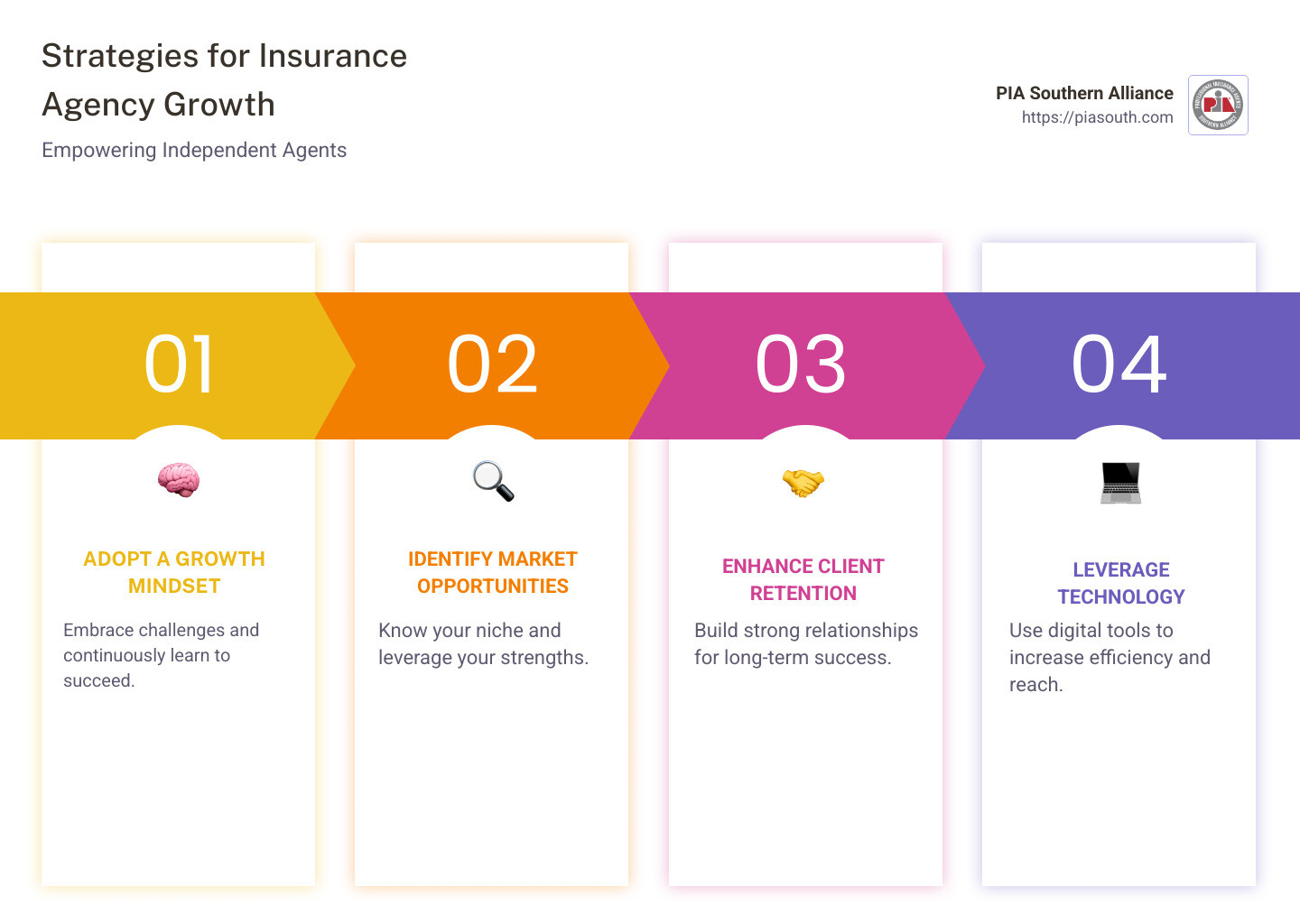
- Adopt a Growth Mindset: Accept challenges and learn continuously.
- Identify Market Opportunities: Know your niche and leverage your strengths.
- Improve Client Retention: Build relationships for long-term success.
- Leverage Technology: Use digital tools to increase efficiency.
I’m Scott Hansard, deeply committed to promoting the highest standards in the insurance industry across Georgia, Alabama, and Mississippi. At PIA Southern Alliance, we focus on providing independent agents with the tools and strategies needed for sustainable expansion.
Terms related to insurance agency growth strategies:
– cross-selling insurance techniques
– insurance agency perpetuation plan
– sample insurance agency perpetuation plan
Accept Digital Change
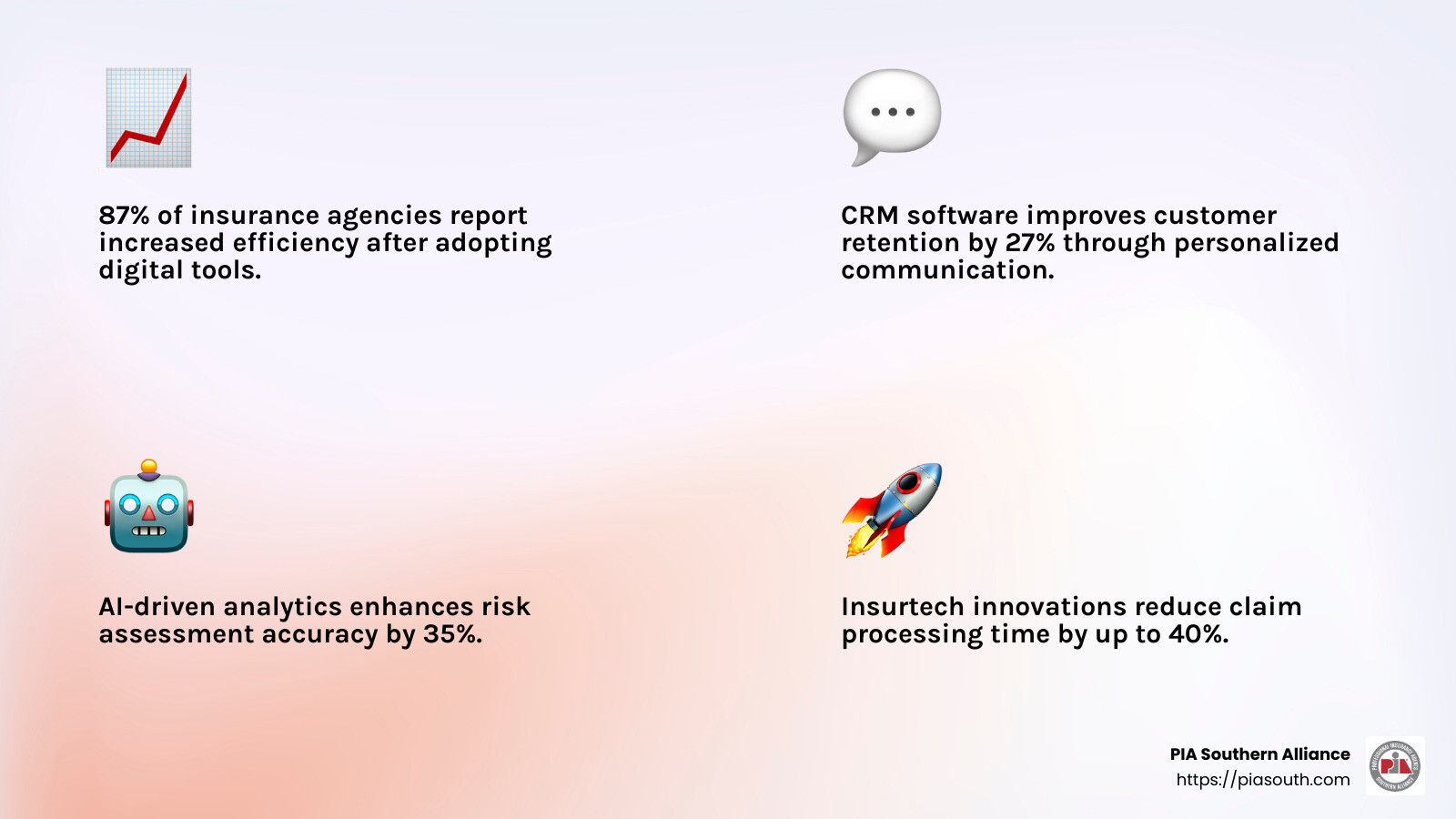
In today’s world, accepting digital change is not just an option; it’s a necessity for insurance agencies aiming to thrive. Digital tools, CRM software, and insurtech are changing how agencies operate, making them more efficient and customer-focused.
Accept Digital Tools
Digital tools streamline operations, making it easier to manage policies, claims, and client interactions. Tools like Insurance Broker Management Systems and Policy Administration Systems improve service delivery by automating routine tasks. This means agents can focus more on building relationships and less on paperwork.
- Policy Management Software: Simplifies policy updates and renewals.
- Claims Management Software: Speeds up claims processing and improves accuracy.

Leverage CRM Software
A robust CRM software system is vital for personalizing client interactions and improving customer retention. By keeping track of client preferences and past interactions, agencies can offer custom services that boost loyalty.
- Personalized Communication: Send targeted messages and offers.
- Customer Insights: Use data to understand client needs and preferences.
Explore Insurtech Innovations
Insurtech is reshaping the insurance landscape with innovations like AI-driven analytics and automated underwriting. These technologies help agencies identify risks and opportunities more accurately, leading to better decision-making.
- AI Analytics: Detect fraud and optimize pricing strategies.
- Automated Underwriting: Streamlines the application process.
By embracing these digital advancements, insurance agencies can improve their operational efficiency and deliver superior customer experiences. This positions them well for growth and success in the competitive insurance market.
Next, we’ll explore how diversifying your insurance offerings can further boost your agency’s growth potential.
Diversify Insurance Offerings
Diversifying insurance offerings is a key strategy for insurance agency growth, allowing agencies to reach more clients and increase revenue. By focusing on cross-selling, upselling, and tapping into niche markets, agencies can create a more robust portfolio that meets diverse client needs.
Cross-Selling and Upselling
Cross-selling and upselling are powerful techniques to boost revenue without acquiring new clients. Cross-selling involves offering additional products that complement what the client already has. For example, if a client has car insurance, offering homeowners insurance can be a natural extension.
Upselling, on the other hand, is about enhancing a client’s current policy. This could mean offering a premium package that includes additional benefits or higher coverage limits. For instance, an agent might suggest adding comprehensive coverage to an existing auto policy.
- Cross-Selling Example: Offer life insurance to a client who already has a property policy.
- Upselling Example: Suggest add-ons like roadside assistance for auto insurance.
These strategies not only increase revenue but also strengthen client relationships by providing comprehensive protection custom to their needs.
Target Niche Markets
Exploring niche markets can set an agency apart from competitors and open new revenue streams. Niche markets are specialized segments with specific needs that aren’t fully addressed by mainstream offerings.
Consider emerging areas like cyber insurance. As more businesses and individuals face digital threats, the demand for cyber coverage is on the rise. Offering specialized policies in this area can attract tech-savvy clients and businesses looking for protection against cyber risks.
Another promising niche is environmental insurance, which caters to businesses needing coverage for pollution-related liabilities. In states like Georgia, Alabama, and Mississippi, where industries like agriculture and manufacturing are prevalent, this can be a lucrative market.
- Cyber Insurance: Protects against data breaches and cyberattacks.
- Environmental Insurance: Covers pollution-related exposures.
By tapping into these niche markets, agencies can not only grow their client base but also position themselves as experts in specialized areas of insurance.
Next, we’ll dive into how building a strong brand identity can further improve your agency’s growth prospects.
Build a Strong Brand Identity
A strong brand identity is crucial for any insurance agency looking to stand out in a crowded market. It’s not just about logos and colors; it’s about what makes your agency unique and how you communicate that to your clients.
Unique Selling Proposition (USP)
Your Unique Selling Proposition (USP) is what sets you apart from other agencies. It’s the reason clients choose you over others. Developing a clear and compelling USP involves understanding what your agency offers that others don’t.
For example, maybe your agency specializes in eco-friendly insurance options, appealing to environmentally conscious consumers. Or perhaps you offer exceptional customer service, with a dedicated agent available 24/7. Whatever it is, your USP should be clear, memorable, and woven into all your marketing efforts.
- Eco-Friendly Insurance: Attracts clients who value sustainability.
- 24/7 Customer Service: Provides peace of mind with round-the-clock support.
A well-crafted USP not only attracts new clients but also reinforces loyalty among existing ones.
Enhancing Your Online Presence
In today’s digital world, having a strong online presence is non-negotiable. It’s one of the most effective ways to communicate your brand identity and reach potential clients.
Start by ensuring your website is user-friendly and informative. It should clearly convey your USP and offer easy navigation. Consider adding a blog to share valuable insights and tips related to property and casualty insurance. This not only helps with SEO but also establishes your agency as a thought leader in the industry.
Social media platforms are another powerful tool for building your brand. Use them to engage with clients, share success stories, and highlight your unique offerings. Platforms like Facebook and LinkedIn are particularly effective for reaching potential clients in Georgia, Alabama, and Mississippi.
- Website Tips: Easy navigation, clear USP, and engaging content.
- Social Media: Engage, inform, and connect with your audience.
By focusing on a strong online presence, your agency can increase visibility, attract new clients, and foster stronger relationships with existing ones.
Next, we’ll explore how focusing on customer retention and loyalty can drive further growth for your agency.
Focus on Customer Retention and Loyalty
Customer retention and loyalty are critical for sustainable growth in the insurance industry. Keeping your existing clients happy not only ensures steady revenue but also turns them into advocates for your agency.
Personalized Services
Personalized services are at the heart of building strong client relationships. By tailoring your offerings to meet individual client needs, you demonstrate that you truly understand and value them. This personal touch can make a big difference in customer satisfaction and loyalty.
For instance, consider using data-driven insights to anticipate when a client might benefit from additional coverage. If a client has recently purchased a new home, you could offer them a custom homeowner’s policy. This proactive approach not only improves the client experience but also opens opportunities for cross-selling and upselling.
- Data-Driven Insights: Understand client needs and offer relevant products.
- Custom Policies: Customize offerings to match life changes, like buying a home.
Implementing Customer Loyalty Programs
Customer loyalty programs are effective tools for rewarding and retaining clients. These programs can include discounts, rewards, or exclusive services that encourage clients to stay with your agency.
Imagine offering a loyalty program that provides clients with a discount on their premiums after a certain number of years with your agency. Or, consider a referral program where clients receive a reward for bringing in new business. Such initiatives not only increase retention but also help expand your client base through word-of-mouth referrals.
- Discounts and Rewards: Encourage long-term relationships and repeat business.
- Referral Incentives: Turn satisfied clients into brand ambassadors.
By focusing on personalized services and implementing loyalty programs, your agency can strengthen client relationships and foster long-term loyalty. This approach not only boosts customer satisfaction but also contributes to your agency’s growth and success.
Next, we’ll dig into the importance of networking and community involvement for expanding your agency’s reach.
Networking and Community Involvement
Networking and community involvement are crucial insurance agency growth strategies that can significantly expand your reach and influence.
Industry Conferences
Attending industry conferences is a fantastic way to stay updated on the latest trends and connect with other professionals. These events offer a platform to learn from industry leaders, share experiences, and find new opportunities.
- Learning Opportunities: Conferences provide insights into industry developments.
- Networking: Meet peers, potential clients, and partners.
Imagine attending a conference in Georgia, Alabama, or Mississippi, where you can engage with local experts and gain insights specific to these markets. These interactions can spark ideas that lead to innovative solutions for your clients.
Community Outreach
Community outreach is about building relationships and showing your agency’s commitment to the local community. Engaging in community events not only improves your agency’s reputation but also opens doors to new business opportunities.
- Building Goodwill: Participate in local events to foster positive relationships.
- Visibility: Increase your agency’s presence and attract new clients.
Consider sponsoring a local charity event or volunteering at community gatherings. Such activities highlight your agency’s values and demonstrate a commitment to making a positive impact. This goodwill can translate into stronger client relationships and increased referrals.
By actively participating in industry conferences and community outreach, your agency can build a robust network and establish a strong local presence. These efforts not only improve your agency’s reputation but also drive growth by connecting you with potential clients and partners.
Next, we’ll explore how investing in employee development can further contribute to your agency’s success.
Invest in Employee Development
Investing in employee development is a cornerstone of successful insurance agency growth strategies. A well-trained team can lift your agency’s performance, ensuring you stay ahead in a competitive market.
Training Programs
Training programs are essential for skill improvement and keeping your team updated with the latest industry practices. They help employees gain new skills and refine existing ones, fostering a culture of continuous learning.
- Skill Improvement: Employees learn about new insurance products and regulations.
- Confidence Building: Training boosts employee confidence, leading to better customer interactions.
Consider enrolling your team in specialized training programs that focus on property and casualty insurance. These programs can provide valuable insights into market trends and best practices, aligning with your agency’s goals.
Skill Improvement
Constant skill improvement is vital for maintaining a competitive edge. Encourage your team to pursue certifications and advanced courses, especially those related to risk management, which is closely aligned with the insurance industry.
- Certifications: Encourage employees to obtain relevant industry certifications.
- Advanced Courses: Support participation in courses that improve industry knowledge.
For instance, an agency in Alabama might benefit from local workshops that address regional insurance challenges. By investing in such opportunities, you not only improve your team’s skills but also demonstrate a commitment to their professional growth.
The Impact of Development
Investing in employee development leads to a motivated workforce. An agency that prioritizes training sees improvements in service quality and customer satisfaction. This, in turn, improves client retention and attracts new business.
- Motivation: A well-trained team feels valued and motivated.
- Customer Satisfaction: Improved skills lead to better service and happier clients.
Research shows that agencies with robust training programs experience higher employee satisfaction and productivity. For example, a well-implemented training program can result in a 15% increase in employee satisfaction and a 10% boost in productivity.
By focusing on employee development, your agency not only improves its service capabilities but also builds a strong foundation for sustainable growth. Next, we’ll dig into how adopting a data-driven marketing strategy can further propel your agency’s success.
Adopt a Data-Driven Marketing Strategy
In today’s competitive insurance landscape, adopting a data-driven marketing strategy can set your agency apart. By leveraging data, you can make informed decisions that boost client engagement and drive growth.
Customer Segmentation
Customer segmentation is the practice of dividing your client base into distinct groups based on various factors like needs, preferences, behaviors, and demographics. This approach allows for more personalized interactions, which can lead to increased customer satisfaction and loyalty.
- Customized Services: Tailor your services to meet the specific needs of different customer segments.
- Targeted Communication: Craft messages that resonate with each segment, improving engagement rates.
For example, an agency in Georgia might identify a segment interested in eco-friendly insurance options. By focusing on this niche, the agency can offer custom policies that meet these customers’ unique needs, enhancing their market position.
Tracking and Analyzing Marketing Metrics
Understanding the effectiveness of your marketing efforts is crucial. By tracking key performance indicators (KPIs) such as contact rates, quote rates, and bind rates, you can assess your strategies’ success and make necessary adjustments.
- Contact Rates: Measure how often potential clients engage with your agency.
- Quote Rates: Track the number of quotes provided relative to inquiries.
- Bind Rates: Analyze the ratio of policies sold to quotes provided.
Consider an agency in Mississippi that notices a drop in quote rates. By analyzing the data, they might find that their messaging isn’t resonating with a specific demographic. Adjusting their approach can lead to better engagement and higher conversion rates.
The Power of Data
Data-driven strategies empower agencies to refine their marketing efforts continuously. By focusing on data, you can identify trends, optimize campaigns, and ultimately improve your agency’s growth trajectory.
- Trend Identification: Recognize emerging patterns and adjust strategies proactively.
- Campaign Optimization: Use insights to fine-tune marketing campaigns for better results.
Adopting a data-driven marketing strategy not only improves operational efficiency but also aligns your agency with modern consumer expectations. By understanding and anticipating client needs, you can deliver exceptional service and foster long-term relationships.
Next, we’ll explore how expanding your geographic reach and market penetration can further strengthen your agency’s position in the industry.
Expand Geographic Reach and Market Penetration
Expanding your insurance agency’s geographic reach and market penetration is a powerful way to increase market share and tap into new opportunities. Here’s how you can make it happen:
Market Share Growth
To grow your market share, consider expanding your agency’s presence into new regions. This can involve opening new locations or acquiring existing agencies. By doing so, you can access a broader customer base and strengthen your competitive position.
- New Locations: Opening additional offices in strategic areas like Georgia, Alabama, and Mississippi can help you reach more customers and increase brand visibility.
- Acquisitions: Acquiring smaller agencies can quickly boost your market presence and give you access to their existing client base.
For instance, an agency in Alabama might acquire a local competitor to instantly increase its market share and expand its service offerings.
Niche Targeting
Targeting niche markets is another effective strategy for insurance agency growth. By focusing on specialized segments, you can create custom insurance solutions that resonate with specific customer needs.
- Unique Products: Develop insurance products that cater to niche markets, such as eco-friendly policies or specialized coverage for small businesses.
- Custom Marketing: Use targeted marketing campaigns to reach these niche audiences effectively.
A case study from Mississippi shows how an agency successfully targeted the growing market for remote work insurance. By offering policies that cover home office setups and cybersecurity risks, they attracted a new wave of clients seeking these specific protections.
Strategies for Success
To successfully expand your geographic reach and market penetration, consider these strategies:
- Local Partnerships: Collaborate with local businesses and organizations to establish a foothold in new regions.
- Community Involvement: Engage with the community through events and sponsorships to build brand trust and recognition.
- Digital Presence: Improve your online presence to reach potential clients in new areas. A strong digital strategy can help you connect with customers who may not be reached through traditional channels.
By expanding geographically and targeting niche markets, your agency can achieve significant growth and solidify its position as a leader in the insurance industry. Next, we’ll dig into how implementing efficient operational processes can further improve your agency’s success.
Implement Efficient Operational Processes
Efficient operational processes are the backbone of a successful insurance agency. Streamlining your workflows and embracing automation can greatly improve productivity and reduce costs. Let’s explore how you can achieve this.
Workflow Automation
Automating routine tasks can free up valuable time and resources, allowing your team to focus on more strategic activities. Consider these automation opportunities:
Task Assignments: Use software to automate task assignments and set reminders. This ensures that nothing falls through the cracks and that your team stays on track.
Document Management: Implement a centralized document management system. This allows for easy access and collaboration, reducing the time spent searching for files.
Claims Processing: Automate claims processing to speed up response times and improve customer satisfaction. This can also minimize errors and improve accuracy.
For example, an agency in Georgia implemented a claims management system that cut processing time by 40%, leading to happier clients and more efficient operations.
Operational Efficiency
Improving operational efficiency is key to maximizing productivity and profitability. Here are some strategies to consider:
Standardized Procedures: Develop standardized procedures for common tasks to ensure consistency and efficiency. This can reduce training time for new employees and improve overall performance.
Performance Metrics: Track performance metrics to identify bottlenecks and areas for improvement. Regularly reviewing these metrics can help you make informed decisions to optimize operations.
Continuous Improvement: Encourage a culture of continuous improvement by regularly evaluating and refining your processes. This helps your agency adapt to changing market conditions and stay competitive.
A case study from Alabama shows how an agency improved its operational efficiency by conducting regular process audits. By identifying inefficiencies and implementing changes, they increased productivity by 25% and reduced operational costs significantly.
Technology Integration
Integrating technology into your operations can improve both workflow automation and operational efficiency:
CRM Software: Use customer relationship management (CRM) software to manage client interactions and streamline communication. This can lead to better customer service and increased retention.
Data Analytics: Leverage data analytics to gain insights into customer behavior and preferences. This information can guide your marketing strategies and help you tailor your services to meet client needs.
By focusing on workflow automation and operational efficiency, your agency can operate more smoothly and effectively. This not only improves your bottom line but also improves the overall customer experience. Next, we’ll explore how setting and tracking SMART goals can drive your agency’s growth and success.
Set and Track SMART Goals
Setting and tracking SMART goals is a game-changer for insurance agencies aiming for growth. SMART stands for Specific, Measurable, Achievable, Relevant, and Timely. These goals provide a clear roadmap for success and ensure everyone in the agency is aligned.
Specific Goals
Being specific about what you want to achieve is crucial. Instead of a vague goal like “increase sales,” set a target like “increase property and casualty policy sales by 15% in Georgia by the end of the fiscal year.” This clarity helps your team focus on what truly matters.
Measurable Outcomes
Measuring progress is essential to know if you’re on track. Use metrics like the number of new clients, policy renewals, or customer satisfaction scores to gauge success. For instance, an agency in Mississippi set a goal to improve customer satisfaction by 20%. They measured progress through quarterly surveys, which helped them adjust their strategies in real-time.
Achievable and Relevant Goals
Goals should be challenging but realistic. Setting unattainable targets can demotivate your team. Ensure that goals are relevant to your agency’s mission and market conditions. For example, if your agency specializes in auto insurance, a goal to expand into niche markets like classic car insurance could be both achievable and relevant.
Timely Objectives
Time-bound goals create urgency and focus. Set deadlines for each goal to keep momentum. A case study from an Alabama agency showed that setting a 6-month deadline for launching a new online platform kept the project on track and motivated the team to meet milestones.
Tracking Progress
Regularly monitor progress towards your SMART goals. Use dashboards and reports to visualize data and identify areas needing attention. This ongoing assessment allows you to pivot strategies if necessary, ensuring that you stay on course.
Incorporating SMART goals into your agency’s strategy not only provides direction but also fosters accountability and motivation. By setting clear, measurable objectives, your agency can track progress and celebrate achievements, paving the way for sustained growth and success.
Now, let’s dig into frequently asked questions about insurance agency growth strategies.
Frequently Asked Questions about Insurance Agency Growth Strategies
How to grow in the insurance industry?
Growing in the insurance industry requires a strategic approach. Focus on diversifying your offerings by tapping into niche markets and employing cross-selling and upselling techniques. Networking is crucial—attend industry conferences in Georgia, Alabama, and Mississippi, and engage in community outreach to build strong connections.
Digital change is another key element. Accept insurtech and CRM software to improve efficiency and customer experience. Additionally, invest in employee development to ensure your team is equipped with the latest skills and knowledge.
Finally, set SMART goals to provide a clear roadmap for success. This structured approach helps align your team and track progress effectively.
What is a good profit margin for an insurance agency?
A good profit margin for an insurance agency typically ranges between 2% and 10%. However, aiming for the higher end of this spectrum can be beneficial, especially if you’re preparing for growth opportunities or potential acquisitions.
To achieve a healthy profit margin, focus on improving operational efficiency and enhancing customer retention. Diversifying your insurance offerings and upselling existing clients can also contribute to a higher margin. Consulting with a financial advisor can provide custom insights for your agency’s specific situation.
Why is digital change important for insurance agencies?
Digital change is crucial for insurance agencies to remain competitive and meet modern consumer expectations. By adopting digital tools and CRM software, agencies can streamline operations, improve customer service, and reach new clients more effectively.
For instance, implementing custom insurance software solutions can improve policy management, claims handling, and regulatory compliance. This not only reduces operational costs but also minimizes errors.
Moreover, digital change enables agencies to leverage data analytics for better decision-making. By understanding customer behavior and preferences, agencies can tailor their offerings and marketing strategies, ultimately driving growth and success.
Now, let’s explore how PIA Southern Alliance supports insurance agents in achieving these growth strategies.
Conclusion
Navigating the path from goals to growth in the insurance industry is no small feat. However, with the right resources and strategic decisions, success is within reach. This is where PIA Southern Alliance steps in as a valuable partner for independent insurance agencies in Georgia, Alabama, and Mississippi.
Educational Resources: We offer specialized educational resources that are designed to improve your strategic decision-making skills. Whether it’s through webinars, courses, or personalized coaching, our focus is on equipping you with the knowledge you need to thrive in a competitive market. By honing your cross-selling abilities and improving your understanding of commercial property insurance, you can create more value for your clients and your agency.
Strategic Decision-Making: Making informed decisions is crucial for growth. Our programs emphasize the importance of setting clear, strategic goals and understanding market dynamics. By leveraging data-driven insights and adopting efficient operational processes, you can streamline your agency’s workflow and improve profitability.
Community and Networking: Being involved in your local community and industry networks can open doors to new opportunities. Whether it’s attending industry conferences or participating in community outreach, building strong connections is key to expanding your reach and market penetration.
As you implement these strategies, growth is a journey, not a destination. With the support of PIA Southern Alliance, you are not alone on this path. We are committed to helping you achieve sustainable success in the insurance industry.
Ready to take the next step? Explore our educational programs and resources today and let PIA Southern Alliance be your partner in building a successful agency.