
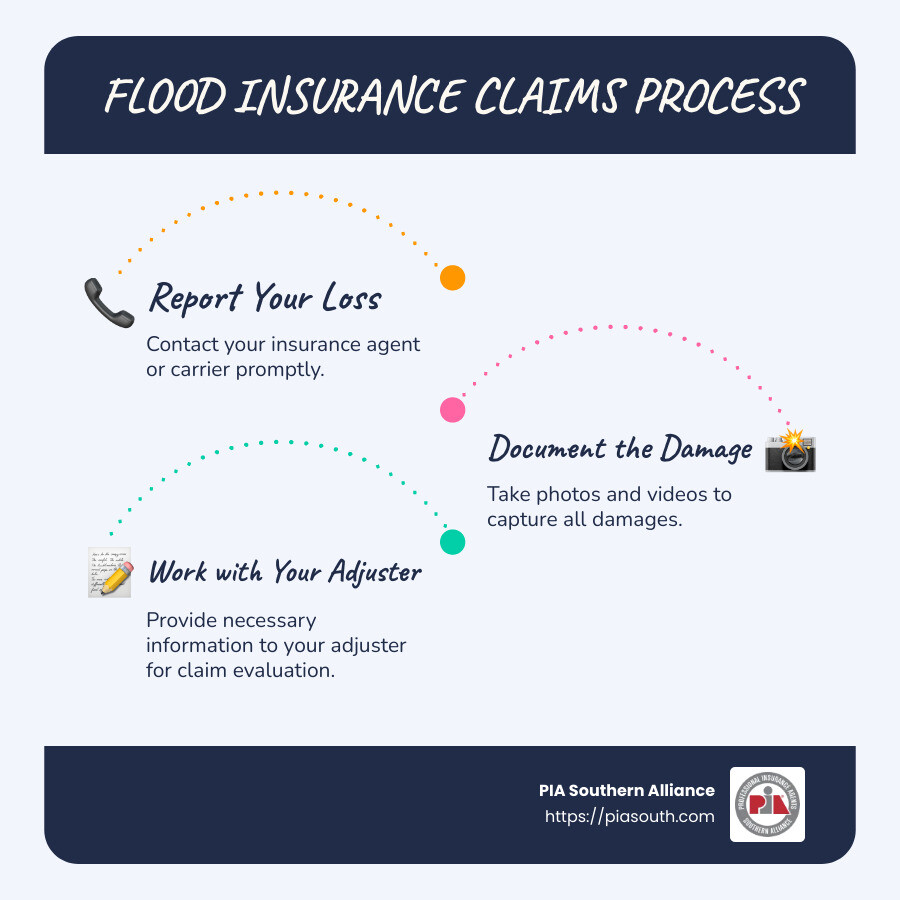
The flood insurance claims process can seem daunting, but understanding it is crucial for effective recovery after a flood. Whether you’re an insurance agency in the Southeast or a homeowner in a flood-prone area, knowing these steps will help ease the path to recovery:
- Report your loss: Contact your insurance agent or carrier as soon as possible.
- Document the damage: Use photos and videos to capture everything.
- Work with your adjuster: Ensure they have all the necessary information to evaluate your claim.
The National Flood Insurance Program (NFIP), managed by FEMA, is designed to help policyholders steer this process with ease. If you’re dealing with flood damage, these steps will guide you through recovering from nature’s worst.
As part of the PIA Southern Alliance, we are committed to empowering agencies by providing essential resources for mastering the flood insurance claims process and enhancing their offerings. Let’s dive deeper in the upcoming sections to steer complexities and maximize claims effectively.
Understanding Flood Insurance
Navigating flood insurance can be tricky, but understanding the basics will help you make informed decisions. Let’s break down the essentials: coverage, deductibles, and the National Flood Insurance Program (NFIP).
Coverage
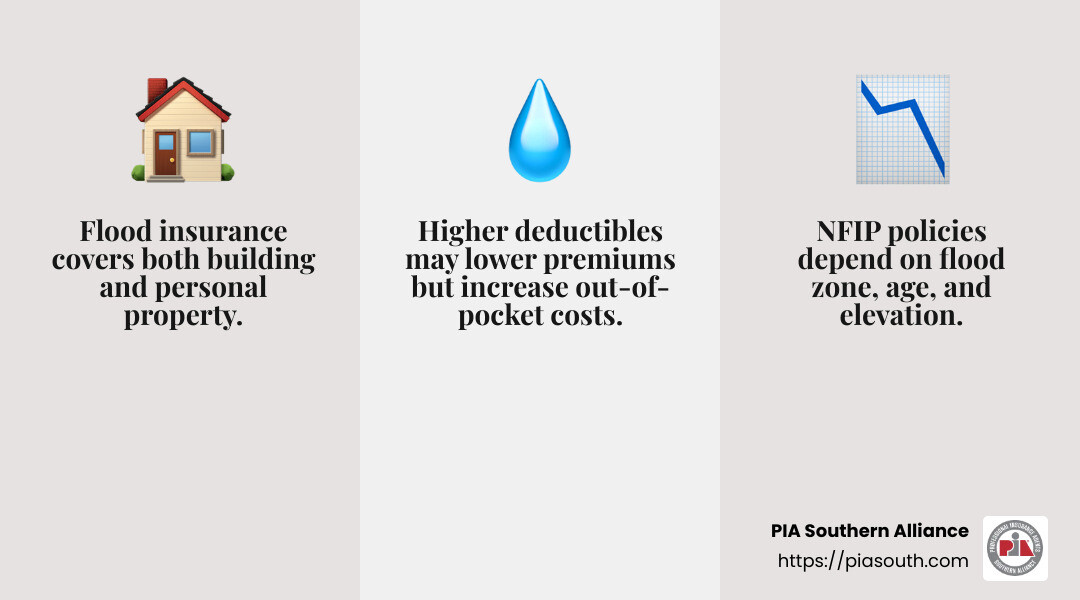
Flood insurance is a specific type of property insurance that covers losses caused by flooding. This includes damage from heavy rain, storm surges, or melting snow. Unlike standard homeowners insurance, flood insurance is necessary for properties in high-risk flood zones.
Flood insurance policies are available for both residential and commercial properties. They cover two main areas:
Building Property Coverage: This covers the physical structure of your home or business, including the foundation, electrical and plumbing systems, and built-in appliances.
Personal Property Coverage: This covers your belongings, such as furniture, electronics, and clothing.
Flood insurance does not cover everything. For example, it typically doesn’t cover temporary living expenses or damage to vehicles.
Deductibles
A deductible is the amount you must pay out of pocket before your insurance kicks in. Choosing the right deductible is a balancing act. A higher deductible means lower premiums, but it also means you’ll pay more if you file a claim.
When selecting a deductible, consider your financial situation and your property’s flood risk. That separate deductibles apply to building property and personal property coverage.
National Flood Insurance Program (NFIP)
The NFIP, managed by FEMA, plays a crucial role in providing affordable flood insurance to property owners in participating communities. The NFIP sets the standards for flood insurance policies and helps communities adopt floodplain management regulations.
Flood insurance through the NFIP is available only in communities that agree to enforce floodplain management ordinances. These ordinances aim to reduce future flood risks, benefiting property owners and the community as a whole.
The cost of an NFIP policy depends on several factors, including your property’s flood zone, age, and elevation. Properties in high-risk areas, like those in Georgia, Alabama, and Mississippi, often face higher premiums due to increased flood risks.
Understanding these elements of flood insurance will help you make informed decisions and ensure you’re adequately protected. In the next section, we’ll explore the steps involved in the flood insurance claims process to help you steer it with confidence.
The Flood Insurance Claims Process
Filing a flood insurance claim can feel overwhelming, but knowing the steps can make the process smoother. Let’s break down the flood insurance claims process into three key steps: notifying your insurer, documenting the damage, and working with your adjuster.
Step 1: Notify Your Insurer
The first thing you need to do after a flood is contact your insurance agent or company to report your loss. Quick action is crucial. Your policy requires you to give prompt written notice. Expect your adjuster to reach out within 24-48 hours after you report your claim, although severe flooding might cause delays.
If you’re unsure who your insurance provider is, you can call the NFIP Call Center at 1-800-427-4661 for assistance. They can help you find your insurance carrier and answer any questions you might have.
Step 2: Document the Damage
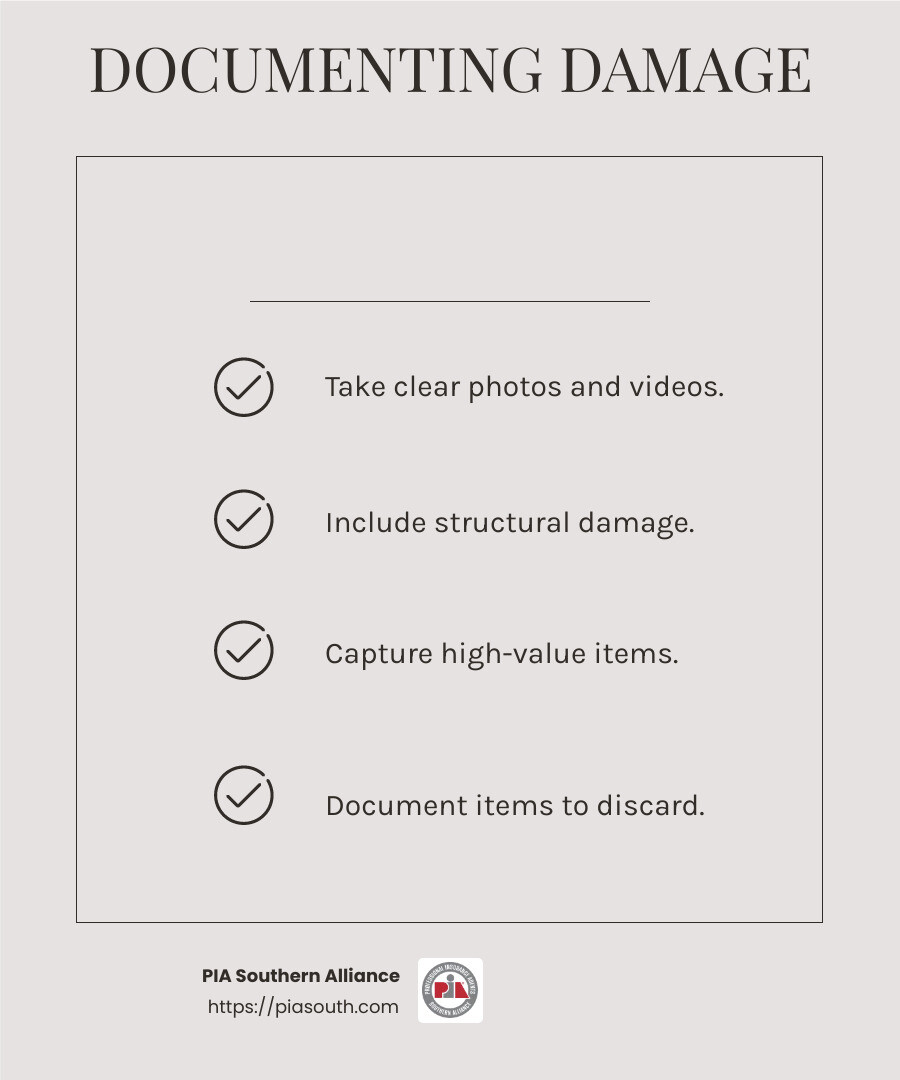
Before the adjuster arrives, thoroughly document all flood-related damage. This step is vital for supporting your claim. Take clear photos and videos of the damage, including structural damage to your home and any affected personal property. Don’t forget to capture high-value items and anything you must discard, like soaked carpets or perishable goods.
Proper documentation not only helps in assessing the extent of the damage but also ensures you have evidence if you need to contest any part of the claim later. The more detailed your documentation, the stronger your claim.
Step 3: Work with Your Adjuster
When your insurance adjuster arrives, verify their identification. They should show you their official ID and Flood Control Number, which confirms their authorization to work on your claim. The adjuster will inspect your property, assess the damage, and take measurements and photos.
You’ll receive a repair estimate based on this inspection. Review it carefully for accuracy. If you disagree or find additional damage later, you can request an additional payment. You’ll need to provide supporting documentation for any new claims.
You’ll also be asked to sign a proof of loss form. Signing this form allows your insurer to issue payment for agreed damages, even if you have questions about the amount. Don’t worry; you can still negotiate further payments if necessary.
By following these steps, you can steer the claims process more effectively and work toward a fair settlement. In the next section, we’ll share tips for maximizing your claim to ensure you get the most out of your insurance coverage.
Tips for Maximizing Your Claim
Navigating the flood insurance claims process doesn’t have to be daunting. With a few smart strategies, you can ensure you get the most out of your claim. Here are some practical tips:
Verify Adjuster Identity
When your adjuster arrives, it’s crucial to verify their identity. Ask to see their official ID and Flood Control Number. These credentials confirm they are authorized to handle your claim. This step protects you from potential scams and ensures you’re working with a legitimate professional.
Document Losses
Thorough documentation is your best friend in the claims process. Start by taking clear photos and videos of all damage. Capture everything, from structural damage to personal items. Make sure to document high-value items separately. If you need to throw anything away for safety reasons, like moldy furniture, photograph it first.
Creating a detailed inventory of lost or damaged items can also strengthen your claim. Write down descriptions, purchase dates, and estimated values. This information can help your adjuster accurately assess your losses.
Keep Records
Organization is key. Keep all related documents in one place. This includes receipts for repairs, replacement items, and any communication with your insurer or adjuster. A well-maintained paper trail not only supports your claim but also helps if you need to appeal a decision later.
It’s also a good idea to keep a log of all interactions with your insurance company. Note down dates, times, and the names of people you speak with. This record can be invaluable if any disputes arise.
By following these tips, you can maximize your claim and ensure a smoother experience. In the next section, we’ll explore common challenges in the claims process and how to overcome them.
Common Challenges and Solutions
When dealing with the flood insurance claims process, it’s important to be aware of potential problems. Here are some common challenges you might face, along with practical solutions to tackle them.
Mold Prevention
Mold can quickly become a problem after a flood. It’s crucial to act fast to prevent its growth. Remember, your insurance may not cover mold damage if you didn’t take steps to stop it.
Solution: Start by removing wet items and drying out your home as soon as it’s safe. Use fans and dehumidifiers to speed up the drying process. If you’re unable to access your property due to official restrictions or lingering floodwaters, document these conditions. This documentation can help if you need to explain any mold issues later.
Claim Denial
Sometimes, claims get denied. This can be due to missing information, a misunderstanding of your policy, or even mistakes in the paperwork.
Solution: Double-check your policy details and ensure all documentation is complete and accurate. If your claim is denied, ask for a detailed explanation. This will help you understand what went wrong and how to fix it. You can also reach out to PIA Southern Alliance for guidance on what to do next.
Appeals Process
If your claim is denied or you receive less compensation than expected, you have the right to appeal. However, navigating the appeals process can be tricky.
Solution: Start by gathering all relevant documents, including your policy, claim forms, and correspondence with your insurer. Clearly outline why you believe your claim should be reconsidered. It’s also beneficial to keep a record of all interactions with your insurance company. This can help support your case.
The U.S. Senate Banking Committee’s investigation highlighted flaws in the appeals process, emphasizing the need for improvements. While FEMA is working on reforms, it’s crucial to stay informed and persistent in pursuing your claim.
By understanding these challenges and taking proactive steps, you can steer the flood insurance claims process more effectively. In the next section, we’ll address frequently asked questions to further assist you in managing your claim.
Frequently Asked Questions about Flood Insurance Claims
Navigating the flood insurance claims process can be confusing. Here are some common questions and answers to help you understand what to expect.
How long does a flood insurance claim take?
Typically, it takes about four to eight weeks to finalize a flood insurance claim. However, this timeline can vary depending on the severity of the flood, the availability of adjusters, and the completeness of your documentation. To help speed up the process, make sure you promptly notify your insurer and provide all necessary documentation, such as photos and videos of the damage.
How to get the most out of a flood insurance claim?
Getting the most out of your claim involves thorough preparation and documentation. Here are some key steps:
- Document all losses: Keep a detailed list of damaged items and take clear photos or videos. This evidence is crucial for proving your losses.
- Contact an attorney: If you encounter difficulties or if your claim is denied, consulting with an attorney experienced in insurance claims can provide valuable guidance and help protect your rights.
- Communicate clearly with your insurer: Maintain open lines of communication with your insurance agent and adjuster. Ask questions and ensure you understand your policy coverage and the claims process.
How do flood insurance payouts work?
Understanding how payouts work can help you manage your expectations:
- Advance payment: After you report your claim, you can request an advance payment to cover immediate needs. This amount will be deducted from your final settlement.
- Final settlement: Once all damage is assessed and documented, you’ll receive a final payout. This check is often made out to both you and your mortgage company, if you have one, to ensure repairs are completed.
By following these guidelines and staying informed, you can steer the flood insurance claims process more effectively. In the next section, we’ll explore additional tips for maximizing your claim.
Conclusion
At PIA Southern Alliance, we understand the complexities of the flood insurance claims process and are here to support you every step of the way. Our goal is to empower independent insurance agencies in Georgia, Alabama, and Mississippi with the knowledge and resources they need to succeed.
We offer a range of educational resources designed to improve your strategic decision-making skills. Our specialized webinars and courses focus on enhancing your ability to cross-sell and make informed choices in the insurance landscape. Whether you’re navigating the intricacies of flood insurance or looking to expand your expertise in commercial property insurance, our programs are custom to fit your needs.
Effective strategic decision-making is crucial for growth and success in the insurance industry. By leveraging the tools and resources provided by PIA Southern Alliance, you can confidently tackle the challenges of the claims process and beyond.
Ready to lift your agency’s capabilities? Explore our insurance certification programs and let PIA Southern Alliance be your partner in building a successful agency.