
Why Ethics Training is the Foundation of Successful Insurance Agencies
Ethics insurance continuing education courses are mandatory programs that help property and casualty agents maintain their licenses, build stronger client relationships, and protect their agencies from liability. These courses cover essential topics like fiduciary duty, conflicts of interest, and fair dealing practices that every independent agent must master.
Quick Reference for Ethics CE Requirements:
- Georgia: 3 hours of ethics CE per 2-year renewal period
- Alabama: 3 hours of ethics CE per 2-year renewal period
- Mississippi: 3 hours of ethics CE per 2-year renewal period
- Format Options: Online self-study, live webinars, in-person seminars
- Cost Range: $29-$185 for individual courses or subscriptions
- Completion: Passing quiz (typically 70% or higher) and certificate issued
For independent agency owners in Georgia, Alabama, and Mississippi, ethics training is more than a regulatory checkbox—it’s the blueprint for a trustworthy practice that clients recommend.
The stakes are higher than ever. With online reviews and social media, a single ethical misstep can damage an agency’s reputation for years. As one insurance professional noted: “I didn’t know about this new CE requirement! First I panicked, but then I found a provider that made it so easy to get my Ethics CE. What a relief!”
Quality ethics courses do more than keep you compliant. They help you make better decisions, avoid costly E&O claims, and build an agency that stands out. At PIA Southern Alliance, we’ve seen how ethics insurance continuing education courses empower independent agents to serve clients and grow their businesses by upholding the highest professional standards.
Why Ethics Continuing Education is Non-Negotiable for P&C Agents
Think of ethics insurance continuing education courses as your professional insurance policy. It’s not just about keeping your license active—it’s about protecting everything you’ve built.
The Georgia Office of Insurance, Alabama Department of Insurance, and Mississippi Insurance Department all require ethics training for good reason. When clients trust you with their financial security, they expect you to act with integrity. A single ethical misstep can trigger costly E&O claims and damage your reputation.
Every ethical decision you make either builds or erodes industry trust. When one agent cuts corners, it affects how the public views all of us. But when you consistently demonstrate ethical behavior, you become the agent people recommend.
The good news? Staying current with your ethics training makes your job easier. You’ll handle difficult situations with confidence, avoid regulatory headaches, and sleep better knowing you’re protecting both your clients and your agency.
For specific details about what’s required in your state, check out our comprehensive guide on Georgia Insurance License Continuing Education Requirements.

The Role of State Regulatory Bodies
Your state DOI acts as a quality control inspector for ethics courses. They carefully review course content, instructor qualifications, and testing procedures to ensure you’re getting education that matters.
This approval process protects you from wasting time on courses that won’t count toward your license renewal and ensures the training reflects current laws and best practices. When you see a course approved by your state’s Department of Insurance, you know it meets rigorous standards.
The system also creates public accountability. Your clients can feel confident that you’ve completed legitimate training from approved providers. This transparency helps maintain compliance across the industry and gives consumers peace of mind.
Want to verify your current license status and continuing education credits? The National Association of Insurance Commissioners makes it easy: Check your license status here. This tool helps you stay on top of your requirements.
Beyond Compliance: Building a Better Agency
Smart agents know that ethics insurance continuing education courses are a secret weapon for growing your business and protecting your bottom line.
Client retention improves dramatically when clients trust you. Ethical agents build the kind of long-lasting relationships that create loyalty and referrals.
The training also sharpens your decision-making skills through real-world case studies. You’ll learn to spot potential problems before they become expensive mistakes, helping you steer tricky situations with confidence.
Your agency reputation benefits too. Being known as the “ethical agent” is the best marketing you can’t buy. Clients refer their friends and family to agents they trust, creating a steady stream of new business.
Most importantly, strong ethics training helps you mitigate risk. By understanding your responsibilities, you reduce the chance of regulatory violations, legal disputes, and E&O claims, protecting your agency’s financial health.
Ready to take your professional development to the next level? Explore additional credentials and designations that can complement your ethics training: More info about professional designations.
What to Look for in High-Quality Ethics Insurance Continuing Education Courses
Finding the right ethics insurance continuing education courses can be the difference between checking a box and strengthening your agency. Not all ethics courses are created equal; the best ones prepare you for real-world situations you’ll face with clients and carriers.
State accreditation is non-negotiable. Every course must be approved by your state’s Department of Insurance—whether in Georgia, Alabama, or Mississippi. This ensures the content meets current regulatory standards and will count toward your license renewal.
Look for courses with a curriculum for P&C agents. Generic ethics training is less effective. You need content that addresses the unique challenges you face daily, which differ from those of life or health agents.
Practical case studies transform abstract concepts into actionable knowledge. Walking through real scenarios—like handling suspected fraud or managing a conflict of interest—helps you learn skills you can use immediately.
An instructor’s experience matters. Someone who has worked in P&C insurance brings insights that purely academic instructors cannot. They understand the pressures you face and can offer practical strategies.
Flexible formats ensure you can complete the course without disrupting your business. Whether you prefer online self-study, live webinars, or in-person seminars, the right provider offers options that fit your schedule.

Key Topics Covered in a Robust Ethics Course
A comprehensive ethics course is a roadmap for navigating complex situations. The best programs help you understand why these principles matter and how to apply them under pressure.
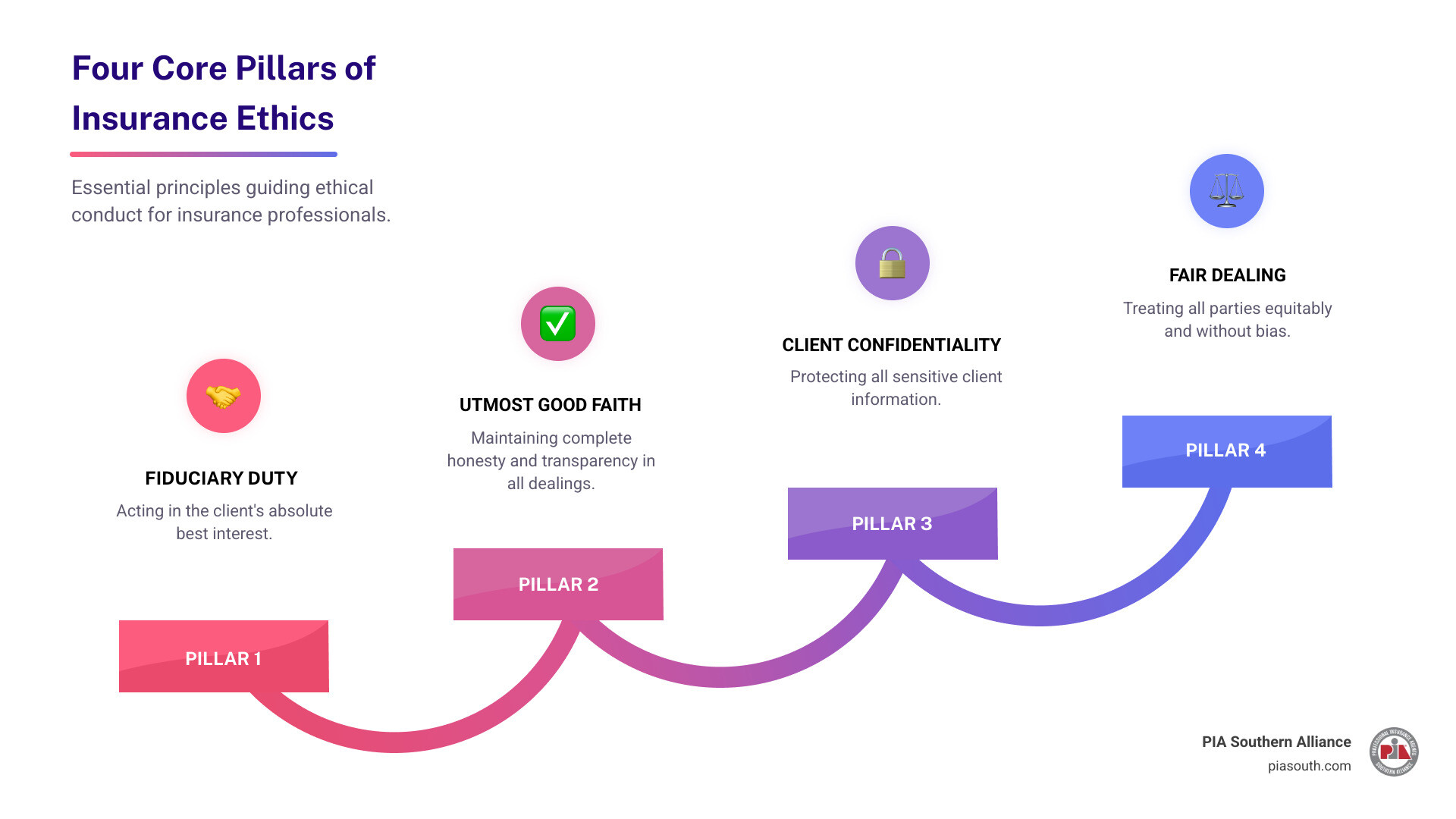
- Fiduciary Duty: This is your legal obligation to act in your client’s best interest when handling their money, advising on coverage, and ensuring claims are settled fairly.
- Conflicts of Interest: Quality courses help you recognize and manage situations where your personal interests might conflict with a client’s needs, including the importance of clear disclosures.
- Client Data Privacy: Training should cover both the technical and regulatory requirements for protecting sensitive client information from potential breaches.
- Fair Claims Handling: This topic covers processing claims impartially and efficiently, avoiding unfair practices, and ensuring settlements align with policy terms.
- Truthfulness and Misrepresentation: This addresses intentional and unintentional deception in sales practices and applications, as well as issues like rebating and defamation.
- Anti-Fraud Measures: Good training helps you recognize fraud indicators, understand reporting obligations, and implement prevention strategies in your agency.
- Professional Boundaries: Courses should provide clear guidelines for maintaining appropriate agent-client relationships to prevent misunderstandings.
- Unfair Trade Practices: This covers a range of prohibited activities, including discrimination and other practices that undermine fair competition.
The most effective courses present these topics through engaging videos, quizzes, and case studies. For a comprehensive look at what quality ethics training should include, explore our Ethics Course for Insurance Agents.
Understanding Completion Requirements for ethics insurance continuing education courses
Understanding completion requirements ensures your efforts count toward license renewal. These rules confirm you’ve absorbed the material.
Most courses require you to pass a final quiz with a score of 70% or higher. Some self-study courses require proctored exams, where someone supervises you, while others use self-monitored exams.
Course evaluations are typically required. Your feedback helps providers improve their offerings for all P&C agents.
Time tracking is built into most online platforms to ensure you meet the minimum hours required for credit.
A certificate of completion is issued after you finish all requirements. While providers usually report completion electronically to the state, keeping copies for your records is wise. This information typically takes three to five business days to appear in the National Insurance Producer Registry (NIPR) database, so plan accordingly to avoid last-minute stress.
Finding the Right Format and Provider for Your Schedule
Between client meetings and agency tasks, finding time for ethics insurance continuing education courses can be a challenge. Fortunately, today’s providers offer more options than ever to fit quality training into packed schedules.
Online on-demand courses are popular because they work around your schedule. You can tackle a module during your morning coffee or finish a quiz after dinner, with no pressure to be anywhere at a specific time.
For those who prefer interaction, live webinars offer a perfect middle ground. You get real-time engagement with instructors and peers without leaving your office—a classroom experience delivered to your desk.
In-person seminars still have their place for those who learn best face-to-face. While they require more time and travel, they offer excellent networking opportunities and deep discussions.
In terms of cost, a single ethics course might run around $85. However, if you need multiple CE hours, subscription models can be cost-effective. Some providers offer unlimited access to their course catalog for around $185 for six months or annual bundles for approximately $149 per year. The key is matching the format to your learning style and professional demands.

The Flexibility of Online ethics insurance continuing education courses
Online ethics insurance continuing education courses have been a game-changer for independent agents in Georgia, Alabama, and Mississippi, making quality education accessible and stress-free.
Self-paced learning is the biggest advantage. You can spend extra time on complex topics and pause whenever a client calls, picking up exactly where you left off.
With 24/7 accessibility, your education fits your schedule, not the other way around. You can learn from your office, home, or even while traveling.
Cost-effectiveness extends beyond the course price. You save on travel, parking, and the opportunity cost of being away from your agency. Many online platforms also include interactive features like videos and case studies to make the experience engaging. This “anywhere, anytime” approach has made continuing education more accessible than ever.
For a comprehensive look at flexible online options, explore our Online CE Classes for Insurance Agents.
The Value of Live Insurance CE Webinars
While on-demand courses offer flexibility, live CE webinars provide invaluable human connection and real-time interaction.
Interactive learning is where webinars shine. Asking questions and getting immediate answers from experienced instructors during a complex ethical scenario can clarify doubts and provide deeper insights.
A structured schedule can be a benefit, creating a dedicated block of time for learning and helping you avoid distractions that might interrupt self-study.
Networking with peers happens naturally in webinars through chat functions and group discussions. You connect with other agents facing similar challenges, learning from their questions and experiences. This collective learning environment strengthens your professional network while fulfilling CE requirements.
The energy of a live session can make complex topics more memorable. When you’re part of a group discussion, you’re more likely to recall key points when you face similar situations in your practice.
To learn more about these structured learning opportunities, visit our Insurance CE Webinars page.
Frequently Asked Questions about Insurance Ethics CE
We know figuring out continuing education can be overwhelming while juggling client needs and agency operations. Here are answers to the questions we hear most about ethics insurance continuing education courses for agents in Georgia, Alabama, and Mississippi.
How many ethics CE hours do I need in Georgia, Alabama, or Mississippi?
The ethics CE requirements are consistent across all three states, though total CE hours can vary by license type.
- Georgia: Producers need 24 hours of CE every two years, with 3 hours in ethics.
- Alabama: Producers, adjusters, and title agents need 24 hours of CE biennially, including 3 hours of ethics. Service representatives need 12 hours of CE, with 2 hours in ethics.
- Mississippi: Producers need 24 hours of CE every two years, with at least 3 hours in ethics.
This consistency highlights the importance of ethical conduct in our industry. However, requirements can change, so always double-check with your state’s Department of Insurance or verify your status through the National Insurance Producer Registry.
You can easily find state requirements via NIPR to confirm your obligations.
Can I take ethics courses from any provider?
No, you cannot take ethics courses from just any provider. Every course must come from a state-approved provider, and the course itself must be accredited by your state’s Department of Insurance.
This approval process ensures the content meets regulatory standards and that your completion will be reported accurately. If a provider or course isn’t approved, your time and money won’t count toward license renewal.
Before enrolling in any ethics insurance continuing education courses, verify the provider’s and course’s approval status on your state’s DOI website or through regulatory databases. This simple step can save you from scrambling at renewal time.
For peace of mind in Georgia, learn more about working with an Approved Continuing Education Provider for Insurance License in Georgia.
Do ethics courses help with professional designations?
Absolutely. Ethics insurance continuing education courses provide foundational knowledge that supports any professional designation you pursue.
Designations in areas like commercial property or risk management all build upon a solid ethical foundation. Understanding fiduciary duty, conflicts of interest, and fair dealing is essential for applying advanced technical knowledge responsibly.
Consistent ethics CE reinforces your commitment to professionalism, a key attribute valued in designation programs. It shows you’re dedicated to upholding the highest standards in all aspects of your practice. These courses help you understand the “why” behind industry rules, which complements advanced training and supports overall professionalism.
Many designation courses may also count toward general CE requirements if the provider is state-approved, creating a win-win for your career development.
To explore how various programs can improve your career, check out our Insurance Certification Programs.
Conclusion: Lift Your Practice with a Commitment to Ethics
We’ve seen that ethics insurance continuing education courses are much more than a checkbox on a license renewal form. They are the foundation for building a thriving, trustworthy agency that clients are eager to recommend.
When we prioritize ethical education, we invest in the long-term success of our practice. Every principle we apply strengthens our ability to serve clients with integrity.
In the competitive insurance landscape of Georgia, Alabama, and Mississippi, agencies that demonstrate ethical conduct stand out. This trust translates directly into stronger client relationships, better retention, and more referrals.
At PIA Southern Alliance, we’ve seen how quality ethics training improves our members’ decision-making, helps them avoid costly mistakes, and gives them confidence in complex situations. This commitment to excellence contributes to a healthier industry culture, supports consumer protection, and builds public trust.
Your next step is simple: make ethics CE a cornerstone of your professional development. This investment will pay dividends for years through stronger client relationships, reduced liability, and improved strategic decision-making.