
Ethics course for insurance agents plays a crucial role in defining the standards and practices these professionals must adhere to, ensuring fairness, honesty, and integrity in every transaction. As agents bridge the gap between clients and insurance companies, they have to steer complex ethical landscapes daily. Here’s a quick snapshot of why ethics are indispensable for insurance agents:
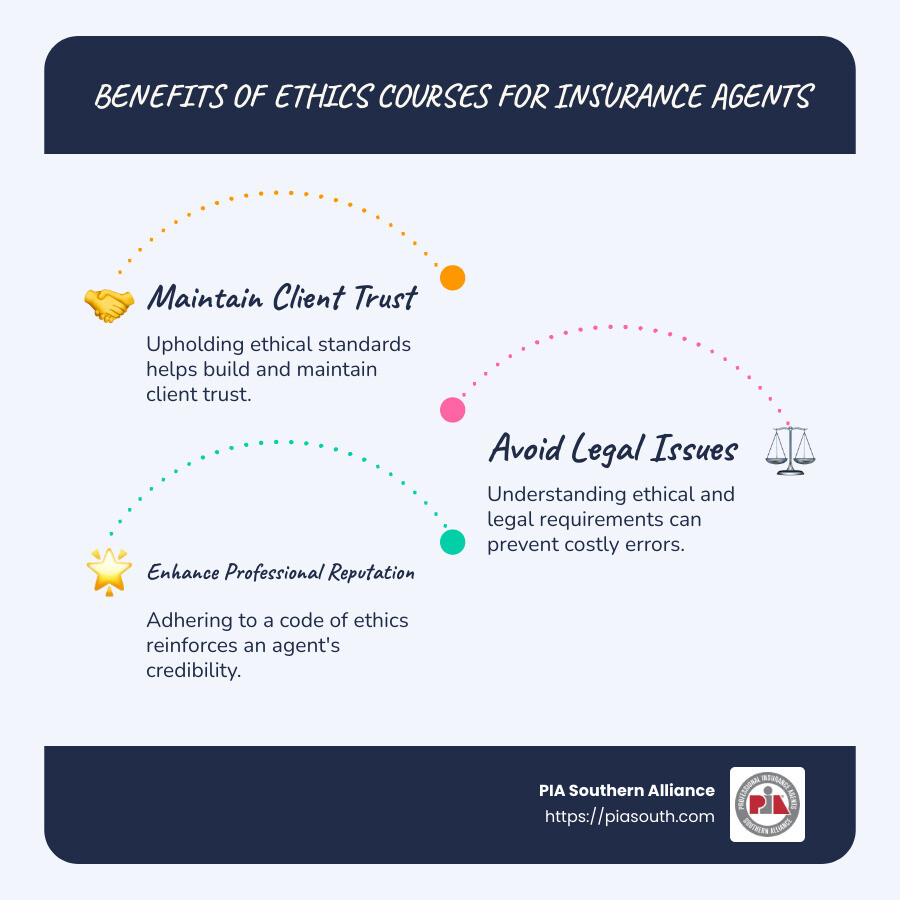
- Maintain Client Trust: Upholding ethical standards helps build and maintain client trust.
- Avoid Legal Issues: Understanding ethical and legal requirements can prevent costly errors and omissions.
- Improve Professional Reputation: Adhering to a code of ethics reinforces an agent’s credibility.
- Fulfill Regulatory Obligations: Ethics courses are often part of continuing education requirements.
At PIA South, we champion the importance of ethics in insurance because they form the cornerstone of client-agent interactions.
Related content about ethics course for insurance agents:
– Alabama insurance continuing education
– insurance ce classes
– insurance continuing ed
Understanding Ethics in Insurance
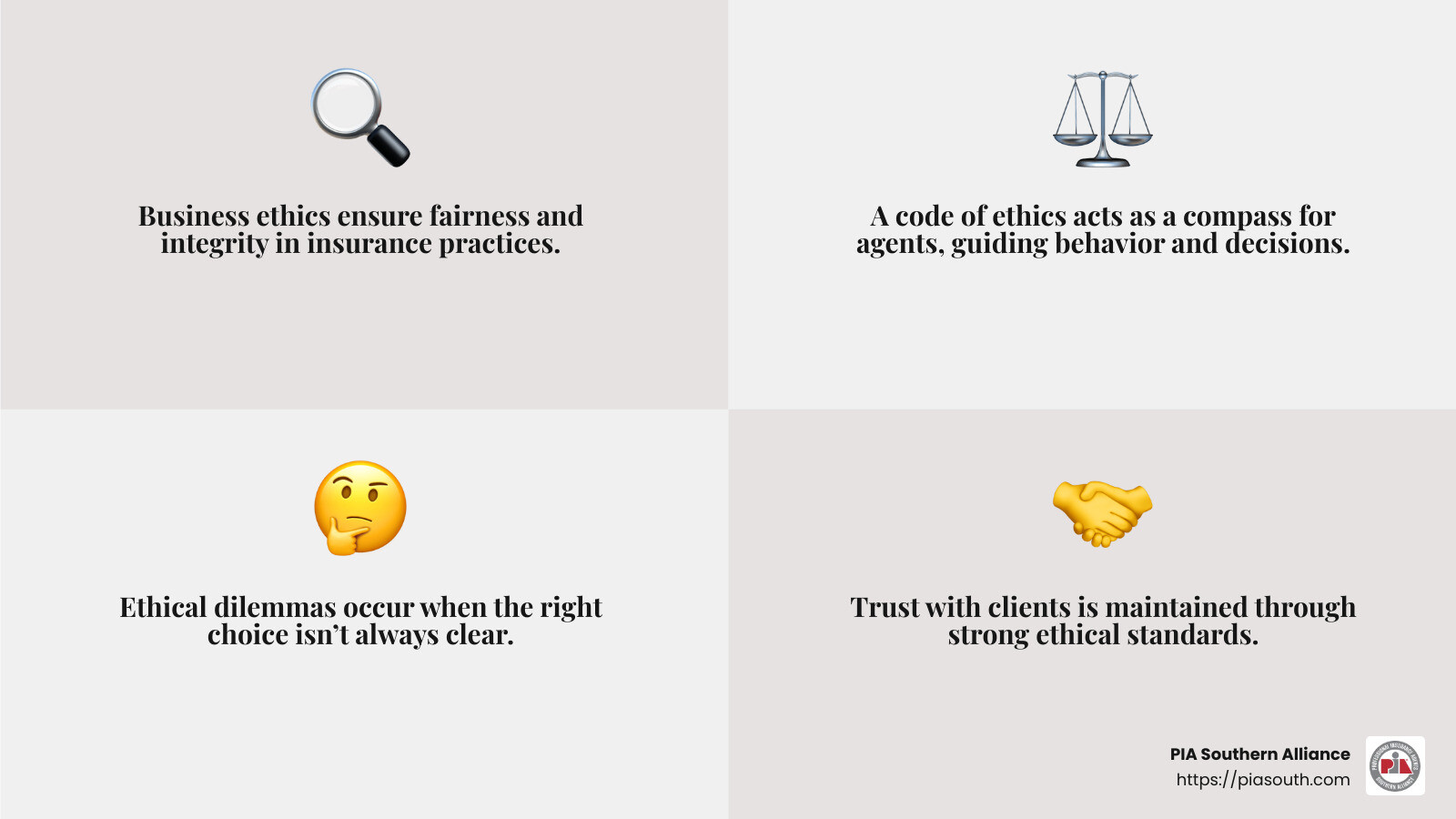
Ethics in insurance isn’t just a set of rules—it’s the backbone of the industry. At the heart of this are business ethics, which ensure that every action an insurance agent takes aligns with fairness and integrity. This is vital because agents deal with sensitive information and make decisions that can significantly impact their clients’ lives.
Business Ethics
In insurance, business ethics guide how agents should behave. They help agents make decisions that are not only legal but also right and fair. This means being honest with clients about policy terms and not overselling products that clients don’t need. It’s all about doing the right thing, even when no one is watching.
Code of Ethics
A code of ethics acts like a compass for agents. It provides a clear framework for what is expected in terms of behavior and decision-making. For instance, it may include guidelines on transparency, confidentiality, and conflict of interest. Having a strong code of ethics helps agents steer tricky situations and maintain trust with clients.
Ethical Dilemmas
Despite the guidelines, ethical dilemmas are common in the insurance world. These are situations where the right choice isn’t always clear. For example, an agent might struggle with whether to prioritize a client’s needs over the interests of the insurance company. In such cases, a well-defined code of ethics can help agents make decisions that uphold their professional integrity.
By understanding and applying these principles, agents can effectively manage their responsibilities and build stronger relationships with their clients. At PIA South, we emphasize the importance of ethics in all our educational resources, ensuring that agents are well-equipped to handle the challenges they face.
Next, we’ll explore why ethics courses for insurance agents are essential for maintaining these standards and advancing in their careers.
The Importance of Ethics Courses for Insurance Agents
Ethics courses are a crucial part of an insurance agent’s professional journey. These courses not only help agents understand the ethical standards expected in the industry but also ensure they stay updated with the latest regulations and practices.
Ethics Course for Insurance Agents
An ethics course for insurance agents is designed to teach the fundamental principles of ethical behavior in the insurance industry. These courses cover topics like honesty, integrity, and fairness, which are essential for building trust with clients.
Agents learn how to handle sensitive information responsibly and make decisions that are in the best interest of their clients. The courses often include real-world scenarios, helping agents to apply ethical principles in their daily work.
Continuing Education
Continuing education (CE) is a requirement for insurance agents to maintain their licenses. It ensures that agents are always up-to-date with the latest industry standards and practices. Ethics courses are a vital part of this continuing education.
In states like Georgia, Alabama, and Mississippi, agents must complete a certain number of CE hours, including ethics training, every renewal period. This ongoing education helps agents stay informed about new regulations and ethical practices, ensuring they provide the best service to their clients.
CE Requirements
CE requirements vary by state, but the emphasis on ethics remains constant. Most states require agents to complete ethics courses as part of their CE credits. For example, in Georgia, agents must complete 3 hours of ethics training as part of their continuing education.
These requirements are in place to ensure that agents maintain high ethical standards throughout their careers. By completing these courses, agents demonstrate their commitment to professionalism and integrity in their work.
Ethics courses are not just about fulfilling a requirement—they’re about empowering agents to make ethical decisions that benefit their clients and the industry as a whole. At PIA South, we offer resources and support to help agents meet these requirements and excel in their careers.
Next, we’ll dive into the key components that make an ethics course effective, including real-world scenarios, case studies, and expert instruction.
Key Components of an Effective Ethics Course
An effective ethics course for insurance agents is more than just a checkbox on a continuing education list. It’s a vital tool that equips agents with the skills and knowledge to steer the complex ethical landscape of the insurance industry. Here’s what makes an ethics course stand out:
Real-World Scenarios
Real-world scenarios bring ethics to life. They help agents understand how ethical principles apply in everyday situations. Imagine an agent faced with a client who wants to embellish a claim. A good ethics course will walk agents through scenarios like this, showing them how to handle such situations with integrity.
By practicing with real-world examples, agents can better prepare for the ethical challenges they will encounter. This hands-on approach ensures that when faced with a tough decision, agents can act confidently and ethically.
Case Studies
Case studies are another powerful component of an effective ethics course. They provide detailed examples of ethical dilemmas that agents might face. By examining these cases, agents can learn from past mistakes and successes.
For example, a case study might explore an incident where an agent failed to disclose important policy details, leading to a client complaint. Analyzing such cases helps agents understand the consequences of unethical behavior and the importance of transparency and honesty.
Expert Instruction
Learning from experts is crucial. Experienced instructors bring valuable insights and knowledge to the table. They can share real-life experiences and offer guidance on best practices.
At PIA South, our courses are led by industry professionals who understand the nuances of insurance ethics. Their expertise helps agents grasp complex concepts and apply them in their work. Expert instruction ensures that agents are not only learning the theory but also understanding how to implement it effectively.
When these components come together, they create a robust learning experience that empowers agents to uphold the highest ethical standards. Next, we’ll explore how to steer ethical challenges in property and casualty insurance, including understanding the adhesion principle and preventing fraud.
Navigating Ethical Challenges in Property & Casualty Insurance
In property and casualty insurance, ethical challenges are a daily reality. Agents must steer these challenges with integrity and professionalism. Let’s explore three key areas: the adhesion principle, agent obligations, and fraud prevention.
Adhesion Principle: One-Sided Contracts
Insurance contracts are often referred to as contracts of adhesion. This means they are drafted by the insurer, with little input from the insured. The insured must “take it or leave it.” Because of this imbalance, any ambiguity in the contract is typically interpreted in favor of the insured.
Why does this matter? Agents must ensure that clients fully understand the terms of their policies. Clear communication is crucial to avoid misunderstandings. An ethics course for insurance agents will teach you how to explain complex contract terms in simple language. This helps build trust and prevents disputes down the line.
Agent Obligations: Duty to Clients and Companies
Insurance agents have obligations to both their clients and the insurance companies they represent. They must act in good faith, provide accurate information, and recommend suitable policies. This dual responsibility can sometimes lead to ethical dilemmas.
For instance, what if a client asks you to overlook a detail that could affect their coverage? An effective ethics course will prepare you for such scenarios. You’ll learn how to balance your duties and make decisions that uphold ethical standards.
Key Obligations Include:
– Providing complete and accurate information
– Acting in the best interest of the client
– Maintaining transparency and honesty
Fraud Prevention: Protecting the Integrity of the Industry
Fraud is a significant concern in the insurance industry. It not only affects the bottom line but also damages the trust between agents and clients. As an agent, you’re on the front lines of fraud prevention.
Consider a situation where you suspect a client is filing a fraudulent claim. An ethics course will equip you with the tools to handle this delicately. You’ll learn to identify red flags and take appropriate actions without jumping to conclusions.
Fraud Prevention Tips:
– Be vigilant and detail-oriented when reviewing claims
– Educate clients on the importance of honesty in claims
– Report any suspicious activity to the appropriate authorities
By understanding and addressing these ethical challenges, property and casualty insurance agents can improve their professional reputation and contribute to a more trustworthy industry. Next, we’ll tackle some frequently asked questions about ethics courses and their role in shaping ethical insurance agents.
Frequently Asked Questions about Ethics Courses
What are considered ethics courses?
Ethics courses are designed to teach the principles of ethical theory and moral obligations. These courses focus on helping professionals understand what constitutes right and wrong behavior in their industry. For insurance agents, an ethics course often includes topics like ethical decision-making, understanding moral obligations to clients, and the implications of ethical lapses.
These courses provide essential skills for navigating complex situations and making decisions that align with both legal standards and personal integrity. By engaging with real-world scenarios and case studies, agents can better prepare for the ethical challenges they may face in their careers.
Do insurance agents have a code of ethics?
Yes, insurance agents are expected to adhere to a code of ethics, which serves as a framework for professional conduct. This code of conduct outlines the ethical standards that agents must follow, including honesty, integrity, and fairness in all dealings.
The code of ethics helps ensure that agents act in their clients’ best interests while maintaining transparency and avoiding conflicts of interest. By following these guidelines, agents can build trust with clients and uphold the reputation of the insurance industry.
How can ethics courses benefit insurance agents?
Ethics courses offer several benefits for insurance agents, contributing to both personal and professional growth. Here’s how:
Career Advancement: Understanding and applying ethical principles can improve an agent’s reputation, opening doors to new opportunities and career advancement.
Ethical Knowledge: Agents gain a deeper understanding of ethical standards and how to apply them in real-world situations. This knowledge is crucial for making informed decisions and providing the best possible service to clients.
Improved Client Relationships: By adhering to ethical standards, agents can build stronger, more trusting relationships with clients. This leads to increased client satisfaction and loyalty.
Overall, ethics courses empower agents to steer their responsibilities with confidence and integrity, enhancing their ability to succeed in the competitive field of property and casualty insurance.
Conclusion
At PIA Southern Alliance, we are committed to supporting insurance agents in Georgia, Alabama, and Mississippi. Our educational resources are designed to improve your skills and knowledge, empowering you to excel in the competitive world of property and casualty insurance.
Strategic Decision-Making
Our courses focus on strategic decision-making, helping you make informed choices that benefit both your clients and your career. With a strong foundation in ethics, you can confidently steer complex situations and uphold the highest standards of professional conduct.
Educational Resources
We offer a variety of educational resources, including specialized webinars and courses custom to your needs. Whether you’re looking to improve your cross-selling abilities or deepen your understanding of ethical principles, our programs are here to support your growth.
Explore our education calendar to find the right courses for you. Join us at PIA Southern Alliance and take the next step in your journey to becoming a successful insurance agent. Together, we can build a brighter future for you and your clients.