
Commercial claims support is a crucial component for any mid-sized independent insurance agency, particularly in handling the complexities of commercial property claims. When disasters strike — like fires, floods, or vandalism — navigating the intricate insurance landscape can feel overwhelming. Luckily, robust support can streamline the claims process, ensuring timely and fair settlements. Here’s what you need to know:
- Understand Your Policy: Start by knowing your policy’s coverage, exclusions, and deductibles.
- Document Everything: Gather comprehensive evidence of your property’s condition and damages.
- Seek Professional Assistance: Consider hiring a public adjuster for expertise in claims.
- Communicate Efficiently: Notify your insurer promptly and keep detailed records of all communications.
Navigating these elements can significantly improve your prospects of a smooth claims process and settlement.

Understanding Commercial Claims
Commercial claims can be daunting. But understanding them is crucial for any business owner to secure their financial safety net.
What is a Commercial Claim?
A commercial claim is a formal request to an insurance company for compensation due to damage or loss of property. Think of it as your lifeline when unexpected events—like a fire or flood—strike your business. It’s your way of asking for help to cover the costs of repairs or replacements.
Obligations and Agreements
When you file a commercial claim, you’re entering a mutual agreement with your insurer. Here’s what you need to know:
- Your Obligations: You must provide evidence of damage and comply with the insurer’s processes. This means documenting everything carefully—from photos of the damage to receipts for repairs.
- Insurer’s Obligations: The insurance company must evaluate your claim and decide on the payout. They’re obligated to assess your documentation and provide a fair settlement based on your policy.
This partnership is key. Both parties have responsibilities, and understanding these can prevent misunderstandings and delays.
The Importance of Understanding
Why get a handle on commercial claims? Because it empowers you. Knowing your obligations and rights can speed up the process and ensure you get the compensation you deserve.

In the next section, we’ll explore the detailed process of filing a commercial claim, guiding you step-by-step through the maze of paperwork and procedures.
The Process of Filing a Commercial Claim
Filing a commercial claim can feel like navigating a labyrinth. But with the right approach, it becomes manageable. Let’s break down the process into simple steps: contacting your insurer, reporting the claim, and undergoing an adjuster inspection.
Step 1: Contact Your Insurer
When disaster strikes, act quickly. Contact your insurer immediately to inform them about the incident. This prompt action is crucial because it sets the claims process in motion. Use the contact information provided in your policy documents. Most insurers, like Progressive, offer 24/7 claim services, ensuring you can reach out anytime you need.
Step 2: Report the Claim
Once you’ve made contact, the next step is to formally report your claim. This involves providing detailed information about the damage or loss. Be thorough—include dates, descriptions, and any initial assessments you might have. Documentation is your ally here. Take photos, gather receipts, and make notes of all relevant details. This evidence supports your claim and helps the insurer understand the extent of the damage.
Step 3: Adjuster Inspection
After reporting your claim, your insurer will typically send an adjuster to assess the damage. The adjuster inspection is a critical phase in the process. The adjuster evaluates the damage, reviews your documentation, and determines the potential payout. Be cooperative and provide any additional information they might need. Their assessment significantly influences the settlement you receive.
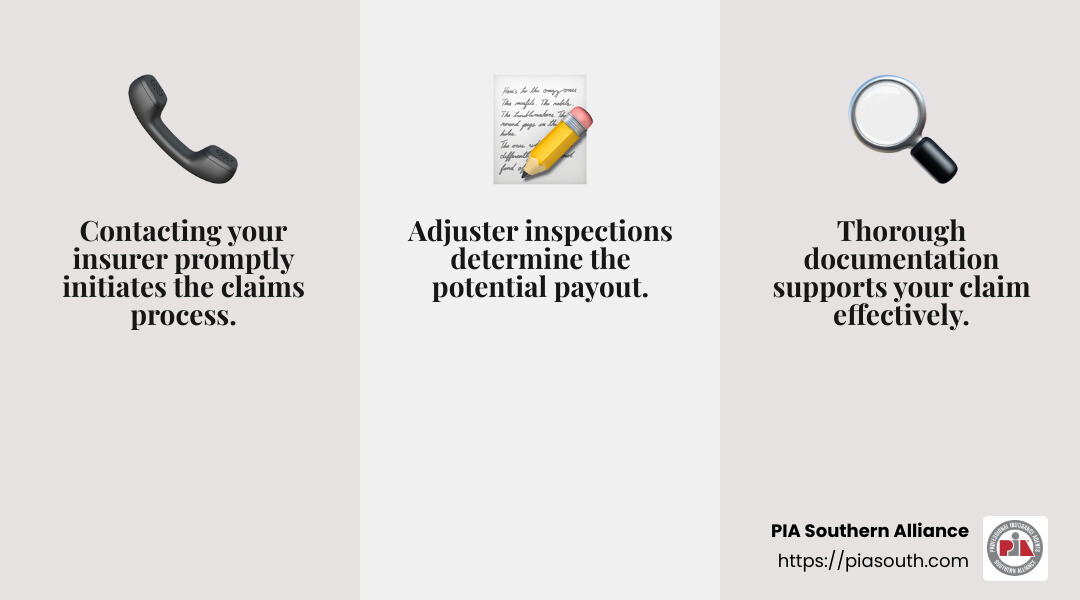
Understanding these steps and executing them effectively can streamline the claims process. It ensures that you move swiftly from filing to settlement, minimizing disruptions to your business operations.
Next, we’ll explore the commercial claims support services available to assist you throughout this journey, providing technical and domain-specific assistance.
Commercial Claims Support: Key Services
Navigating the complexities of commercial claims can be challenging, but commercial claims support services are designed to make the process smoother and more efficient. These services provide invaluable assistance in three main areas: technical support, domain support, and consultation.
Technical Support
Technical support is crucial for resolving the nitty-gritty details of a claim. This support includes helping you understand the technical aspects of your policy and the claims process. For instance, if your claim involves complex damage like structural issues or specialized equipment, technical experts can provide insights and guidance.
Technical support teams also assist with digital claims management. Many companies now offer online platforms where you can track your claim status, submit documents, and communicate with your insurer. This digital approach not only saves time but also ensures transparency and accuracy.
Domain Support
Domain support focuses on the specific industry or business sector you operate in. Each industry has unique risks and needs, and domain experts understand these intricacies. They help tailor your claims process to better fit your business context.
For example, a retail business faces different risks compared to a manufacturing plant. Domain support ensures that the nuances of your industry are considered, from understanding inventory losses in retail to addressing machinery breakdowns in manufacturing.
Consultation
Finally, consultation services provide strategic advice throughout the claims process. These experts work with you to develop strategies that maximize your claim benefits while minimizing disruptions to your business.
Consultants offer guidance on everything from gathering evidence to negotiating settlements. They understand the tactics insurers might use to reduce payouts and can advise you on how to counteract these strategies effectively.
In addition, consultation services often include educational resources that empower you to make informed decisions about your claims and insurance policies. They aim to equip you with the knowledge and skills needed to manage future claims independently.
By leveraging these key services, you can steer the commercial claims process more effectively, ensuring your business receives the support it needs during challenging times.
Next, we’ll dig into how you can strengthen your commercial claims with solid evidence and real-world case studies.
How to Strengthen Your Commercial Claims
When it comes to making sure your commercial claims are successful, evidence is your best friend. Without it, your claim might not stand a chance. Here’s how you can make your claim as strong as possible.
Gather Solid Evidence
First, make sure you have all the necessary documentation. This includes photos and videos of the damage, receipts for any repairs or replacements, and records of business interruptions. Think of it like building a case in court—every piece of evidence counts.
For example, if a storm damages your property, don’t just rely on your memory. Take clear, detailed photos of the damage. If possible, include timestamps on your images. This kind of evidence is crucial if you want to back up your claim convincingly.
Learn from Case Studies
Case studies can be a goldmine of information. They show you how others have successfully steerd the claims process and what pitfalls to avoid. For instance, a study might reveal that businesses that documented their losses thoroughly were more likely to receive a fair settlement.
Reading about real-world experiences can also provide insights into how insurance companies operate. It helps you understand what they might look for when reviewing your claim and how you can prepare accordingly.
Use Statistics to Your Advantage
Statistics can be powerful. They provide a factual basis that can support your claim. For example, knowing that almost 40% of small businesses never reopen after a disaster (according to FEMA) underscores the importance of receiving a fair settlement.
When you present your claim, using statistics can emphasize the impact of the damage on your business. It shows that you’re not just another claimant but a business owner who understands the stakes involved.
By focusing on gathering solid evidence, learning from case studies, and leveraging statistics, you can significantly strengthen your commercial claims. This approach not only improves your chances of a successful claim but also ensures that your business can recover and thrive.
Next, we will address some common questions about commercial claims support and how it can help you steer the claims process more effectively.
Frequently Asked Questions about Commercial Claims Support
What is a commercial claim?
A commercial claim is a formal request you make to your insurance company for compensation. It arises when your business property suffers damage due to covered events like fires, vandalism, or natural disasters. When you file a claim, you’re asking your insurer to fulfill their obligation by paying for the losses as per the insurance agreement.
The obligation here is mutual: you must provide evidence of the damage, and the insurer must evaluate your claim fairly and promptly. The agreement is your insurance policy, which outlines what is covered and how payments are determined.
How do I make a commercial claim?
Making a commercial claim involves a few key steps:
- Contact your insurer: Notify them as soon as possible about the damage. Delays can complicate the process.
- Report the claim: Provide detailed information about the event and the damage. Include photos, videos, and any other relevant documents.
- Adjuster inspection: An adjuster from the insurance company will inspect the damage. Cooperate fully and provide any additional information they might need.
These steps ensure that your claim is processed smoothly and efficiently. The sooner you report, the faster your claim can be resolved.
How do you support your claims?
Supporting your claim effectively involves a combination of evidence, logic, and sometimes, experts:
- Evidence: Gather all necessary documentation, like photos, receipts, and records of any repairs. This is your proof of the damage and its impact on your business.
- Logic: Present your claim clearly and logically. Explain how the damage affects your business operations and why a fair settlement is necessary.
- Experts: Sometimes, hiring a public adjuster or consulting with other experts can help. They bring specialized knowledge and can negotiate on your behalf to ensure you get the settlement you deserve.
By using these strategies, you can make a strong case and improve your chances of a successful claim.
In the next section, we’ll wrap up with how PIA Southern Alliance can aid you in navigating these processes with their educational resources and strategic decision-making support.
Conclusion
Navigating the complexities of commercial claims can feel overwhelming. That’s where PIA Southern Alliance comes in. We are committed to empowering independent insurance agencies in Georgia, Alabama, and Mississippi with the tools and knowledge they need to succeed.
Our educational resources are designed to make you confident in your ability to handle commercial claims. We offer specialized webinars and courses that improve your cross-selling abilities and strategic decision-making. These resources cover everything from understanding policy details to effectively supporting your clients through the claims process.
Strategic decision-making is crucial in the insurance industry. With our support, you can make informed choices that benefit your agency and your clients. We focus on helping you understand the intricacies of commercial claims, ensuring you can provide top-notch service and advocacy for your clients.
At PIA Southern Alliance, our goal is to be your partner in building a successful agency. By leveraging our resources, you can steer the commercial claims process with ease and confidence.
Join us today and find how our educational resources and strategic support can transform your agency’s approach to commercial claims. Together, we can ensure that you and your clients are prepared for whatever challenges come your way.