
When it comes to insurance, commercial claims data analysis is a fundamental tool that transforms raw data into valuable insights. By leveraging data analytics, insurance agencies can improve claims management processes, improve decision-making, and streamline operations. Key benefits include:
- Fraud Detection: Identify suspicious patterns and reduce fraudulent claims.
- Risk Mitigation: Spot trends to better manage risk and improve underwriting.
- Operational Efficiency: Automate routine tasks and improve workflow.
The insurance industry, especially in regions like Georgia, Alabama, and Mississippi, is at a crossroads. By adopting a data-driven approach, agencies not only provide better service to clients but also position themselves more competitively in the market.
At PIA Southern Alliance, we’re committed to helping independent agencies improve their expertise and offerings through the power of commercial claims data analysis. From years of industry experience, we provide key insights and educational resources to support your agency’s growth and success.

Quick commercial claims data analysis terms:
– commercial claims support
– insurance agency performance metrics
Understanding Commercial Claims Data Analysis
Commercial claims data analysis is like a detective’s toolkit. It helps insurance agencies sift through mountains of data to find clues that can improve their business. Let’s break down the key components: data mining, predictive analytics, and machine learning.
Data Mining
Think of data mining as digging for gold in a digital landscape. It involves extracting useful information from large datasets. In the insurance world, this means uncovering patterns in claims data that might not be obvious at first glance. For example, data mining can reveal that certain types of claims spike during specific seasons or in particular locations. This knowledge helps agencies anticipate demand and allocate resources efficiently.
Predictive Analytics
Predictive analytics is like having a crystal ball for future claims. It uses historical data to forecast what might happen next. This is incredibly useful for insurance agencies. By predicting the likelihood of claims, agencies can make informed decisions about pricing, resource allocation, and risk management. For instance, if predictive analytics suggests a high probability of claims in a certain area, an agency can adjust its underwriting criteria or offer custom insurance products to mitigate risk.
Machine Learning
Machine learning is the brain behind modern claims analysis. It involves teaching computers to learn from data and improve over time. In commercial claims data analysis, machine learning algorithms can identify unusual patterns that might indicate fraud. They can also automate routine tasks, such as processing claims, which frees up human agents to focus on more complex issues.

Together, these tools form a powerful trio that transforms how insurance agencies handle claims. By using data mining, predictive analytics, and machine learning, agencies can turn raw data into actionable insights, improve decision-making, and improve operational efficiency.
In the changing insurance landscape of Georgia, Alabama, and Mississippi, embracing these technologies is not just an option—it’s a necessity. By leveraging commercial claims data analysis, agencies can stay ahead of the curve, offering better service and smarter solutions to their clients.
Key Benefits of Commercial Claims Data Analysis
Commercial claims data analysis offers significant advantages for insurance agencies, particularly in the areas of risk mitigation, cost control, and fraud detection. Let’s explore how these benefits can transform the insurance landscape.
Risk Mitigation
Risk mitigation is all about preparing for the unexpected. With commercial claims data analysis, insurance agencies can predict potential risks before they occur. By examining historical claims data, agencies can identify trends and patterns that signal future risks. For instance, if data shows an increase in claims related to natural disasters in certain regions, agencies can adjust their policies and advise clients on preventative measures. This proactive approach not only reduces potential losses but also improves client trust.
Cost Control
Controlling costs is a top priority for any business, and insurance agencies are no exception. By analyzing claims data, agencies can pinpoint areas where expenses can be reduced. For example, data analysis can reveal inefficiencies in the claims process or identify claims that are more costly than average. Agencies can then streamline these processes, automate routine tasks, and allocate resources more effectively. The result? Lower operational costs and improved profitability.
Fraud Detection
Fraud detection is a critical component of claims management. Fraudulent claims can cost agencies millions of dollars each year. With the help of data analysis, agencies can detect unusual patterns that may indicate fraudulent activity. Machine learning algorithms, in particular, excel at spotting anomalies in data. By flagging suspicious claims for further investigation, agencies can reduce the incidence of fraud and protect their bottom line.
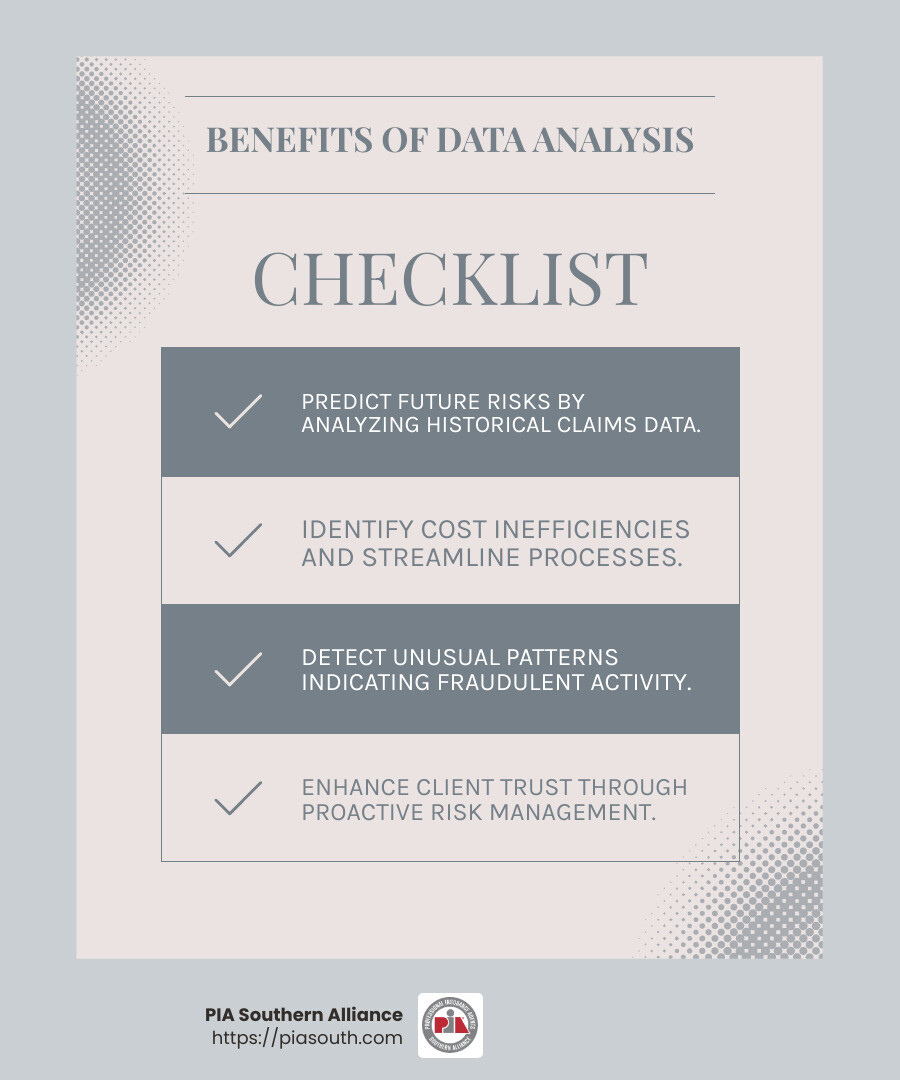
In summary, commercial claims data analysis is a game-changer for insurance agencies in Georgia, Alabama, and Mississippi. By leveraging the power of data, agencies can mitigate risks, control costs, and detect fraud more effectively. These benefits not only improve operational efficiency but also improve the overall claims experience for clients, ensuring that agencies remain competitive in a rapidly changing market.
Implementing a Commercial Claims Data Analysis Strategy
To harness the full potential of commercial claims data analysis, insurance agencies need a well-thought-out strategy. This involves understanding current workflows, setting key performance indicators (KPIs), and choosing the right software solutions.
Workflow Analysis
Start with a deep dive into your existing processes. Workflow analysis helps you map out each step involved in managing claims. By doing this, you can spot inefficiencies and areas ripe for improvement. For example, if a particular step consistently causes delays, it’s a sign that process needs attention.
Visual tools like process flowcharts can make it easier to understand the entire claims management journey. This clarity ensures you’re not just making changes for the sake of it, but focusing on areas that will truly improve efficiency and effectiveness.
Set KPIs
Once you’ve mapped out your workflows, it’s time to set KPIs. These are the benchmarks that will help you measure the success of any changes you implement. KPIs can focus on various aspects, such as reducing the time it takes to settle claims, increasing the accuracy of risk assessments, or enhancing customer satisfaction.
By aligning KPIs with industry standards, or even internal benchmarks, agencies can ensure they are on the right path. Regularly reviewing these indicators allows for adjustments and ensures continuous improvement.
Software Solutions
Finally, selecting the right software solutions is crucial. The right tools can automate routine tasks, improve data accuracy, and offer real-time insights into claims processes. For instance, platforms like Pulpstream offer cloud-based solutions that simplify claims management without needing extensive coding knowledge.
When choosing software, consider your specific needs. If your agency handles a lot of property damage claims, look for software that excels in this area. The key is to find a solution that integrates seamlessly with your existing systems and improves your ability to analyze data effectively.
By focusing on workflow analysis, setting clear KPIs, and implementing robust software solutions, insurance agencies can transform their claims management processes. This strategic approach not only boosts efficiency but also ensures that agencies remain competitive in a data-driven industry.
Frequently Asked Questions about Commercial Claims Data Analysis
What is commercial claims data analysis?
Commercial claims data analysis is the process of examining insurance claims data to extract actionable insights. This involves using advanced techniques like data mining, predictive analytics, and machine learning to uncover patterns and trends. The primary goal is to improve decision-making, optimize claims management, and improve overall business performance. In commercial insurance, this analysis helps identify risk factors, streamline operations, and detect fraudulent activities.
How can data analysis improve claims processing?
Data analysis can significantly improve claims processing in several ways:
Efficiency Boost: By automating repetitive tasks and streamlining workflows, data analysis reduces the time it takes to process claims. This leads to faster settlements and happier clients.
Fraud Detection: Advanced analytics can identify unusual patterns that may indicate fraud. This allows insurers to investigate suspicious claims more quickly and reduce financial losses.
Risk Assessment: Predictive models help insurers assess the likelihood of future claims. This enables better risk management and more accurate pricing of policies.
Cost Control: By analyzing claims data, insurers can pinpoint areas where costs can be reduced, such as by identifying common causes of claims and implementing preventive measures.
What tools are used in commercial claims data analysis?
Several tools and technologies are commonly used in commercial claims data analysis:
Data Mining Software: Tools like SAS or RapidMiner help extract valuable insights from large datasets. These tools can identify patterns and correlations that aren’t immediately apparent.
Predictive Analytics Platforms: Solutions like IBM SPSS or Microsoft Azure Machine Learning offer predictive modeling capabilities. These platforms help forecast future trends and assess risks.
Artificial Intelligence (AI) and Machine Learning: AI-driven tools can automate data processing and improve the accuracy of predictions. They are particularly useful for identifying anomalies and optimizing workflows.
Visualization Tools: Platforms like Tableau or Power BI provide intuitive dashboards for visualizing data. These tools help stakeholders easily understand complex data insights and make informed decisions.
By leveraging these tools, insurance agencies can transform raw claims data into strategic assets, driving efficiency and improving customer satisfaction.
Conclusion
At PIA Southern Alliance, we understand the transformative power of commercial claims data analysis. By using this power, insurance agencies in Georgia, Alabama, and Mississippi can make more informed, strategic decisions that drive business success.
Our focus is on enhancing agents’ capabilities through educational resources and development programs. We offer specialized webinars and courses designed to improve strategic decision-making. This means agents can better steer the complexities of the insurance landscape, particularly in commercial property insurance.
Strategic decision-making is not just about having the right data but knowing how to use it effectively. Our resources equip agents with the skills needed to interpret complex data, allowing them to optimize claims management and detect potential risks early.
We believe that continuous learning is key to staying ahead in the insurance industry. By participating in our programs, agents can improve their cross-selling abilities and gain insights into innovative claims processing techniques.
Explore our educational programs and resources today. Let PIA Southern Alliance be your partner in turning data into actionable decisions that improve your agency’s growth and success.