
Commercial casualty courses are an essential component for insurance professionals looking to steer the intricate world of liability claims and property damage protection. These courses help you understand vital concepts in commercial insurance, enabling you to support businesses by safeguarding their assets against unforeseen risks. Whether you’re an insurance agent aiming to expand your expertise or a business owner seeking the right coverage, these courses cover a comprehensive range of topics from general liability to workers’ compensation.
Quick insights into commercial casualty courses:
- Equip you to handle liability claims and complex incidents
- Offer knowledge on diverse property damage coverage
- Are fundamental for ensuring effective risk management strategies
You’ll find that mastering these concepts not only improves your professional capabilities but also positions you as a trusted advisor in your clients’ eyes. As part of PIA Southern Alliance, my mission is to extend valuable insights into these industry courses, drawing from years of experience in elevating the profession of independent agents across Georgia, Alabama, and Mississippi. Let’s dig into commercial insurance, solveing the intricacies of coverage that provides peace of mind to businesses and insurance professionals alike.
Commercial casualty courses glossary:
– Continuing education for insurance agents
– digital marketing for insurance agents
Understanding Commercial Casualty Insurance
Let’s break down the essentials of commercial casualty insurance. This type of insurance is all about protecting businesses from various liabilities. It covers legal liability, negligence, and property and casualty insurance.
Legal Liability
Legal liability is a key concept in commercial casualty insurance. It refers to the responsibility a business has if it causes harm to others, whether it’s injury or property damage. If a customer slips and falls in a store, the business could be legally liable for their medical expenses. This is why having the right insurance is crucial—it helps cover these costs, preventing financial ruin.
Negligence
Negligence is another important term to understand. It happens when a business fails to take reasonable care to avoid causing harm. For example, if a business doesn’t fix a known safety hazard, like a broken step, and someone gets hurt, that’s negligence. Commercial casualty insurance can help cover the costs associated with such incidents.
Property and Casualty Insurance
Property and casualty insurance is a broad category that includes coverage for both property damage and liability. It’s designed to protect businesses from financial loss due to events like fires, theft, and lawsuits. This type of insurance is essential for any business operating in Georgia, Alabama, or Mississippi, as it provides a safety net against unexpected events.
In summary, understanding these concepts is crucial for anyone involved in commercial insurance. They form the foundation of protecting businesses from the myriad risks they face every day, ensuring they can continue to operate smoothly even when the unexpected happens.
Key Components of Commercial Casualty Courses
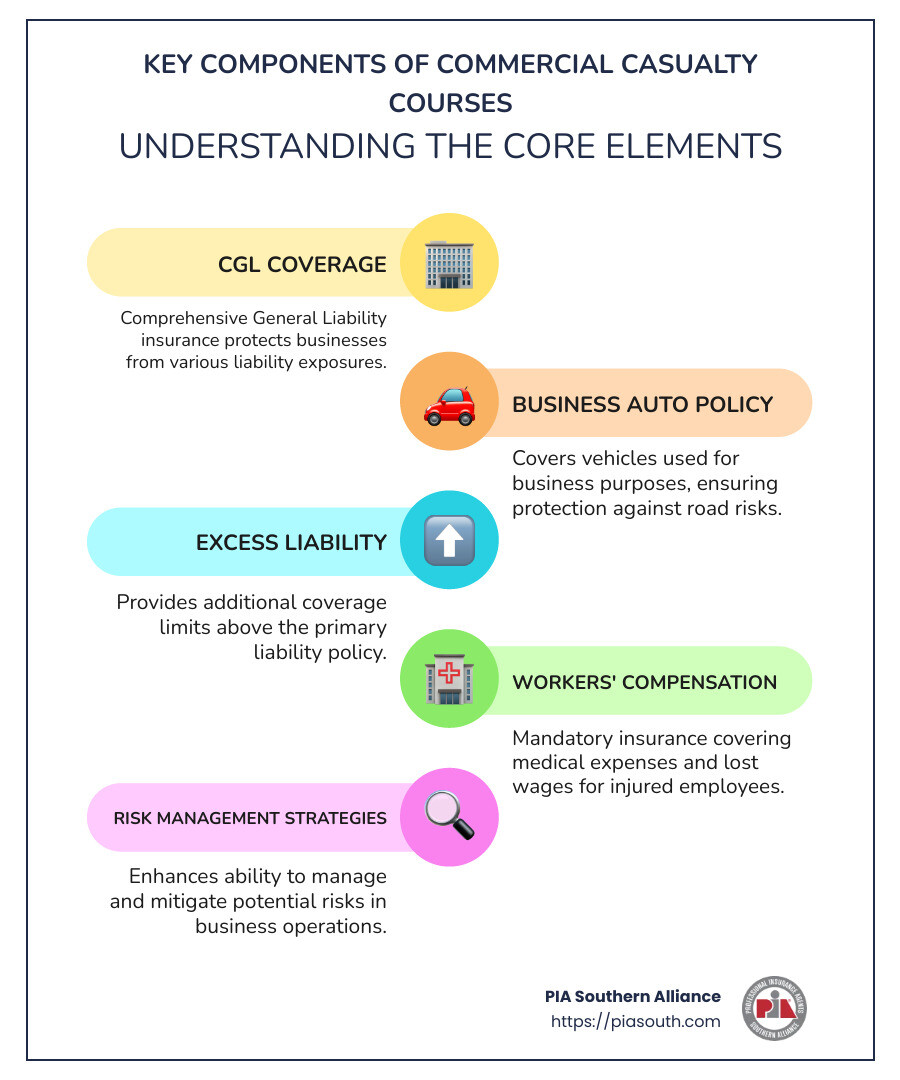
When diving into commercial casualty courses, you’ll encounter several key components that form the backbone of this insurance specialty. These courses are designed to equip you with the knowledge to protect businesses from various risks. Let’s explore the main elements you’ll study.
CGL Coverage
Commercial General Liability (CGL) coverage is a cornerstone of commercial casualty insurance. It protects businesses from claims related to bodily injury, property damage, and personal injury that could arise during business operations. Imagine a customer slipping on a wet floor in a store. CGL coverage would help cover the resulting medical expenses and legal fees. This type of insurance is essential for managing everyday risks and is a primary focus in any comprehensive commercial casualty course.
Business Auto Policy
The business auto policy (BAP) is another crucial component. It provides coverage for vehicles used in business activities. This includes protection against liability claims if an employee is involved in an accident while driving a company vehicle. The policy also covers physical damage to the vehicle itself. Understanding BAP is vital for businesses that rely on transportation, ensuring they are covered for any incidents on the road.
Excess Liability
Excess liability insurance, often referred to as umbrella coverage, offers an additional layer of protection. It kicks in when the limits of other policies, like CGL or BAP, are exhausted. For instance, if a lawsuit results in damages exceeding the CGL policy limit, excess liability coverage would help cover the remaining costs. This is particularly important for businesses with significant exposure to large claims, providing peace of mind and financial security.
Workers’ Compensation
Workers’ compensation is a mandatory coverage in many states, including Georgia, Alabama, and Mississippi. It provides benefits to employees who suffer job-related injuries or illnesses. This coverage includes medical expenses, rehabilitation costs, and lost wages. For businesses, it ensures compliance with state laws and protects against lawsuits from injured employees. Understanding workers’ compensation is crucial for anyone involved in managing business risks, making it a key focus in commercial casualty courses.
These components form the bedrock of commercial casualty insurance, equipping professionals with the skills to manage and mitigate business risks effectively. Through these courses, you’ll gain the expertise needed to steer the complexities of commercial insurance and protect businesses from potential financial setbacks.
Skills and Career Benefits
When you dive into commercial casualty courses, you’re not just learning about insurance policies. You’re gaining a set of valuable skills that can lift your career in the insurance industry. Let’s break down the key skills and career benefits you can expect from these courses.
Risk Management
Risk management is at the heart of every successful insurance professional’s toolkit. In commercial casualty courses, you’ll learn how to identify, assess, and mitigate risks that businesses face daily. This skill is crucial because it helps businesses avoid potential pitfalls that could lead to financial loss. For example, understanding how to evaluate a company’s exposure to liability claims can save them from costly lawsuits. Mastering risk management means you’re not just reacting to problems—you’re preventing them.
Financial Analysis
Financial analysis is another critical skill developed through these courses. You’ll learn how to evaluate the financial implications of insurance policies and claims. This means understanding how different coverages impact a business’s bottom line and making informed recommendations. For instance, analyzing the cost-benefit of excess liability coverage can help a business decide whether it’s worth the investment. With strong financial analysis skills, you become a trusted advisor, guiding businesses in making strategic insurance decisions.
Cross-Organization Collaboration
In commercial insurance, collaboration is key. Commercial casualty courses teach you how to work effectively with various stakeholders, including underwriters, claims adjusters, and risk managers. This cross-organization collaboration ensures that everyone is on the same page, leading to better outcomes for clients. Imagine working on a complex claim that requires input from multiple departments. Your ability to coordinate and communicate effectively can streamline the process and improve client satisfaction.
By honing these skills, you not only boost your professional capabilities but also open up new career opportunities. Whether you’re looking to advance within your current organization or explore new roles in the insurance industry, the skills gained from commercial casualty courses set you apart from the competition.
Top Commercial Casualty Courses
When it comes to advancing your career in the insurance industry, choosing the right commercial casualty courses is crucial. Let’s explore some of the top courses that can help you gain a competitive edge.
AINS 103
The AINS 103 course is a fantastic starting point for those new to commercial insurance. It focuses on the essentials of commercial property and liability policies. This course is designed to provide a comprehensive understanding of key commercial coverage forms, helping you quickly address customer inquiries. Completing AINS 103 not only improves your knowledge but also gives you credit toward the Associate in Insurance (AINS) designation. The course typically takes 6-9 hours to complete, making it a manageable yet impactful investment in your professional development.

Chartered Property Casualty Underwriter (CPCU)
The CPCU designation is considered the gold standard in the property and casualty insurance industry. This program covers a wide range of topics, including risk management, insurance operations, and financial analysis. The CPCU designation is highly respected and can open doors to leadership roles and higher earning potential. It’s a rigorous program that requires dedication, but the rewards are well worth the effort. The CPCU exams test your ability to apply knowledge to real-world scenarios, ensuring you’re well-prepared to handle complex insurance challenges.
Associate in Commercial Underwriting (AU)
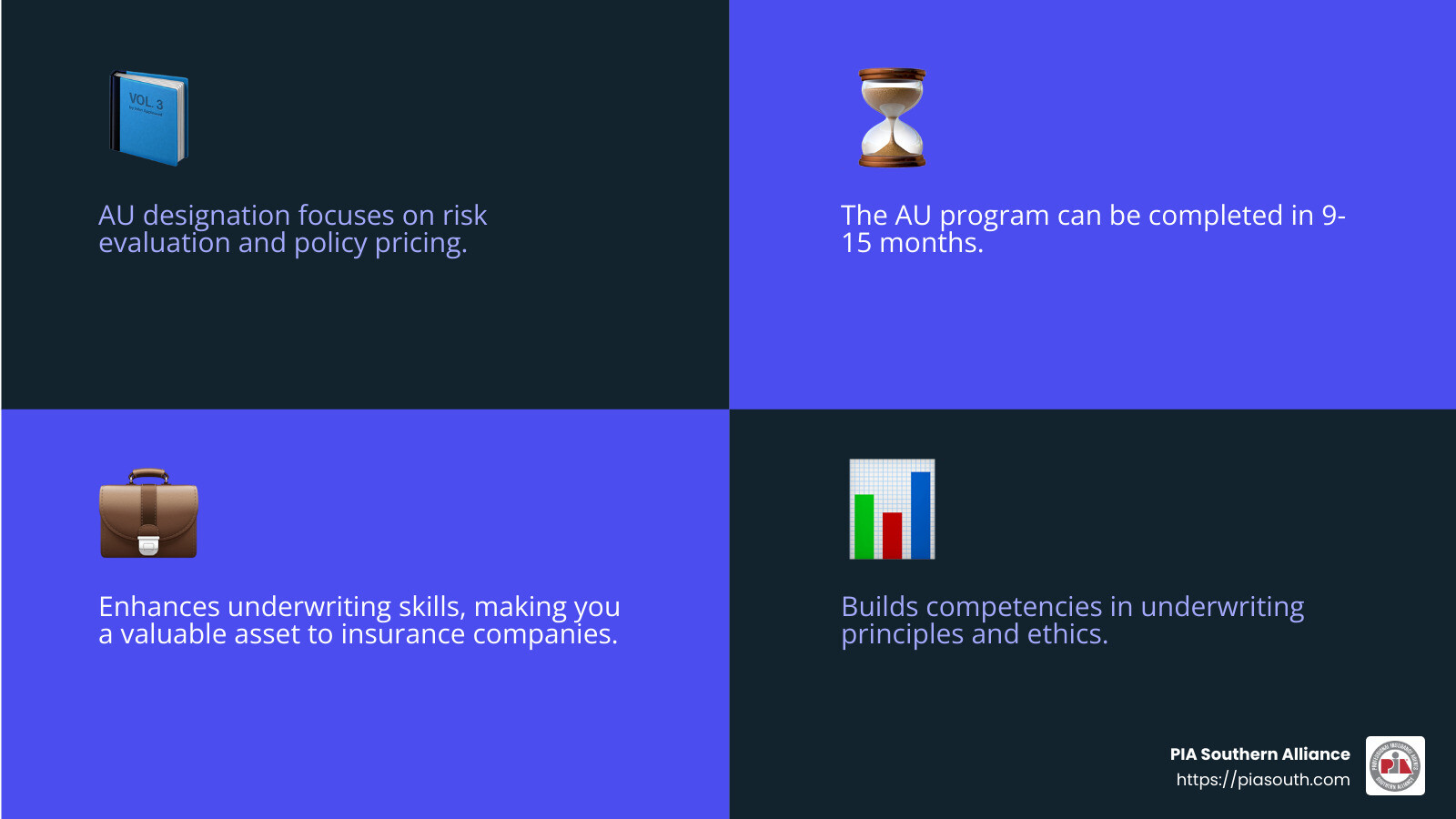
The Associate in Commercial Underwriting (AU) designation is perfect for those looking to specialize in underwriting. This program focuses on evaluating risks and making informed decisions about policy acceptance and pricing. The AU designation builds competencies in underwriting principles and ethics, providing a disciplined approach to managing commercial property exposures. Completing the AU program not only improves your underwriting skills but also positions you as a valuable asset to any insurance company. The program typically takes 9-15 months to complete, allowing you to pace your learning according to your schedule.
Each of these courses offers unique benefits and caters to different career goals. Whether you’re just starting out or looking to specialize, investing in one of these top commercial casualty courses can set you on the path to success in the insurance industry.
Frequently Asked Questions about Commercial Casualty Courses
What is a commercial casualty?
A commercial casualty refers to incidents where a business faces liability claims due to property damage or personal injury. This can include anything from a customer slipping and falling on a wet floor to a fire damaging a neighboring property. Understanding commercial casualty is crucial for insurance professionals, as it involves assessing risks and determining the right coverage to protect businesses from financial losses.
Which course is best for an insurance company?
When it comes to choosing the best course for an insurance company, several options stand out. Kaplan Financial and ExamFX are popular choices among insurance professionals. They offer comprehensive training materials and practice exams that help prepare for various insurance designations. However, the best course often depends on the specific needs of the company and its employees. For those focusing on commercial casualty, courses like AINS 103 and CPCU provide in-depth knowledge and are highly regarded in the industry.
How long is the AINS 103 exam?
The AINS 103 exam consists of 85 questions, and candidates are given a set amount of time to complete it. To pass, a solid understanding of commercial property and liability policies is essential. The exam is designed to test your ability to apply the concepts learned in the course to real-world scenarios. Achieving a passing grade not only validates your knowledge but also earns you credit toward the Associate in Insurance (AINS) designation, a valuable credential in the insurance industry.
Conclusion
At PIA Southern Alliance, we are dedicated to empowering independent insurance agencies in Georgia, Alabama, and Mississippi. Our focus is on providing educational resources and development programs that improve strategic decision-making, especially in the field of commercial casualty insurance.
Our specialized webinars and courses are designed to help agents improve their cross-selling abilities and make informed choices that lead to growth. By leveraging these resources, you can steer the complexities of the insurance landscape with confidence.
Our commitment is to support your journey in the insurance industry. Whether you’re new to the field or looking to reinforce your knowledge, our programs offer the tools you need to succeed. From understanding the nuances of CGL coverage to mastering workers’ compensation, our courses cover all critical aspects of commercial casualty insurance.
Explore our professional designations and educational programs today and let PIA Southern Alliance be your partner in building a successful agency. Together, we can tackle the challenges of the insurance world and drive your agency’s capabilities to new heights.