
CIC agency management is a vital component for insurance professionals striving to excel in the complex insurance industry. This expertise, developed through the CIC (Certified Insurance Counselor) Designation Program, equips agency owners, brokers, and agents with the necessary management skills to improve agency profitability and growth.
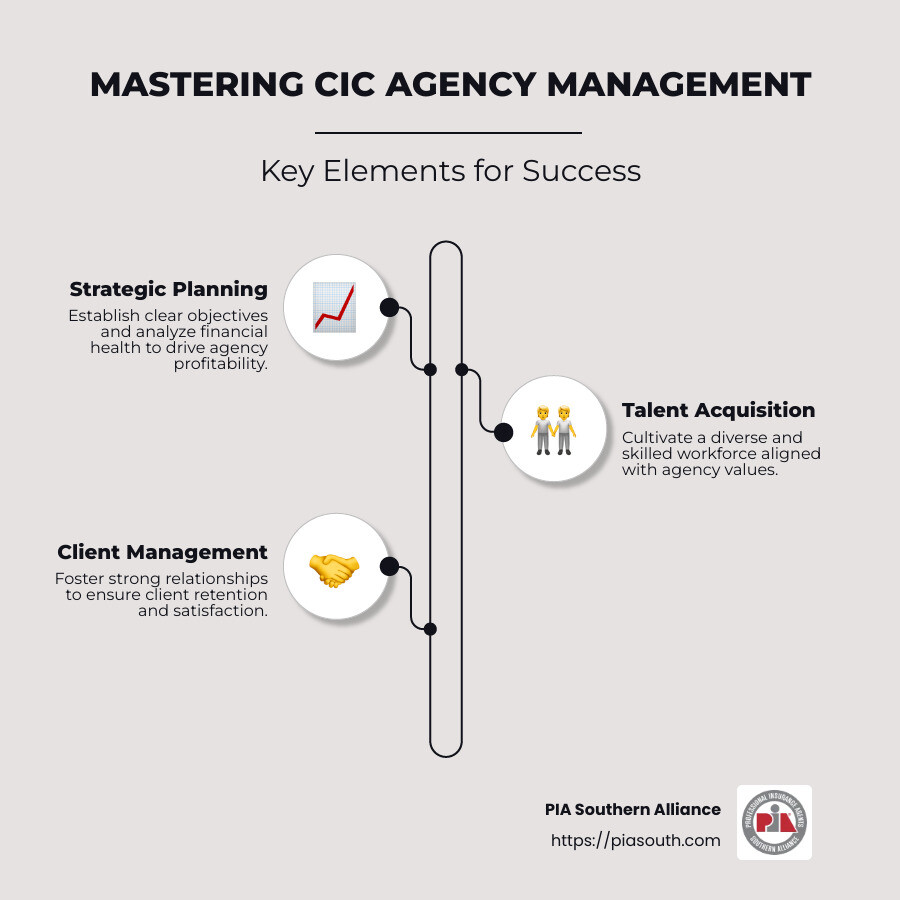
- Strategic Planning: Establish clear goals and analyze financial health.
- Talent Acquisition: Build a diverse workforce reflecting agency culture.
- Client Management: Maintain strong client relationships for retention.
- Technology Utilization: Leverage tools for efficient operations.
- Ethical Responsibility: Uphold high ethical standards.
The CIC Designation Program is recognized as “The Insurance Professional’s Designation®,” blending expert instruction with practical application. It’s custom to agency owners and insurance professionals with at least two years of full-time experience. Through this comprehensive program, participants gain a thorough understanding of effective agency management.
By successfully navigating CIC agency management, your agency can achieve sustainable success amidst a competitive market.
Strategic Planning for CIC Agency Management
Strategic planning is like setting the GPS for your insurance agency. It guides you through the twists and turns of the market, ensuring you reach your destination: profitability and growth.
Why Strategic Planning Matters
To thrive in the insurance world, a solid strategic plan is essential. It helps agencies like yours establish clear, actionable goals. Think of it as a roadmap that aligns your team and resources towards common objectives. This alignment is crucial for boosting agency profitability.
Key Elements of Strategic Planning
- Change-Management: Change is constant in the insurance industry. Whether it’s new regulations or shifting market demands, adaptability is key. A well-crafted strategic plan prepares your agency to pivot when necessary, ensuring you stay ahead of the curve.
- Financial Health Analysis: Understanding your agency’s financial health is vital. By examining cash flow, budgets, income statements, and balance sheets, you gain insights needed for effective decision-making. These tools help pinpoint areas for improvement and opportunities for growth.

- Goal Setting: Establishing clear, measurable goals is a cornerstone of strategic planning. These goals should be specific, achievable, and aligned with your agency’s mission. They act as milestones, guiding your team towards success.
Real-World Application
Consider the case of an agency that implemented strategic planning to steer a challenging market. By identifying key insurance markets and setting targeted goals, they increased their client base by 20% in just one year. This success story highlights the power of strategic planning in driving agency profitability.
Conclusion
Strategic planning is not just a one-time exercise; it’s an ongoing process. By continuously refining your goals and adapting to changes, your agency can achieve sustained success. Next, let’s explore how talent acquisition and development play a crucial role in your agency’s growth journey.
Talent Acquisition and Development
In insurance, talent acquisition and development is the backbone of a thriving agency. It’s not just about hiring people; it’s about building a team that reflects your agency’s values and culture. Let’s explore how you can craft a diverse and effective workforce.
Building a Diverse Workforce
A diverse team brings a wealth of perspectives and ideas, which can lead to more innovative solutions and better client service. According to the CIC Agency Management course, recruiting for diversity is essential. This means looking beyond traditional pools of candidates and considering individuals from different backgrounds and experiences.
Recruiting the right talent starts with a clear understanding of what your agency needs. Writing precise job descriptions and conducting structured interviews are crucial steps. These practices help ensure that new hires align with your agency’s culture and goals.
Consider incorporating behavioral interview techniques to assess a candidate’s fit within your team. Ask questions that reveal how they handle real-world situations. This approach can help you identify candidates who are not only skilled but also adaptable and resilient.
Performance Evaluation
Once you’ve assembled your team, the next step is to ensure they continue to grow and contribute to your agency’s success. Performance evaluation is a key component of this process. Regular feedback sessions, goal setting, and professional development opportunities are essential.
For example, an agency that implemented a robust performance evaluation system saw a 15% increase in employee satisfaction and a 10% boost in productivity within a year.
By investing in your team’s development, you create a more engaged and motivated workforce. This not only improves individual performance but also improves overall agency performance.
Conclusion
Talent acquisition and development are ongoing processes that require attention and effort. By fostering a diverse and skilled workforce, your agency is better equipped to meet the challenges of the insurance industry. Now, let’s move on to explore how client retention and acquisition can further drive your agency’s growth.
Client Retention and Acquisition
In the competitive world of insurance, client retention and acquisition are crucial for agency growth and sustainability. Meeting client expectations, developing a strong brand, and understanding account profitability are key components of success.
Understanding Client Expectations
Clients today expect more than just a policy; they want a relationship. They look for agencies that understand their needs and provide personalized solutions. According to the CIC Agency Management course, creating value through clear vision and mission statements can help shape your agency’s brand and align it with client expectations.
Example: An agency that regularly surveys its clients to understand their needs and adjusts its services accordingly sees a higher retention rate.
Brand Development
Your brand is more than just a logo; it’s the perception clients have of your agency. A strong brand communicates trust and reliability. Developing a brand that resonates with your target audience can set you apart from competitors. Consider what makes your agency unique and how you can convey that in your marketing efforts.
Strategies for Brand Development:
– Consistent messaging across all platforms
– Engaging storytelling that highlights your agency’s values
– High-quality customer service that reflects your brand promise
Account Profitability
Not all accounts are created equal. Understanding which accounts are profitable is essential for strategic decision-making. The CIC Agency Management course emphasizes the importance of analyzing account profitability to ensure resources are allocated effectively.
For instance, agencies that conduct regular profitability analyses can identify underperforming accounts and make informed decisions about where to focus their efforts.
Conclusion
By aligning with client expectations, developing a strong brand, and focusing on profitable accounts, your agency can improve client retention and acquisition. This strategic approach not only boosts growth but also ensures long-term success. Next, we’ll explore how technology can play a role in this process.
Technology Utilization in CIC Agency Management
In today’s insurance industry, technology utilization is a game-changer for agencies striving for efficiency and improved client engagement. From evaluating the right tools to streamlining workflows, technology is at the heart of successful agency management.
Evaluating Technology for Your Agency
Choosing the right technology begins with a thorough evaluation of your agency’s needs. The CIC Agency Management course highlights the importance of assessing existing technologies to ensure they align with your agency’s goals. This involves understanding how these tools can support your workflows and improve client interactions.
Example: An agency that integrates a customer relationship management (CRM) system custom to its specific needs can improve client tracking and communication.
Enhancing Client Engagement Through Technology
Technology offers numerous ways to engage with clients effectively. Whether it’s through automated communication tools or personalized digital experiences, the right technology can help you meet and exceed client expectations.
Ways to Improve Client Engagement:
– Implementing chatbots for instant client support
– Using data analytics to personalize client interactions
– Offering mobile apps for easy policy management
By leveraging these technologies, agencies can create seamless and meaningful interactions that foster client loyalty.
Streamlining workflows is crucial for maximizing productivity and reducing operational costs. Workflow tools can automate routine tasks, allowing your team to focus on more strategic activities. According to the CIC Agency Management course, selecting tools that integrate well with your existing systems is key to achieving a smooth operation.
Benefits of Workflow Tools:
– Automated task assignments and reminders
– Real-time collaboration among team members
– Centralized document management
Agencies that adopt these tools often see improved efficiency and a reduction in errors, leading to better service delivery.
Conclusion
By evaluating and implementing the right technologies, your agency can improve client engagement and streamline workflows. This not only improves efficiency but also positions your agency for sustainable growth. Next, we’ll dig into the ethical responsibilities that come with these advancements in technology.
Ethical Responsibility in Insurance
In insurance, ethical responsibility isn’t just a buzzword—it’s a cornerstone of trust and professionalism. A strong ethical foundation ensures that insurance agents act in the best interest of their clients, maintaining the integrity of the agency and the industry as a whole.
Professional Ethics in Insurance
Professional ethics guide how agents conduct themselves in their daily interactions. These principles are crucial for building and maintaining client trust. The CIC Agency Management course emphasizes the importance of understanding and applying ethical standards in all business dealings.
Example: An agent who prioritizes transparency and honesty in policy discussions is more likely to earn long-term client loyalty.
Legal Duties of Insurance Agents
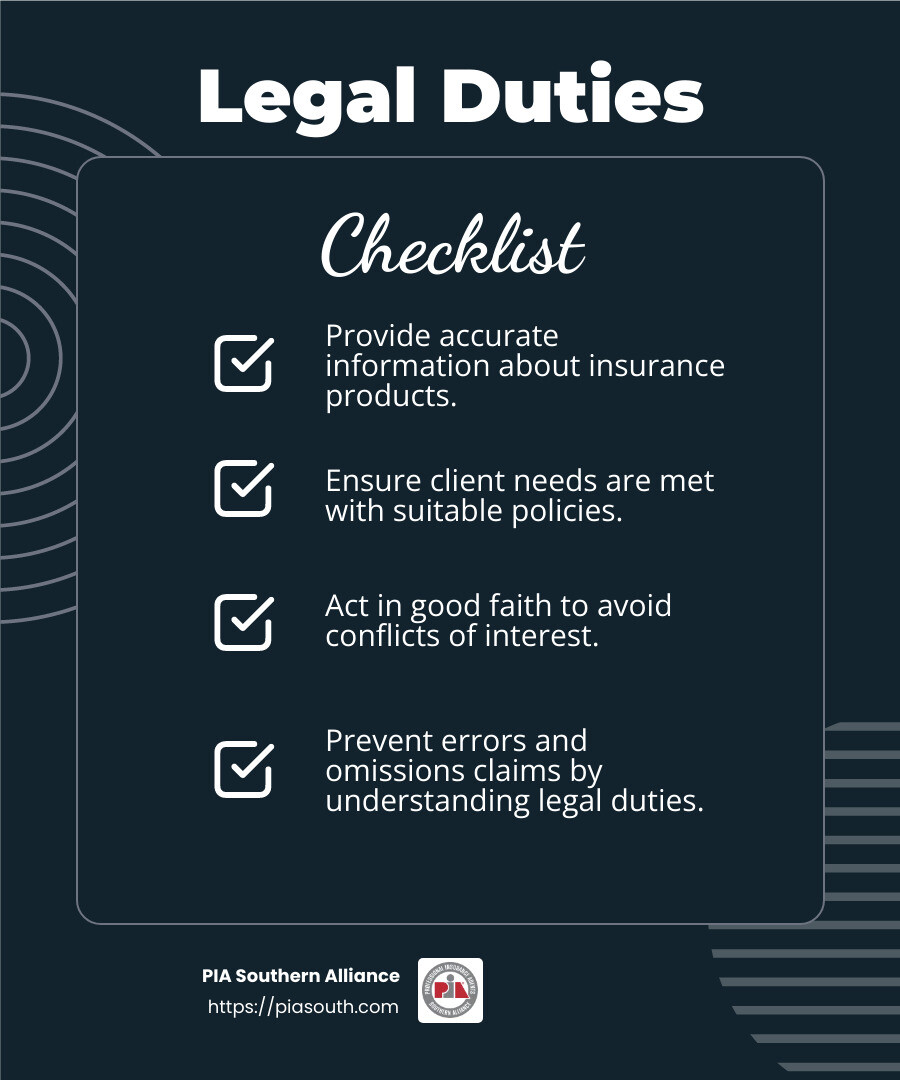
Insurance agents have specific legal duties to their clients, including the duty to provide accurate information and the duty to act in good faith. These duties are not just legal obligations but also ethical ones. Failing to meet these responsibilities can lead to serious consequences, such as errors and omissions claims.
Key Legal Duties:
– Providing accurate and complete information about insurance products
– Ensuring that client needs are met with suitable policy recommendations
– Acting in good faith and avoiding conflicts of interest
Establishing a Code of Ethics
A code of ethics serves as a roadmap for ethical behavior within an agency. It outlines the values and principles that guide decision-making and interactions with clients, colleagues, and partners. Developing and adhering to a code of ethics is crucial for maintaining a culture of integrity and accountability.
Components of a Strong Code of Ethics:
– Clear guidelines for ethical decision-making
– Procedures for reporting and addressing unethical behavior
– Commitment to continuous ethical education and training
Agencies with a robust code of ethics are better equipped to steer complex ethical dilemmas and maintain the trust of their clients and the public.
Conclusion
Ethical responsibility in insurance is about more than compliance—it’s about fostering a culture of trust, integrity, and professionalism. By upholding high ethical standards, insurance agents not only protect their clients but also contribute to the long-term success and reputation of their agency. Next, we’ll address some frequently asked questions about CIC Agency Management.
Frequently Asked Questions about CIC Agency Management
How hard is the CIC designation?
Earning the Certified Insurance Counselor (CIC) designation is a significant achievement in the insurance industry. It requires commitment and a strong understanding of various insurance concepts. The CIC program consists of five courses, each focusing on different aspects of insurance, such as strategic planning, talent acquisition, and technology utilization.
Each course includes a two-day instruction period followed by an optional two-hour exam. To earn the designation, participants must pass five of the seven available exams within five calendar years. The exams test knowledge on specific topics and require a solid grasp of the course material.
To help candidates succeed, the CIC program offers different learning formats: instructor-led online sessions, self-paced online courses, and in-person classroom experiences. This flexibility allows participants to choose the method that best suits their learning style and schedule.
What does CIC mean in insurance?
In the insurance world, CIC stands for Certified Insurance Counselor. This professional certification is highly respected and recognized across the industry. It signifies an individual’s expertise and dedication to maintaining high standards in insurance practices.
The CIC designation is recommended for licensed agents, brokers, and adjusters, as well as insurance professionals with at least two years of experience. Holding this certification demonstrates a commitment to professional development and a deep understanding of insurance management.
Who is the managing director of CIC?
Fred Ruoro is the Managing Director of CIC General Insurance Limited. CIC, a prominent name in the insurance sector, is known for its comprehensive services and innovative solutions. With leaders like Fred Ruoro at the helm, CIC continues to excel in delivering quality insurance products and services.
For more information about CIC and its leadership, you can explore CIC’s official site.
Next, we’ll dive into the resources offered by PIA Southern Alliance and how they can support your journey in the insurance industry.
Conclusion
Navigating CIC Agency Management can be challenging, but with the right support and resources, success is within reach. That’s where PIA Southern Alliance steps in. We are dedicated to empowering independent insurance agencies in Georgia, Alabama, and Mississippi with the tools they need to thrive.
Our educational resources are custom to improve your strategic decision-making skills. Whether you’re looking to improve agency profitability through strategic planning or improve your team’s potential with effective talent acquisition strategies, we offer specialized webinars and courses to guide you every step of the way.
Strategic decision-making is at the heart of a successful insurance agency. With our focus on commercial property insurance, we help agents hone their cross-selling abilities and make informed choices that lead to growth. By leveraging the resources we provide, you can tackle the complexities of the insurance landscape with confidence.
Ready to lift your agency’s capabilities? Explore our professional designations and educational programs today and let PIA Southern Alliance be your partner in building a successful agency.