
Advancing Your Insurance Career with the CPCU Designation
The chartered property casualty underwriter designation (CPCU) is the most prestigious credential in the property-casualty insurance industry, recognized by employers and clients alike for its rigorous standards and comprehensive coverage of risk management principles.
| CPCU Designation at a Glance |
|---|
| Issuing Organization: The Institutes |
| Requirements: 8 courses + ethics component + 2 years experience |
| Completion Time: Typically 18-24 months |
| Cost: Approximately $6,000 |
| Continuing Education: 24 hours every 2 years |
| Industry Recognition: Considered equivalent to a master’s degree in insurance |
The CPCU stands out among insurance designations because it combines technical knowledge with ethical standards and leadership development. Over 90,000 professionals have earned this credential, making it the gold standard for property-casualty insurance professionals seeking to advance their careers in underwriting, claims, risk management, or agency leadership.
For independent agency owners in Georgia, Alabama, and Mississippi, the CPCU designation provides a competitive edge in an increasingly complex insurance marketplace. The comprehensive curriculum covers everything from fundamental insurance principles to specialized commercial and personal lines, preparing you to confidently handle complex risks and serve your clients with distinction.
At PIA Southern Alliance, we’ve seen how the CPCU designation transforms insurance careers by opening doors to leadership opportunities and providing the knowledge needed to steer the ever-changing insurance landscape across the Southeast.
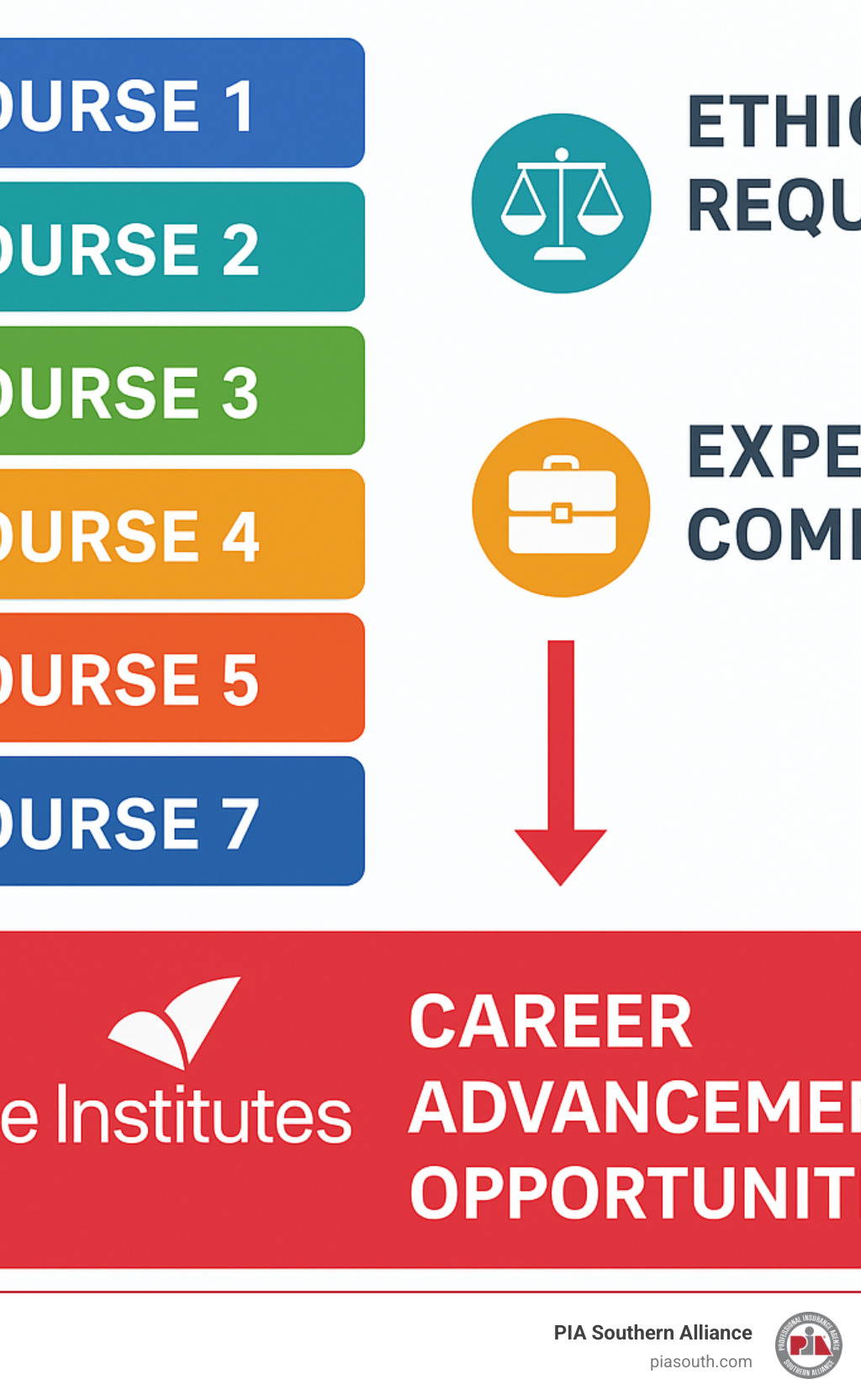
Chartered Property Casualty Underwriter (CPCU) Designation Explained
The chartered property casualty underwriter designation is the gold standard in property-casualty insurance credentials. Administered by The Institutes (formerly the American Institute for Chartered Property Casualty Underwriters), this prestigious designation has been earned by over 90,000 professionals worldwide who have demonstrated their commitment to excellence in our industry.
Often called the “CPA of the insurance industry,” the CPCU isn’t just another acronym to add to your business card. It’s widely recognized as equivalent to a master’s degree in property-casualty insurance and represents a significant achievement in your professional journey. What makes this designation truly valuable is how it weaves together several critical aspects of insurance expertise:
The CPCU builds your knowledge foundation through a comprehensive curriculum covering risk management principles, insurance operations, legal frameworks of insurance contracts, and financial analysis. But perhaps most importantly, it emphasizes ethical standards and professional conduct that lift our entire industry.
This powerful combination of technical knowledge, ethical standards, and demonstrated experience prepares you to steer the complex challenges of today’s insurance marketplace with confidence. When you earn your chartered property casualty underwriter designation, you’re not just completing courses—you’re changing your insurance career.
Why Employers Value CPCU
When we talk with agency owners across Georgia, Alabama, and Mississippi, their eyes light up at the mention of the CPCU credential. Here’s why employers throughout the Southeast value this designation so highly:
Improved Credibility: The chartered property casualty underwriter designation is rated as the most valuable credential for demonstrating insurance and leadership skills—by three times more decision-makers than the next best credential. This instant recognition opens doors and builds trust with clients, colleagues, and carriers alike.
Strategic Decision-Making Skills: The rigorous CPCU curriculum develops professionals who can analyze complex risks with confidence. You’ll gain the ability to recommend appropriate coverage solutions and make strategic business decisions based on sound insurance principles—skills that are invaluable in today’s complex market.
Cross-Functional Understanding: One of the most practical benefits of the CPCU is how it provides insights into how different areas of an insurance operation work together. This makes designees particularly valuable in roles that require coordination across departments or functions.
As one agency principal in Alabama shared with us, “When I see a CPCU on a resume, I know I’m looking at someone who has demonstrated commitment to the profession and has the technical foundation to handle complex commercial accounts.”
Networking Advantage: Beyond the knowledge you gain, CPCU designees access the CPCU Society, with more than 15,000 members and over 130 chapters worldwide. This professional network provides ongoing educational opportunities, mentorship, and connections that can fuel your career growth for decades to come.
The chartered property casualty underwriter designation isn’t just about what you know—it’s about who you become in the process and the doors that open as a result.
Earning the Credential: Eligibility, Courses, Ethics, Exams
Ready to pursue your chartered property casualty underwriter designation? The journey takes commitment, but thousands of insurance professionals across Georgia, Alabama, and Mississippi have proven it’s absolutely achievable while maintaining busy careers. Let’s break down exactly what you’ll need to do to join their ranks.
First things first—you’ll need at least two years of hands-on experience in insurance or risk management. This practical requirement ensures that when you complete your CPCU, you’re not just book-smart but have the real-world context to apply what you’ve learned.
The heart of the program consists of eight carefully designed courses that build your expertise step by step. You’ll start with four core courses that every CPCU candidate completes:
CPCU 500 introduces you to the foundations of risk management and insurance—think of it as building your professional vocabulary and framework. CPCU 520 dives into insurance operations, while CPCU 530 covers the business law every insurance professional needs to understand. Rounding out the core, CPCU 540 tackles finance and accounting principles specific to our industry.
After mastering these fundamentals, you’ll choose a concentration that aligns with your career path. Working primarily with business clients? The commercial lines track (CPCU 551, 552, and 553) will deepen your expertise in commercial property and liability risks. If you’re focused on individuals and families, the personal lines concentration (CPCU 555, 556, and 557) might be your better fit. Your final course is an elective that lets you customize your learning to your specific interests.
What truly sets the chartered property casualty underwriter designation apart is its emphasis on ethics. The Ethics 312 course isn’t just another box to check—it’s a cornerstone of what makes the CPCU so respected. When you complete this requirement, you’re publicly committing to uphold the CPCU Professional Code of Ethics throughout your career.

Each course concludes with a comprehensive exam that tests not just your memory but your ability to apply concepts to real insurance scenarios. These two-hour, multiple-choice assessments have a well-earned reputation for being challenging, but that’s exactly why employers value the credential so highly. The good news is that exams are now 100% online with virtual proctoring, giving you the flexibility to schedule them during testing windows that work with your busy life.
Once you’ve conquered all your courses and exams, you’ll complete the matriculation process by submitting your application to The Institutes. This includes verifying your professional experience and formally accepting the CPCU Code of Professional Ethics.
At PIA Southern Alliance, we’ve supported countless agents across our three-state region through this journey. Many tell us that while demanding, earning their CPCU was among their most rewarding professional accomplishments. If you’re looking for more guidance on certification paths, check out our Insurance Certification Programs resource page.
Step-by-Step Path to the Chartered Property Casualty Underwriter Designation
The clearest path to success starts with enrolling directly with The Institutes, the organization that administers the chartered property casualty underwriter designation. They’ll provide access to your course materials and examination registration.
Many successful CPCU candidates in Alabama, Georgia, and Mississippi find that joining study groups dramatically increases their chances of success. These groups provide accountability, different perspectives on complex topics, and often, much-needed moral support during challenging courses.
When you’re ready, you’ll schedule your exams during the available testing windows. The online format means you can take them from home or office—no more traveling to testing centers!
The Institutes offers a convenient CE tracking system to document your progress, which is especially helpful for meeting state continuing education requirements across our tri-state region.
Some candidates may qualify for course waivers based on other academic achievements or professional designations. It’s worth checking if your background might save you time and money through these waivers.
For a complete breakdown of course details and requirements, visit The Institutes’ official CPCU page for the most up-to-date information.
Step-by-Step Path to the Chartered Property Casualty Underwriter Designation
The journey to earning your chartered property casualty underwriter designation doesn’t have to feel overwhelming. For our insurance professionals across Georgia, Alabama, and Mississippi, we’ve mapped out a clear pathway that breaks this achievement into manageable steps.
Start by honestly assessing your readiness. Do you meet the two-year experience requirement? Can you carve out 10-15 hours weekly for studying? This self-evaluation helps set realistic expectations before you dive in.
When you’re ready to begin, your first step is creating an account with The Institutes. We typically recommend starting with CPCU 500, as it establishes the fundamental concepts you’ll build upon throughout the program. Think of it as laying the foundation before constructing the house!
Developing a thoughtful study plan is crucial for success. Most working professionals in our southern agencies find they can complete one course every 2-3 months while balancing their client responsibilities. The key is consistency—even 30 minutes daily adds up significantly over time.
Don’t underestimate the power of community in this journey. Our data reveals an interesting fact: students who participate in CPCU study groups score an average of 5 points higher on exams than solo learners. The CPCU Society offers excellent 8-week instructor-led study groups for core courses that many of our Georgia and Alabama agents have found invaluable.
When exam time approaches, leverage all available prep resources. Practice quizzes, flashcards, and simulated exams aren’t just busy work—they’re strategic tools. Those who complete simulated exams typically score 2-3 points higher on actual CPCU tests. That could mean the difference between passing and having to retake!
Be strategic about scheduling your exams. The testing windows open four times annually for 60-day periods. We’ve found our Mississippi agents have the most success when they complete their coursework first, then allow 2-3 weeks for focused review before selecting their exam date.
As you progress, use The Institutes’ tracking tools to monitor your advancement. This visibility helps maintain momentum and allows you to adjust your timeline if life throws unexpected challenges your way.
Don’t overlook potential shortcuts! If you hold certain academic degrees (particularly a risk management degree) or professional designations, you might qualify for course waivers. This could potentially reduce the number of exams required—a welcome relief for busy professionals.
The Ethics 312 course deserves special attention. While it might be tempting to view it as just another requirement, this component reinforces the ethical foundation that distinguishes chartered property casualty underwriter designation holders in our industry.
Finally, once all requirements are satisfied, submit your matriculation application to officially receive your designation. This moment—when you can proudly add those CPCU letters after your name—makes the entire journey worthwhile.
Throughout this process, PIA Southern Alliance is here to support your professional development. Many insurance professionals across our three-state region find that earning the CPCU becomes more than just acquiring knowledge—it becomes a transformative experience that reshapes how they approach their insurance careers.
Budget & Timeline: Costs, Study Resources, Continuing Education
Let’s talk dollars and sense when it comes to earning your chartered property casualty underwriter designation. As many of our Georgia, Alabama, and Mississippi agents have finded, understanding the investment—both financial and time—helps you plan your CPCU journey more effectively.
Financial Investment
The CPCU isn’t inexpensive, but the career advancement it provides makes it worthwhile. Most insurance professionals invest approximately $6,000 to complete the designation, though your actual costs may vary:
- Exam Registration Fees: Each exam runs about $370, bringing your exam total to roughly $3,000 for all eight required tests.
- Study Materials: Course textbooks and materials typically range from $150 to $450 per course, potentially adding another $2,500+ to your total.
- Optional Resources: Additional study aids like online courses and practice exams are available but will increase your investment.

Timeline Expectations
Most of our Southern insurance professionals complete their CPCU in about 18-24 months. Of course, your personal journey might be shorter or longer depending on a few factors:
Study Pace: While juggling client meetings and policy renewals, most agents find that each course requires about 6-8 weeks of dedicated study time. Think of it as a marathon, not a sprint!
Exam Windows: The Institutes offers four testing windows each year, each lasting 60 days. This schedule provides flexibility but also means you’ll need to plan your studies to align with these opportunities.
Life Balance: Let’s be real – you’re probably balancing your CPCU studies with family commitments, community involvement, and the day-to-day demands of running an independent agency. Your timeline should reflect what’s realistic for your life.
Continuing Education Requirements
Once you’ve earned those prestigious letters after your name, you’ll need to maintain your designation:
CPCU designees must complete 24 hours of continuing education every two years to stay “in good standing.” The good news for our Southern agents? These CE hours often overlap with your state licensing requirements in Georgia, Alabama, and Mississippi, giving you double the benefit for your educational efforts.
Think of these CE requirements as your opportunity to stay sharp in an ever-changing insurance landscape – something that directly benefits your clients and your bottom line.
Cutting Your CPCU Costs
We’ve worked with hundreds of independent agents across the South who have found creative ways to make the CPCU more affordable. Here are some insider tips:
Employer Reimbursement: Many agencies offer tuition assistance for professional development. Have that conversation with your agency principal before starting your first course – you might be pleasantly surprised.
Early Bird Savings: Registering early for CPCU exams can save up to $70 per exam – that’s potentially $560 off your total investment just for planning ahead!
Used Study Materials: The content doesn’t change dramatically year to year, so consider purchasing gently used textbooks from colleagues who’ve completed the program. Many CPCU Society chapters facilitate these exchanges.
Academic Waivers: If you have a risk management degree or hold certain other professional designations, you might qualify for waivers on some CPCU exams.
Study Groups: We’ve seen remarkable success when agents form study groups. Not only does this approach improve pass rates (saving you from costly retakes), but it also creates valuable professional connections across our Southern states.
Scholarships: Don’t overlook scholarship opportunities from The Institutes, which can cover up to $4,000 of your expenses. That’s significant savings worth pursuing!
At PIA Southern Alliance, we’ve seen how the chartered property casualty underwriter designation transforms careers for independent agents across Georgia, Alabama, and Mississippi. While the investment is substantial, the return on that investment – in expertise, client trust, and career advancement – makes it one of the smartest business decisions you can make.
For more information about training opportunities for your agency, visit our Independent Insurance Agency Training page.
Career Impact & Common Questions
Earning the chartered property casualty underwriter designation isn’t just about adding letters after your name—it’s about changing your insurance career from the inside out. When we talk with CPCU designees across Georgia, Alabama, and Mississippi, they consistently share stories of how this credential has opened doors they never knew existed.
Career Advancement Opportunities
The CPCU designation creates a clear pathway to leadership in virtually every corner of the property-casualty world:
Underwriting Leadership: We’ve seen countless professionals leverage their CPCU knowledge to move from individual contributor roles into managing entire underwriting departments, bringing sophisticated risk analysis to their teams.
Claims Management: The technical depth provided by the CPCU curriculum equips professionals to handle the most complex claims scenarios and lead claims operations with confidence.
Risk Management: For those interested in the corporate side, CPCU designees bring valuable perspective to risk management departments, where they can help organizations steer increasingly complex risk landscapes.
Agency Ownership/Management: Here in the Southeast, many independent agency owners tell us their CPCU knowledge gives them a distinct advantage when competing for commercial accounts and negotiating with carriers. As one agency principal in Alabama shared, “My CPCU gave me the confidence to pursue larger, more complex accounts that I would have referred elsewhere before.”
Insurance Education: Some designees find a passion for developing others and move into training roles, helping shape the next generation of insurance professionals.
Professional Network Benefits
Perhaps one of the most underrated aspects of earning your CPCU is gaining immediate access to the CPCU Society’s powerful network:

With more than 15,000 members across 130+ chapters worldwide, the Society provides opportunities that extend well beyond simple networking. The local chapters throughout Georgia, Alabama, and Mississippi host regular events where you can connect with fellow insurance professionals, discuss regional market trends, and build relationships that often lead to business opportunities and career advancement.
Many of our members tell us that the connections they’ve made through CPCU Society events have become their most trusted professional resources—the people they call when facing a particularly challenging insurance scenario.
Salary Impact
Let’s talk about the financial return on your investment. While we can’t promise specific salary increases (they vary widely by company, region, and role), the data consistently shows that chartered property casualty underwriter designation holders earn more than their non-designated peers.
For agency professionals in particular, the credential often translates to improved client retention and business growth. As one Georgia agent told us, “The knowledge I gained through the CPCU program helped me save several large accounts by identifying coverage gaps their previous agent had missed. The designation paid for itself within the first year.”
Is the Chartered Property Casualty Underwriter Designation Worth It?
When insurance professionals ask us if the CPCU is worth the investment, we don’t hesitate to say yes—with one important caveat: you need to be committed to a long-term career in property-casualty insurance.
The chartered property casualty underwriter designation delivers tremendous value through several key channels:
Return on Investment: While the upfront cost may seem steep, the potential for increased earnings over a 20+ year career makes the CPCU one of the best investments you can make in your professional development.
Leadership Trajectory: In today’s competitive job market, the designation immediately signals to employers that you’re serious about your insurance career and ready for greater responsibility.
Employer Demand: When we survey agency principals and insurance executives across the Southeast, they consistently rank the CPCU as the most valuable credential when making hiring and promotion decisions.
Strategic Credibility: The comprehensive knowledge you gain enables you to speak confidently about complex insurance matters with clients, underwriters, and colleagues. This earned credibility becomes particularly valuable when advocating for clients during difficult claims situations.
A Mississippi agency owner summed it up perfectly: “Earning my CPCU was challenging, but it completely changed how carriers and clients perceive my expertise. It’s opened doors I didn’t even know existed.”
Frequently Asked Questions about the Chartered Property Casualty Underwriter Designation
How difficult are the CPCU exams?
Let’s be honest—these exams are challenging. Each two-hour test includes about 85 multiple-choice questions that don’t just test memorization but require you to apply concepts to real-world scenarios. The passing grade is typically 70%, and most candidates need dedicated study time to succeed. However, with proper preparation, the pass rate is quite reasonable.
How many hours of study are required per course?
Most successful candidates report spending 50-75 hours studying for each CPCU exam. For working professionals, this typically means dedicating 8-12 hours per week over a 6-8 week period. The good news is that the material directly applies to your daily work, so you’re often reinforcing what you’re learning on the job.
Can I complete the program faster than 18 months?
Absolutely! While 18-24 months is the average timeframe for working professionals, we’ve seen dedicated students complete the program in as little as a year. Your timeline will depend on your personal circumstances, work demands, and how much time you can devote to studying.
What happens if I fail an exam?
Don’t panic if you don’t pass on your first attempt. You can retake the exam during the next testing window, though you’ll need to pay the registration fee again. There’s no limit on attempts, and many successful CPCU holders didn’t pass every exam on the first try.
Do I need to complete the courses in a specific order?
While there’s no mandatory sequence, we typically recommend starting with the foundational courses (CPCU 500, 520, 530, and 540) before tackling the more specialized concentration courses. This approach builds a solid knowledge base that makes the later courses more manageable.

The Chartered Property Casualty Underwriter Designation vs Other Credentials
When comparing the CPCU to other insurance designations, several important distinctions stand out:
Comprehensive Scope: While many credentials focus narrowly on specific insurance functions, the CPCU provides a 360-degree view of the property-casualty world. This holistic understanding is particularly valuable for agency professionals who need to understand how various aspects of insurance interconnect.
Industry Recognition: Within property-casualty insurance, the CPCU is widely acknowledged as equivalent to a master’s degree in terms of the depth and breadth of knowledge required. This recognition translates to immediate credibility with clients, carriers, and employers.
Leadership Focus: Unlike some technical designations that concentrate solely on job-specific skills, the CPCU develops both technical expertise and leadership capabilities. This dual focus prepares you not just for your current role but for future advancement.
Ethical Component: The explicit ethics requirement and professional code of conduct distinguish the CPCU from many other designations. In today’s complex insurance environment, this ethical foundation is increasingly valued by both clients and employers.
For insurance professionals across Georgia, Alabama, and Mississippi who have completed a risk management degree, the CPCU serves as an excellent complement, bridging the gap between academic concepts and real-world application. The designation builds upon that educational foundation with industry-specific knowledge that can accelerate your career progression.
Conclusion
The journey to earning the chartered property casualty underwriter designation is challenging but immensely rewarding for insurance professionals who are serious about excellence. In today’s increasingly complex property-casualty landscape, the comprehensive knowledge and ethical foundation that the CPCU provides aren’t just nice-to-have credentials—they’re becoming essential tools for success.
For independent agents across Georgia, Alabama, and Mississippi, the CPCU designation creates a meaningful competitive edge that sets you apart. When clients and carriers see those four letters after your name, they immediately recognize you possess the expertise to handle complex risks and provide thoughtful, informed insurance guidance. It’s like having a silent advocate for your credibility in every client meeting.
Beyond the technical knowledge, one of the CPCU’s most valuable aspects is the doors it opens to a powerful professional network through the CPCU Society. These connections often become career-defining relationships that provide opportunities for collaboration, mentorship, and ongoing growth. As one Mississippi agent told us, “The knowledge got me in the door, but the relationships I built through the CPCU Society have kept that door wide open for years.”
At PIA Southern Alliance, we’ve witnessed how the chartered property casualty underwriter designation transforms careers throughout our tri-state region. We understand the unique challenges facing independent agents in Georgia, Alabama, and Mississippi, and we’re committed to supporting you throughout your CPCU journey with resources custom to our regional insurance marketplace.
The property-casualty insurance industry consistently rewards those who invest in continuous learning and professional development. By pursuing the CPCU designation, you’re not just enhancing your current capabilities—you’re building a foundation for long-term success that will pay dividends throughout your career.
Whether you’re an agency owner looking to strengthen your team’s expertise, a producer seeking to stand out in a competitive market, or an insurance professional with leadership aspirations, the CPCU designation represents one of the most valuable investments you can make in your future.
Take that first step today toward joining the respected community of insurance professionals who have earned the right to call themselves Chartered Property Casualty Underwriters. Your future self will thank you for it.
To learn more about how professional designations can improve your insurance career, visit our Professional Designations resource page.