
Understanding Mortgage Insurance and Finance Charges
Are mortgage insurance premiums included in the finance charge? Yes, mortgage insurance premiums are generally included in the finance charge under the Truth in Lending Act (TILA) and Regulation Z, with specific exceptions:
| Type of Mortgage Insurance | Included in Finance Charge? | Exception Conditions |
|---|---|---|
| FHA Mortgage Insurance Premium | Yes | None |
| Private Mortgage Insurance (PMI) | Yes | Excluded if paid by seller as “seller’s points” |
| VA Funding Fee | Yes | None |
| Lender-Paid Mortgage Insurance | Yes (via higher interest rate) | N/A |
Mortgage insurance protects lenders against borrower default and is typically required when homebuyers make a down payment of less than 20%. Understanding how these premiums affect your finance charge is crucial for accurate loan disclosures and comparing true borrowing costs.
The finance charge represents the total cost of consumer credit as a dollar amount. It includes any charge payable directly or indirectly by the consumer and imposed by the creditor as an incident to or condition of extending credit. According to Regulation Z (12 CFR §1026.4), premiums for insurance protecting the creditor against the consumer’s default are explicitly included in this calculation.
For independent insurance agents in Georgia, Alabama, and Mississippi, understanding these regulations helps ensure your clients receive accurate information when navigating mortgage transactions. This knowledge is especially important when clients ask about the relationship between their property insurance (which you may provide) and mortgage insurance (which protects their lender).
PIA Southern Alliance has extensive experience helping agents understand complex regulatory issues like are mortgage insurance premiums included in the finance charge, ensuring you can confidently address client questions about mortgage-related insurance costs.
Are mortgage insurance premiums included in the finance charge terms you need:
– insurance premium financing
– insurance premium funding interest rates
– insurance premium funding loan
Understanding Finance Charges Under TILA and Regulation Z
Let’s talk about something that affects nearly every homebuyer – finance charges. The Truth in Lending Act (TILA) and its implementing regulation, Regulation Z, give us a clear roadmap for understanding these costs in mortgage transactions. In simple terms, a finance charge is defined in 12 CFR §1026.4(a) as “the cost of consumer credit as a dollar amount.” This includes any charge you’ll pay directly or indirectly that the lender requires as part of giving you credit.

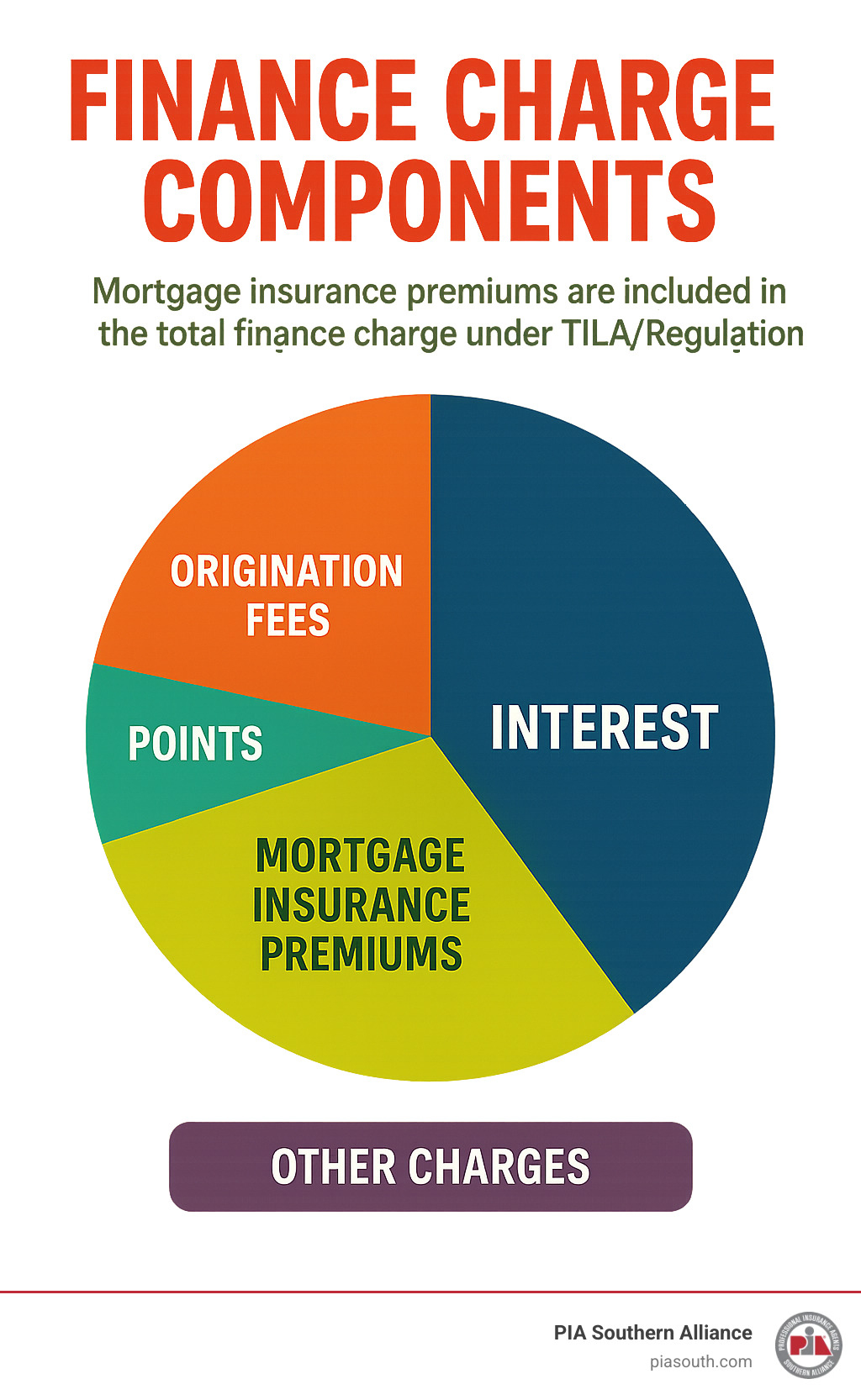
When we look at what makes up a finance charge, Regulation Z is pretty specific about what’s always included, never included, or only included under certain conditions. According to 15 U.S.C. § 1605, your finance charge typically includes:
Interest (the biggest piece of the pie), service fees, transaction fees, loan origination fees, points, appraisal and credit report fees (with some exceptions), insurance premiums that protect the creditor, and debt cancellation coverage.
For insurance agents across Georgia, Alabama, and Mississippi, understanding this framework is essential when helping clients steer the sometimes confusing world of mortgages and insurance.
Key Elements That Drive the Finance Charge
When your clients ask about mortgage costs, it helps to know what’s really driving that finance charge number on their disclosure forms.
Interest and points form the foundation of most finance charges. This includes both the interest paid over the life of the loan and any upfront discount points your client might pay to secure a lower interest rate.
Loan origination fees are another big component. These are what lenders charge for processing the application, underwriting the loan, and handling all the paperwork. They’re almost always included in the finance charge calculation.
Mortgage broker fees come into play when a broker helps your client find their loan. Regulation Z is crystal clear here – broker fees paid by the borrower are always part of the finance charge, regardless of whether the lender keeps any portion.
Insurance protecting the creditor is where we start answering the question: are mortgage insurance premiums included in the finance charge? The short answer is yes – premiums for insurance that protects the lender against your client’s default are expressly included.
For you as a property and casualty insurance agent, understanding these components helps you provide more comprehensive guidance when clients are juggling both homeowners insurance (which you may provide) and mortgage insurance requirements.
Why Finance-Charge Accuracy Matters for Agents
You might wonder why you should care about finance charge calculations as an insurance agent. Here’s why it matters:
The finance charge directly impacts the Annual Percentage Rate (APR) your clients use to compare loan offers. Inaccurate calculations can lead to misleading comparisons and unhappy clients who feel misled about their true borrowing costs.
There’s also a significant legal angle – major understatements of the finance charge can trigger extended rescission rights for borrowers under TILA. This creates potential legal and financial headaches for lenders, which can ripple through the entire transaction.
Federal regulators frequently cite finance charge violations during compliance examinations. The Federal Reserve consistently notes that finance charge errors are among the most common compliance issues they encounter.
Perhaps most importantly for your agency, providing accurate information about finance charges builds trust with your clients. In Georgia, Alabama, and Mississippi, being known as the agent who truly understands the total cost of homeownership sets you apart as a true professional.
As independent agents, you’re uniquely positioned to help clients understand how various insurance premiums affect their overall mortgage costs, creating opportunities for more comprehensive client relationships.
For more information about finance charges and related regulations, you can View Title 12 on govinfo.gov View Title 12 on govinfo.gov.
Are Mortgage Insurance Premiums Included in the Finance Charge?
When clients ask, “Are mortgage insurance premiums included in the finance charge?” you can confidently tell them yes. This isn’t just a regulatory technicality—it’s something that directly impacts their bottom line when buying a home.
Under Regulation Z, the rules are pretty clear. Sections 12 CFR §1026.4(b)(5) and (7) specifically mention that premiums for mortgage insurance must be included in the finance charge calculation. This applies across all the common types of mortgage insurance your clients might encounter:
- Private Mortgage Insurance (PMI) for conventional loans when buyers put down less than 20%
- FHA Mortgage Insurance Premium (MIP) required on all FHA loans
- VA Funding Fee that serves a similar purpose on VA loans
The reasoning makes perfect sense: these premiums protect the lender if your client defaults on the loan. That protection for the creditor is exactly what Regulation Z targets for inclusion in finance charges.

If you look at page 5 of a Closing Disclosure, you’ll see this in action. The Consumer Financial Protection Bureau requires mortgage insurance to be factored into the finance charge disclosed there, giving borrowers a clearer picture of their true borrowing costs.
Borrower-Paid Premiums: are mortgage insurance premiums included in the finance charge?
When your clients directly pay for mortgage insurance, are mortgage insurance premiums included in the finance charge? Absolutely—though how they’re treated depends on the payment structure:
For upfront premiums collected at closing, these are considered prepaid finance charges. You’ll spot them on line 1003 of the HUD-1 or HUD-1A settlement statement. These one-time payments get rolled into the finance charge without any adjustments.
Monthly or periodic premiums also count toward the finance charge. For example, with FHA loans, these monthly premiums continue for either 11 years or the entire loan term, depending on the down payment and loan length.
The impact on the APR can be substantial—often raising it by 0.20% to 0.50% or more. For your clients in Georgia, Alabama, and Mississippi comparing loan options, this knowledge can be invaluable.
| Premium Type | Typical Amount | Payment Method | Impact on APR |
|---|---|---|---|
| FHA Upfront MIP | 1.75% of loan amount | Added to loan balance or paid at closing | Moderate |
| FHA Annual MIP | 0.45-1.05% of loan amount | Monthly with mortgage payment | Significant |
| Conventional PMI | 0.5-2% of loan amount annually | Monthly or single premium | Varies by structure |
| VA Funding Fee | 1.4-3.6% of loan amount | Added to loan balance or paid at closing | Moderate |
Helping your clients understand these nuances positions you as a trusted advisor rather than just an insurance salesperson.
Seller-Paid or Lender-Paid Premiums: are mortgage insurance premiums included in the finance charge?
Here’s where things get interesting. When someone other than your client pays the mortgage insurance premium, the rules shift:
For seller-paid premiums, Regulation Z §1026.4(c)(5) offers an exclusion. These payments are treated as “seller’s points” and don’t count toward the finance charge—as long as your client isn’t legally obligated to repay them. This can make a significant difference in the disclosed APR.
With Lender-Paid Mortgage Insurance (LPMI), the lender covers the premium but typically charges a higher interest rate in exchange. While the premium itself isn’t directly included, that higher interest rate is part of the finance charge—effectively incorporating the insurance cost through the back door.
This reflects Regulation Z’s broad interpretation of “payable,” which looks beyond who writes the check to consider the economic reality of who ultimately bears the cost.
For your property and casualty clients across Georgia, Alabama, and Mississippi, these distinctions matter when they’re weighing different loan options. A loan with seller-paid PMI might look better on paper because of the lower APR, even though the economic cost may be built into the purchase price.
Understanding these finance charge rules helps you provide more comprehensive guidance to clients navigating both their homeowners insurance and mortgage decisions—positioning you as their go-to insurance professional.
Exceptions, Carve-Outs, and Special Cases
Let’s face it—finance regulations can be as complex as a Georgia pine forest! While we’ve established that are mortgage insurance premiums included in the finance charge (they generally are), Regulation Z offers several interesting exceptions that every agent should understand.
Voluntary Credit Insurance
When it comes to credit life, accident, health, or loss-of-income insurance, the premiums can actually stay out of the finance charge calculation—but only under very specific conditions. The insurance must be truly optional, this fact must be clearly disclosed in writing, and your client needs to explicitly elect to purchase it with their signature.
It’s worth noting that this rarely applies to mortgage insurance in practice. Why? Because mortgage insurance isn’t typically “voluntary” when a borrower makes less than a 20% down payment—it’s a lender requirement, plain and simple.
Property Damage and Liability Insurance
Here’s where things get interesting for property and casualty agents in Alabama, Mississippi, and Georgia. Homeowners insurance premiums can be excluded from the finance charge when three conditions are met: the lender provides written cost information, the borrower knows they can choose any insurer, and there’s no requirement to use a specific provider.

This is a critical distinction for your clients to understand—their homeowners insurance (which you likely help them with) gets different treatment than their mortgage insurance (which protects the lender against default). Helping clients understand this difference positions you as a knowledgeable advisor in their homebuying journey.
Government-Backed Loan Considerations
Government-backed loans come with their own unique twists. For FHA loans, both the upfront MIP and the annual MIP are included in the finance charge calculation. With VA loans, the funding fee (which serves a similar purpose to mortgage insurance) is included in the finance charge, though certain veterans may qualify for exemptions.
For agents working with first-time homebuyers in Mississippi, Alabama, and Georgia, understanding these nuances can be particularly valuable, as government-backed loans are often popular options for those entering the housing market.
Tolerance Thresholds
Even regulators understand that perfect calculations can be challenging! Regulation Z provides some breathing room with tolerance thresholds:
$100 maximum permissible variance applies to most mortgage loans, while a 0.5% variance is allowed for non-open-end real property loans. For certain refinance transactions, the tolerance increases to 1%.
These tolerances offer some flexibility for minor calculation errors, but don’t change the fundamental rule that are mortgage insurance premiums included in the finance charge—they absolutely are in most cases.
For agents wanting to dive deeper into the regulatory language, you can View the PDF for 12 CFR 226.4 for the complete text.
Understanding these exceptions helps you provide more comprehensive guidance to your clients as they steer both their property insurance needs and mortgage requirements. At PIA Southern Alliance, we believe that knowledgeable agents create satisfied clients—and these nuanced details are exactly what set professional agents apart in the competitive markets of Georgia, Alabama, and Mississippi.
Impact on APR and Consumer Disclosures
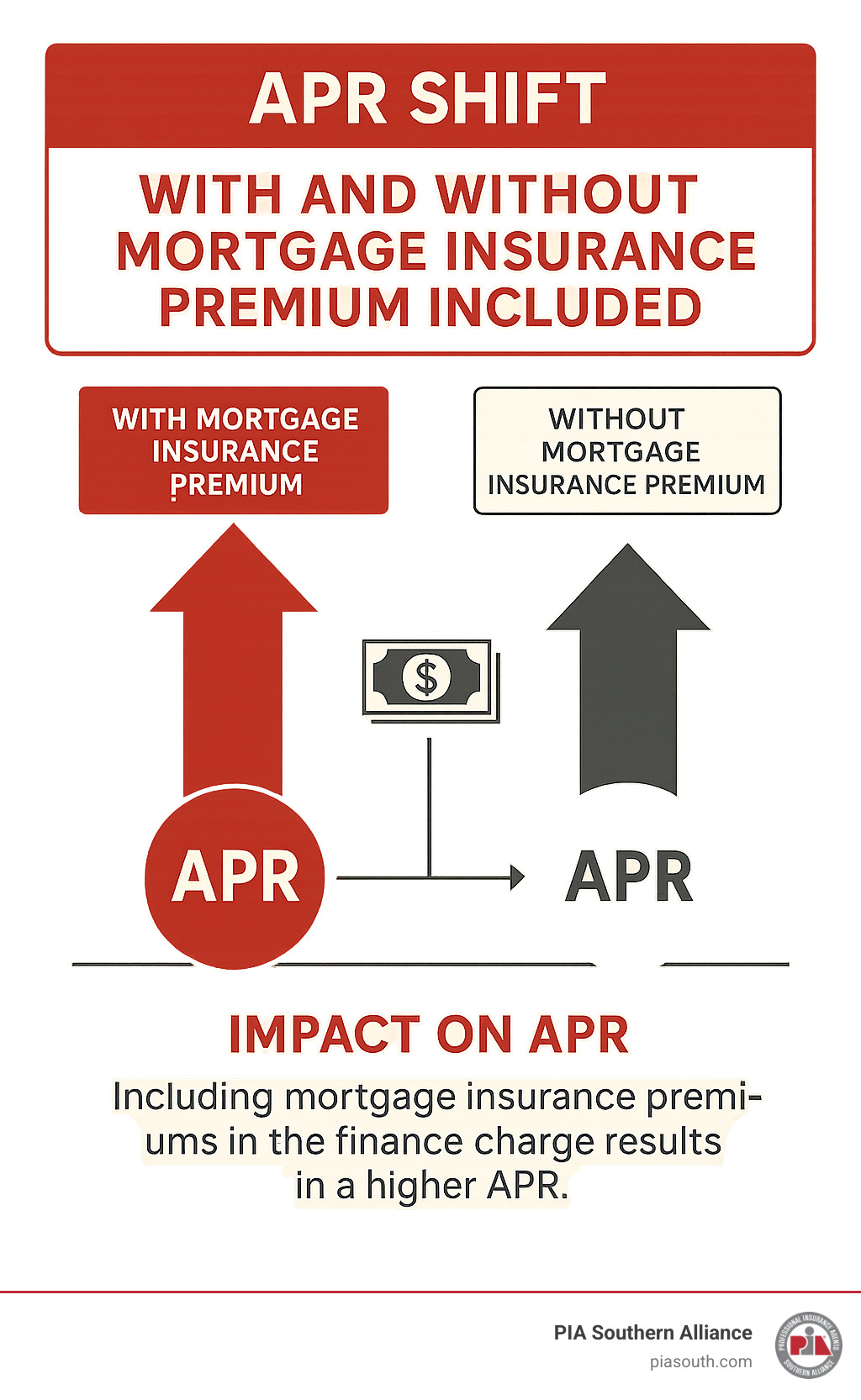
When you’re helping clients steer mortgage options, understanding how mortgage insurance affects their bottom line is crucial. The inclusion of mortgage insurance premiums in the finance charge significantly impacts the Annual Percentage Rate (APR) – that all-important number borrowers use to compare loan offers.
On a Loan Estimate, your clients will see the interest rate prominently displayed on page 1, while the APR appears on page 3. The difference between these two rates often tells a story – and that story frequently involves mortgage insurance premiums and other finance charges.
The Closing Disclosure lays it all out on page 5 in the “Loan Calculations” section. Here, borrowers can see the finance charge alongside the APR, total payments, and amount financed – giving them the full picture of their loan’s cost.
For your clients in Georgia, Alabama, and Mississippi who are comparing mortgage options, understanding this relationship between mortgage insurance and finance charges can make a real difference:
A loan with a slightly higher interest rate but no mortgage insurance might actually have a lower APR than a loan with a lower rate that requires mortgage insurance. This counterintuitive situation often confuses first-time homebuyers who focus solely on the interest rate.
The escrow account itself adds another layer of complexity. While mortgage insurance premiums are included in the finance charge, the escrow account that holds these funds is not. This distinction can leave borrowers scratching their heads when they see both items on their statements.
Some borrowers facing large upfront premiums might consider Insurance Premium Financing as an option, which brings its own set of finance charge implications. As their trusted advisor, you can help them understand these nuances.
By helping clients understand these disclosures, you strengthen your role as a valuable partner in their homebuying journey. When they ask, “Are mortgage insurance premiums included in the finance charge?” you’ll be ready with a clear, confident answer that helps them make informed decisions about what’s likely the biggest purchase of their lives.
Compliance Tips for Independent Agents in GA, AL, and MS
Navigating the complex world of mortgage insurance and finance charges doesn’t have to give you a headache. For independent insurance agents across Georgia, Alabama, and Mississippi, understanding these regulations isn’t just about compliance—it’s about providing genuine value to your clients during one of their biggest life purchases.
When your clients ask, “Are mortgage insurance premiums included in the finance charge?” your confident, informed response builds trust and positions you as their go-to insurance expert. Let’s look at some practical ways to stay on top of these requirements.
First, make it a habit to review settlement statements with a knowledgeable eye. Taking a few minutes to verify that mortgage insurance premiums appear correctly as finance charges allows you to explain to clients why their total costs look the way they do. This simple step can prevent confusion and demonstrate your commitment to transparency.
Documentation matters tremendously in our industry. For any voluntary coverage you offer, keep clear records of your client’s written elections. These documents aren’t just paperwork—they’re your protection if questions arise about whether premiums should be excluded from finance charges.

When sellers contribute to closing costs—which happens frequently in our Southern markets—understand how these contributions affect finance charge calculations. This knowledge is particularly relevant when sellers cover mortgage insurance premiums, potentially changing how they’re treated under Regulation Z.
Watch out for common compliance missteps that can trip up even experienced agents. These include forgetting to include required mortgage insurance premiums in APR calculations, incorrectly excluding premiums without meeting all exception criteria, and failing to maintain proper documentation. Small oversights can lead to significant compliance issues down the road.
Training makes all the difference. Consider incorporating finance charge and disclosure requirements into your agency’s regular training program. When everyone on your team understands how various insurance products relate to lending costs, you create a more knowledgeable, confident client experience.
The housing markets in Georgia, Alabama, and Mississippi each have their unique characteristics, but the rules governing mortgage insurance and finance charges remain consistent. Your local expertise combined with regulatory knowledge creates an unbeatable value proposition for homebuyers.
For agents looking to help clients manage insurance costs more effectively, exploring premium financing options can provide additional solutions. Learn more about how this works through our guide on How Does Insurance Premium Financing Work?
Your role extends beyond selling policies—you’re guiding clients through a complex financial journey. When you can clearly explain how mortgage insurance affects their bottom line, you become an indispensable partner in their homebuying process.
Frequently Asked Questions about Mortgage Insurance & Finance Charges
Do periodic FHA mortgage insurance premiums affect the finance charge?
Yes, both the upfront and periodic (annual) FHA mortgage insurance premiums are included in the finance charge. If you’re working with clients navigating FHA loans, they should understand that the annual MIP—typically ranging from 0.45% to 1.05% of the loan amount—is paid monthly with their mortgage payment and significantly impacts their APR calculation.
There’s a strict timeline for these payments too. According to HUD guidelines, FHA monthly premiums are billed on the 15th of each month and must be paid by the 10th of the following month. It’s worth noting to your clients that while these premiums must be paid in full to avoid late fees and interest charges, those potential late fees themselves aren’t considered part of the finance charge under Regulation Z.
How does excluding seller-paid PMI influence the disclosed APR?
When a seller agrees to pay the mortgage insurance premium, something interesting happens: it’s treated as “seller’s points” and excluded from the finance charge under Regulation Z §1026.4(c)(5). This can make a meaningful difference in how attractive a loan appears on paper.
Let me put this in perspective with a real example: On a $200,000 loan with a 4% interest rate, having the seller pay an upfront PMI premium of $3,000 might reduce the disclosed APR by approximately 0.15-0.25 percentage points compared to the same loan with borrower-paid PMI. For your clients in Georgia, Alabama, and Mississippi comparing loan offers, this difference could influence their decision-making.
This exclusion applies only when the borrower isn’t legally obligated to repay these amounts, which is typically the case in standard seller contribution arrangements. Helping your clients understand this nuance can position you as a valuable resource in their homebuying journey.
What records must agents keep to prove a premium is voluntary?
For insurance agents across Georgia, Alabama, and Mississippi, proper documentation is your best protection when it comes to voluntary insurance premiums. To exclude insurance premiums from the finance charge as voluntary, you’ll need to maintain three key records:
Written Disclosures that clearly show you informed the consumer in writing that the insurance was optional and not required by the creditor. This transparency is non-negotiable.
Affirmative Written Election providing evidence of the consumer’s specific written request for the insurance. This typically comes in the form of a signed or initialed form—verbal agreements won’t cut it here.
Cost Disclosure records demonstrating that the premium amount was disclosed for the initial term of insurance coverage, ensuring the client knew exactly what they were signing up for.
How long should you keep these records? We recommend maintaining them for at least seven years in Georgia, Alabama, and Mississippi. This covers the duration of most loans plus the applicable statute of limitations period in these states.
At PIA Southern Alliance, we’ve seen how proper record-keeping can make all the difference when questions arise about whether are mortgage insurance premiums included in the finance charge and when exceptions might apply. Taking these simple but crucial documentation steps protects both you and your clients from potential compliance issues down the road.
Conclusion
Understanding are mortgage insurance premiums included in the finance charge isn’t just regulatory trivia—it’s essential knowledge that helps you serve your clients better across Georgia, Alabama, and Mississippi. As we’ve explored throughout this guide, mortgage insurance premiums are indeed included in the finance charge under Regulation Z, with just a few specific exceptions for seller-paid premiums and truly voluntary insurance products.
This knowledge equips you to have more meaningful conversations with your clients about their home financing journey. You can help them understand why their APR differs from their interest rate, explain the impact of different down payment options on their total costs, and clarify the difference between the property insurance you provide and the mortgage insurance that protects their lender.
When your clients review their Loan Estimate or Closing Disclosure with confusion in their eyes, you’ll be ready to guide them through the maze of numbers with confidence. That kind of expertise builds the trust that keeps clients coming back year after year.
At PIA Southern Alliance, we believe that well-informed agents create better outcomes for everyone. That’s why we’re committed to providing the educational resources and training that help you steer complex regulatory matters like these. Our webinars and courses are designed specifically for independent agents in our tri-state region, focusing on the practical knowledge that helps you serve clients better.
While mortgage insurance premiums do increase the finance charge and APR, they also make homeownership possible for many who couldn’t otherwise afford a 20% down payment. By understanding these costs thoroughly, you can help clients weigh their options and make choices that align with their long-term financial goals.
Your expertise as an independent agent extends beyond just policy selection—you’re a trusted advisor in one of the biggest financial decisions your clients will ever make. That relationship is what sets independent agents apart in our increasingly digital world.
For more information about financing options that can help your clients manage their insurance premiums more effectively, visit More info about Professional Agents Funding.